

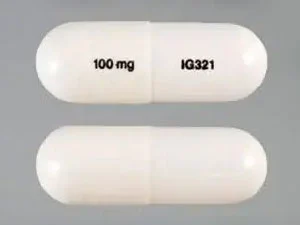
Generic Gabapentin 100 mg
Price range: $141.68 through $252.00
| Variation | Price | Quantity | Add To Cart |
|---|---|---|---|
| 300 pills | $252.00 |
|
Add to cart |
| 90 pills | $141.68 |
|
Add to cart |
| 180 pills | $219.00 |
|
Add to cart |
| 240 pills | $235.00 |
|
Add to cart |
Gabapentin 100 mg: why a small capsule can play a precise role
Gabapentin 100 mg is a prescription immediate-release capsule. The lower strength can help a clinician build a carefully adjusted schedule, prescribe an amount suited to reduced kidney function, or make smaller changes when response and side effects need close observation. It is not automatically a beginner dose, a harmless sleep aid, or a medicine that anyone can add for pain. The correct schedule depends on the diagnosis, total daily amount, kidney clearance, age, other medicines, and treatment goal.
Immediate-release gabapentin capsules are FDA-approved for management of postherpetic neuralgia in adults and as adjunctive therapy for partial-onset seizures in adults and children aged three years and older. Clinicians may prescribe gabapentin off-label for other conditions, but the reason, evidence, alternatives, and monitoring should be discussed. A 100 mg product page cannot decide whether pain is neuropathic, whether a seizure diagnosis is correct, or whether another condition needs urgent treatment.
This guide is organized around precision: choosing the right use, understanding the purpose of the 100 mg unit, measuring benefit, preventing accumulation and sedation, and verifying a lawful pharmacy refill. It does not provide an individual titration schedule. Take only the amount and frequency on your prescription label.
The 100 mg strength is a building block, not a complete plan
A medicine strength tells you how much active ingredient is in one capsule. It does not tell you how many capsules to take or how often. A prescription could use one or more units per dose, but only the prescriber should design that combination. The official gabapentin labeling includes different regimens for postherpetic neuralgia, seizures, pediatric patients, renal impairment, and hemodialysis. Copying an adult pain schedule into a kidney-adjusted or pediatric situation can be dangerous.
One benefit of a 100 mg capsule is dosing flexibility. A clinician may use it when trying to minimize initial dizziness or sleepiness, when adjusting gradually, or when a renal-function table supports a small daily amount. Conversely, an adult epilepsy regimen may eventually require larger divided doses, and using many 100 mg capsules could be inconvenient and increase adherence errors. The pharmacy may dispense a different strength once the stable dose is known.
Do not assume that “low strength” means it can be tried without supervision. Sedation, breathing suppression, allergic reactions, mood changes, and withdrawal can occur in relation to the total regimen and patient risk—not simply the number printed on one capsule. Several 100 mg capsules can quickly equal a higher dose.
Approved and off-label treatment conversations
Postherpetic neuralgia
Postherpetic neuralgia is persistent pain in the area where shingles occurred. Patients may describe burning, electric shocks, stabbing, itching, altered sensation, or pain from light clothing. Immediate-release gabapentin is approved for this condition in adults. The labeled initiation schedule uses gradual daily changes, but the prescriber may modify the plan for kidney function, frailty, side effects, or other clinical factors.
Partial-onset seizures
Gabapentin capsules are approved as add-on treatment for partial-onset seizures, with or without secondary generalization. In children, dosing is weight-based and age-specific. Gabapentin does not cure epilepsy and should not replace another seizure medicine unless a specialist directs the change. The maximum interval guidance and need for consistent divided dosing make adherence especially important.
Other conditions
Search results commonly associate gabapentin 100 mg with diabetic neuropathy, sciatica, back pain, fibromyalgia, anxiety, hot flashes, migraine, restless legs, or sleep. Some uses are off-label, evidence varies, and certain brand or prodrug formulations—not ordinary immediate-release capsules—have different approved indications. Ask the clinician to name the diagnosis and explain why this formulation was chosen.
Off-label prescribing can be clinically appropriate, but it should not be hidden behind vague promises that gabapentin “cures chronic pain.” It is not a universal analgesic. New weakness, bowel or bladder problems, fever, trauma, chest pain, unexplained weight loss, or rapidly progressive neurologic symptoms require diagnostic evaluation rather than online ordering.
How gabapentin works
Gabapentin is an antiepileptic drug and gabapentinoid. It binds to the alpha-2-delta subunit of voltage-activated calcium channels. This is associated with modulation of excitatory neurotransmission, although the precise mechanism responsible for seizure control and pain relief is not fully established. Despite its name and structural relationship to GABA, it does not act as a straightforward GABA-receptor agonist.
For neuropathic pain, the goal may be fewer spontaneous bursts, less touch sensitivity, better sleep, or improved function. It is not an instant numbing agent. For seizures, it helps reduce abnormal neuronal activity as one component of treatment. The absence of an immediate sensation after a 100 mg capsule is not a reason to repeat it.
Why clinicians sometimes titrate slowly
Dizziness and somnolence can interfere with walking, driving, work, and thinking. Starting with a small unit and changing gradually may help identify the lowest useful regimen and reduce abrupt changes in impairment. A slower approach may be considered in older adults, patients at high fall risk, people using other sedatives, and those with reduced renal clearance.
Slow titration also provides cleaner information. If several medicines and doses change at once, it becomes hard to identify the cause of benefit or harm. A written plan should state the current step, next review, and conditions under which no increase should occur. Never advance a schedule simply because the calendar date arrived when severe dizziness, breathing symptoms, swelling, rash, or mood change is present.
A clinician’s titration instruction is not a general protocol to share. The indication, kidney function, age, and final target differ. If the pharmacy label and a printed plan appear inconsistent, pause and call. Do not guess whether “one three times daily” means one capsule or one total milligram amount.
Kidney function: the main reason small units may matter
Gabapentin is eliminated through the kidneys, largely unchanged. When renal clearance falls, the drug can accumulate unless dose and frequency are adjusted. The current prescribing information provides a table based on creatinine clearance. In the lowest renal-function ranges, total daily amounts may be much smaller and intervals different from those used in normal renal function. Hemodialysis has additional supplemental-dose guidance.
The 100 mg capsule can help assemble some adjusted regimens, but patients should not calculate creatinine clearance or select a row themselves. Laboratory eGFR and creatinine clearance are related but not always interchangeable for drug dosing, and clinical context matters. A prescriber or pharmacist should interpret the result.
Ask for a renal-dose review when
- chronic kidney disease is newly diagnosed or has progressed;
- dialysis starts, stops, or changes schedule;
- acute illness causes dehydration, vomiting, diarrhea, or kidney injury;
- unusual confusion, severe sleepiness, tremor, jerking movements, or loss of coordination appears;
- an older prescription is restarted after a long gap;
- another clinician changes medicines that affect kidney function or sedation.
Normal urine output does not prove normal clearance. Older adults may have reduced renal function even without obvious symptoms. A 100 mg capsule can still be excessive if taken too often in severe impairment, while an unnecessarily low schedule may fail to treat the condition. Precision requires current clinical information.
Before the first dose: a complete disclosure list
Tell the prescriber about kidney disease, dialysis, lung disease, sleep apnea, previous serious allergy, depression, suicidal thoughts, seizures, falls, pregnancy, breastfeeding, and substance-use history. Provide every prescription and nonprescription medicine, alcohol and cannabis use, vitamins, and supplements.
Opioids and other central nervous system depressants deserve specific discussion. Morphine, oxycodone, hydrocodone, buprenorphine, benzodiazepines, sleep medicines, sedating antihistamines, muscle relaxants, and alcohol can combine with gabapentin to worsen drowsiness and breathing. Underlying respiratory impairment further increases concern. The clinician may select a lower amount, closer monitoring, or a different medicine.
Also mention aluminum- or magnesium-containing antacids. They can reduce gabapentin bioavailability; current labeling recommends taking gabapentin at least two hours after such an antacid. A pharmacist can identify relevant ingredients across brands.
How to take gabapentin 100 mg capsules
Swallow the prescribed capsule whole with water. Immediate-release gabapentin may be taken with or without food. Use a consistent schedule and a medication list or alarm when several daily doses are prescribed. For seizure regimens using three-times-daily administration, labeling says the maximum interval between doses should not exceed 12 hours.
Do not open, crush, or mix capsule contents unless a pharmacist gives instructions for the exact product. When swallowing is difficult, ask about a suitable formulation or strength instead of altering it. Do not interchange immediate-release gabapentin with extended-release gabapentin or gabapentin enacarbil on a milligram-for-milligram basis.
If a dose is missed, follow the pharmacy instructions. A common general principle is to take it when remembered unless it is close to the next dose, but seizure control and divided schedules need individualized guidance. Never double the next amount. If several doses were missed, or vomiting prevented absorption, call the prescriber.
Measuring benefit at a low starting strength
Define what will be measured before treatment. For postherpetic neuralgia, record average and worst pain, number of nighttime awakenings, sensitivity to clothing, walking, work, and rescue-medication use. For seizure treatment, keep a seizure diary with date, type, duration, recovery, missed medicines, illness, and possible trigger.
A small early dose may be intended mainly to establish tolerability before the next planned step. That does not mean it should be increased automatically. If dizziness, swelling, confusion, rash, severe fatigue, breathing change, or mood symptoms appear, contact the clinician. If nothing changes, follow the planned review rather than adding extra capsules.
Separate treatment benefit from sedation. Sleeping more because the medicine causes drowsiness is not the same as improved pain or anxiety. Ask whether function is better. If the target symptom improves only slightly while concentration, balance, or mood worsens, the overall result may be unfavorable.
Common side effects and daily safety
Gabapentin can cause dizziness, sleepiness, fatigue, coordination difficulty, tremor, blurred or double vision, swelling of the hands or feet, nausea, and weight gain. Side-effect patterns differ by age, indication, total dose, kidney function, and concurrent medicines. A 100 mg capsule does not eliminate these risks.
Do not drive, cycle in traffic, operate machinery, climb, or perform hazardous work until the effect is known. Alcohol and sedatives may worsen impairment. Older adults and people using blood-pressure medicines may face greater fall consequences. Arrange help during early treatment if balance is already poor.
Report persistent swelling, rapid weight change, repeated falls, severe daytime sleepiness, memory or speech problems, or loss of coordination. The clinician may evaluate dose, kidney function, drug combinations, and alternative causes. Do not simply take the dose at bedtime to hide daytime adverse effects unless the prescribed schedule allows that.
Serious reactions that should not wait
Seek emergency help for slow or difficult breathing, extreme sedation, inability to wake normally, blue or gray lips, collapse, or suspected overdose. Serious and fatal respiratory depression has been reported with gabapentin, particularly alongside opioids or other CNS depressants and in people with underlying respiratory impairment.
Facial, lip, tongue, or throat swelling; hives; trouble swallowing; or wheezing can indicate anaphylaxis or angioedema. A multiorgan hypersensitivity reaction known as DRESS may begin with fever, rash, or swollen lymph nodes and can involve the liver, kidneys, heart, or blood cells. Obtain urgent medical assessment rather than waiting for a complete symptom list.
Gabapentin and other antiepileptic drugs carry a warning for suicidal thoughts or behavior. New or worsening depression, unusual behavior, agitation, or self-harm thoughts should be reported promptly. An immediate suicidal crisis requires emergency or local crisis support. Family or caregivers should know what changes to watch for.
Never stop abruptly without a plan
Gabapentin should generally be tapered rather than stopped suddenly. Rapid discontinuation can increase seizure risk and may produce withdrawal symptoms, including anxiety, insomnia, nausea, sweating, pain, headache, tremor, dizziness, agitation, confusion, depression, or suicidal thinking. Current labeling states reduction or discontinuation should generally occur gradually over at least one week, but some patients need a different plan.
The availability of 100 mg capsules can help a prescriber make smaller taper steps, but that is not an invitation to build an online taper. Total daily dose, duration, indication, kidney function, seizure history, and prior withdrawal symptoms affect the schedule. If supply, travel, cost, or a delayed appointment threatens interruption, contact the pharmacy and prescriber early.
Responsible use, storage, and disposal
Take only medication prescribed to you. Do not share it for pain, sleep, anxiety, or withdrawal. Gabapentin misuse has been reported, particularly alongside opioids or other drugs. Federal scheduling and state monitoring rules vary. Secure storage protects children, pets, visitors, and people at risk of misuse.
Tell the clinician if you are taking extra capsules, using them for euphoria, combining them intentionally with sedatives, or experiencing craving or loss of control. Honest disclosure supports safer care. Use a pharmacy or community take-back program for unwanted medication. Do not keep loose capsules in an unlabeled bag or combine different strengths in one bottle.
Comparing gabapentin 100 mg price
Price searches often include “gabapentin 100 mg cost,” “gabapentin 100 mg coupon,” “buy gabapentin 100 mg online,” and “gabapentin 100 mg refill.” Compare the same immediate-release capsule, quantity, manufacturer, and directions. A low price for 30 capsules may cost more per treatment month than a quote for 90. Insurance, deductible, discount programs, dispensing fees, and state rules can affect the total.
Do not compare immediate-release capsules with extended-release products or gabapentin enacarbil. Formulations have different absorption and approved uses and are not interchangeable just because “gabapentin” appears in the name. Ask the pharmacist what product the quote covers and whether a manufacturer change affects inactive ingredients.
How to order gabapentin 100 mg through a safe pharmacy
A legitimate online pharmacy requires a valid prescription, is licensed by the applicable state board of pharmacy, provides a verifiable U.S. address and phone number, and gives access to a licensed pharmacist. FDA guidance warns against websites that offer prescription drugs without prescriptions, are not state-licensed, hide their location, lack pharmacist support, or advertise prices that seem too good to be true.
Unsafe sellers may supply counterfeit, expired, contaminated, or incorrectly stored products with too much, too little, or none of the active ingredient. Do not use a website promoting “gabapentin without prescription,” anonymous international reshipping, unmarked capsules, or research products represented as human medicine. Verify the license in the state board database before paying.
Prescription-order checklist
- Confirm immediate-release gabapentin capsule, 100 mg.
- Match quantity, number of capsules per dose, and dosing frequency.
- Verify the pharmacy license and pharmacist availability.
- Ask for the full price including dispensing and shipping.
- Plan shipping around refill timing without stockpiling.
- Review the dispensed manufacturer, imprint, and patient leaflet.
Transactional phrases such as “buy gabapentin 100 mg online with prescription” should describe a lawful refill path, not bypass care. A real telehealth service conducts an appropriate evaluation and may decline to prescribe. Payment, membership, or questionnaire completion must not guarantee medication.
Identifying a 100 mg capsule on delivery
Approved generic gabapentin 100 mg capsules can differ in color and imprint. Some searches refer to a white capsule marked IG 321, but appearance alone is not proof. Counterfeiters can copy markings, and multiple legitimate manufacturers may use other designs. Confirm through the dispensing pharmacy.
The container should list the patient, gabapentin, 100 mg, directions, prescriber, pharmacy, quantity, manufacturer, and expiration or beyond-use date. Do not take medicine from a broken seal, loose unlabeled packaging, or a bottle for another person. Contact the pharmacy if the appearance changes unexpectedly, the capsule is damaged, or the label conflicts with the treatment plan.
Store according to the label, protected from excess heat and moisture. Keep the original child-resistant container unless the pharmacist prepares an adherence pack. If several strengths are used during titration, separate and label them clearly to prevent selecting the wrong capsule.
A refill should trigger a brief clinical review
Ask whether the target symptom has improved, whether the 100 mg unit remains convenient, and whether side effects or kidney function have changed. Review all new opioids, sleep medicines, antihistamines, muscle relaxants, alcohol use, and breathing conditions. A refill is not merely a transaction when accumulation or additive sedation is possible.
For pain, track sleep and function in addition to intensity. For epilepsy, review seizure frequency and adherence. If treatment provides no meaningful benefit, ask whether continued exposure is justified. If it does help, use the lowest effective regimen and maintain safe storage.
Frequently asked questions about gabapentin 100 mg
Is 100 mg a low dose?
It is the smallest commonly marketed capsule strength, but safety depends on the number of capsules, frequency, kidney function, age, and other medicines. “Low strength” does not mean risk-free.
Can gabapentin 100 mg be used for nerve pain?
Immediate-release gabapentin is approved for postherpetic neuralgia in adults. Clinicians may use it off-label for other neuropathic pain after diagnosis. The 100 mg unit may be part of titration or renal adjustment, but the prescriber sets the schedule.
Will one capsule make me sleepy?
It can. Sensitivity varies, and opioids, alcohol, sedatives, age, and kidney impairment can increase the effect. Avoid hazardous tasks until you know your response.
Can I take it only when pain is severe?
Not unless the prescriber specifically wrote an as-needed plan. Gabapentin is commonly scheduled, and inconsistent use may reduce benefit or complicate withdrawal and seizure risk. Follow the label.
Can I take three 100 mg capsules instead of one 300 mg capsule?
The active amount may add mathematically, but substitutions should be confirmed by the pharmacist because directions, formulation, quantity, and adherence matter. Do not alter capsule counts on your own.
Can I use it with an antacid?
Aluminum- and magnesium-containing antacids reduce gabapentin absorption. Current labeling recommends taking gabapentin at least two hours after such an antacid. Ask the pharmacist to check the product.
What if I miss a dose?
Follow the pharmacy’s instructions and do not double. The best response depends on how close the next dose is and whether gabapentin is being used for seizure control. Call if several doses were missed.
Can I stop after taking only 100 mg?
Do not stop based only on capsule strength. Withdrawal and seizure considerations depend on the total regimen and duration. Ask the prescriber for a taper or discontinuation plan.
Do I need a prescription to buy gabapentin 100 mg online?
Yes. Use a licensed pharmacy that requires a valid prescription and provides pharmacist access. Avoid any website offering no-prescription gabapentin.
What should I do if I receive an IG 321 capsule?
Do not rely solely on an online imprint match. Compare the patient label and manufacturer, and ask the dispensing pharmacist to verify that the capsule is the prescribed product before taking it.
Precision-strength summary
Gabapentin 100 mg is a flexible prescription unit that can support cautious titration, small dose changes, or certain renal-adjusted schedules. It remains a clinically active medicine with risks of dizziness, sedation, falls, mood changes, allergic reactions, withdrawal, and serious respiratory depression—especially with opioids or underlying breathing impairment. Kidney function and the complete medication list are central to safe use.
Use only the immediate-release capsule and schedule written for you. Do not repeat missed doses, stop abruptly, or substitute another gabapentin formulation. When comparing price or delivery, verify the exact product, quantity, pharmacy license, prescription requirement, and pharmacist access. Seek emergency care for breathing difficulty, inability to wake, severe allergy, suicidal crisis, overdose, or a dangerous seizure event; contact the prescriber for dose questions, side effects, or insufficient benefit.
A titration diary reduces guesswork
When 100 mg capsules are used to make small changes, keep a simple dated record. Write the number of capsules per dose, dose times, total daily amount, food or antacid timing, target symptom, and adverse effects. Do not write only “better” or “worse.” For neuropathic pain, note sleep interruptions, touch sensitivity, walking, work, and rescue treatment. For seizures, use the seizure type and diary method provided by the clinician.
Record dizziness, sleepiness, swelling, falls, confusion, mood, breathing, and missed doses. A change made on the same day as an opioid, sleep medicine, illness, or renal-function problem should be highlighted. Bring the diary to follow-up. It can prevent escalation based on memory and can show when a small apparent benefit is outweighed by impaired function.
The diary is not permission to change the schedule. Use it to follow the written plan and identify when to pause and call. Red-flag symptoms—breathing difficulty, severe allergy, suicidal crisis, prolonged or repeated seizure, or inability to wake—require urgent help rather than documentation for the next visit.
Caregiver safeguards when several capsule strengths are used
Titration or tapering may involve more than one gabapentin strength. This creates a selection risk, particularly for a patient with poor vision, cognitive impairment, or multiple daily medicines. Ask the pharmacist to provide large-print directions, color-independent labels, or a blister/adherence pack when available. Never identify strength only by capsule color because generic manufacturers differ.
A caregiver should understand the exact unit: “one 100 mg capsule” is different from “100 mg total” when other strengths are present. Keep old instructions separate from current instructions, and remove discontinued bottles through a take-back program. Before filling a pill organizer, reconcile every bottle against the newest medication list. If the patient appears unusually sleepy, confused, unsteady, or has jerking movements, check for a dosing error and contact clinical help.
Travel, time zones, and refill continuity
Carry gabapentin in the original patient-labeled pharmacy container. Check official destination rules because gabapentin may be monitored or controlled differently across states and countries. Keep it in hand luggage at a stable temperature, and carry a current medication list with the indication, dose, prescriber, pharmacy, kidney status, and allergies.
For a divided seizure regimen, ask the pharmacist how to move dose times across time zones without creating an excessively long interval or two closely spaced doses. Do not use both home and destination clocks independently. Arrange refills early enough for lawful prescription review, but do not stockpile or obtain duplicate supplies from unverified sellers.
If travel illness causes dehydration, vomiting, diarrhea, breathing difficulty, or reduced kidney function, seek medical advice before continuing an automatic titration. Keep opioid and sedative information with the gabapentin record so an unfamiliar clinician can recognize respiratory-depression risk.
Telehealth prescribing still requires clinical depth
A remote gabapentin evaluation should identify the diagnosis, review prior treatment, assess kidney function, screen opioids and other sedatives, ask about breathing disorders and substance use, and establish monitoring and discontinuation plans. A legitimate clinician may request examination, laboratory results, imaging, or specialist input and may decline to prescribe when the cause of pain or seizure-like symptoms is unclear.
A form that guarantees gabapentin after payment or advertises “100 mg without prescription” is not safe care. Confirm the clinician and pharmacy licenses, understand the full cost, and make sure a pharmacist can answer formulation and missed-dose questions. Never hide opioid use, dialysis, pregnancy, or severe mood symptoms to obtain a refill.
Questions to resolve at the first follow-up
The first review should confirm that the written schedule was understood and that the capsule strength has not been confused with the total dose. Bring every medicine bottle or a complete photo list. Tell the clinician about missed doses, antacid timing, alcohol, new sedatives, falls, driving difficulty, swelling, mood change, and any acute illness. Ask whether kidney function is current enough for the next step.
For pain, decide whether the change is meaningful in daily life. A reduction on a zero-to-ten scale is more persuasive when it is accompanied by better sleep, walking, clothing tolerance, or work. For seizures, review diary entries rather than relying on memory. If benefit is absent, ask how long the current step should be tested and what alternative diagnosis or treatment will be considered.
End the visit with one reconciled plan: the exact number of 100 mg capsules at each time, the date of any planned change, symptoms that block that change, and a contact route for questions. Obtain a separate discontinuation plan if treatment is ending. This prevents old portal messages, bottle labels, and verbal instructions from competing with one another.
Medical references used for this guide
- DailyMed, current gabapentin capsule prescribing information and Medication Guide.
- U.S. Food and Drug Administration, safe online pharmacy and BeSafeRx consumer resources.
| Select Variation |
300 pills ,180 pills ,240 pills ,90 pills |
|---|