
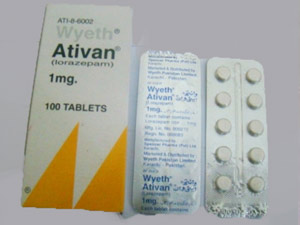
Generic Ativan 1 mg
Price range: $533.00 through $1,507.00
| Variation | Price | Quantity | Add To Cart |
|---|---|---|---|
| 360 pills | $1,507.00 |
|
Add to cart |
| 180 pills | $908.00 |
|
Add to cart |
| 90 pills | $533.00 |
|
Add to cart |
Ativan 1 mg is a prescription tablet containing 1 mg of lorazepam, a benzodiazepine used to manage anxiety disorders and to give short-term relief of anxiety symptoms, including anxiety that comes with depressive symptoms. The 1 mg tablet is the middle of the three Ativan strengths (0.5 mg, 1 mg, and 2 mg). It is often the building block of a divided daily schedule. Lorazepam differs from many benzodiazepines in two ways that matter in practice: it has an intermediate duration of action, and the liver clears it by a simple route that does not create active metabolites. This page explains what the Ativan 1 mg tablet is, how it is dosed, the side effects and boxed warning, its interactions, and the rules for filling a lorazepam prescription.
Important: Ativan 1 mg is a Schedule IV controlled medicine and requires a valid prescription. The information here comes from the FDA-approved labeling and is for patient education. Follow the dosing instructions from the prescriber.
Ativan 1 mg Tablet Profile
| Characteristic | Ativan 1 mg |
|---|---|
| Active ingredient | Lorazepam 1 mg |
| Medicine class | Benzodiazepine (intermediate-acting) |
| Brand tablet description | White, five-sided tablet with a raised “A” on one side and “BPI 64” on the other |
| Main labeled uses | Anxiety disorders; short-term relief of anxiety or anxiety associated with depressive symptoms |
| Oral bioavailability | About 90% |
| Peak blood level | About 2 hours after a dose |
| Half-life | About 12 hours (inactive glucuronide metabolite: about 18 hours) |
| Age limit | Safety and effectiveness not established under 12 years |
| Federal schedule | C-IV |
How Lorazepam Is Processed and Why It Matters
Like other benzodiazepines, lorazepam strengthens the effect of GABA, the brain’s main calming neurotransmitter. This reduces excess nerve activity linked to anxiety, tension and agitation. Where Ativan stands apart is in how the body clears it.
Many benzodiazepines go through the liver’s cytochrome P450 enzyme system and form active by-products that keep working for days. Lorazepam takes a shorter route. It is joined directly to glucuronic acid (glucuronidation) to form lorazepam glucuronide, which has no activity in the central nervous system, and this is passed in the urine. Three practical consequences follow:
- More predictable duration. With a half-life of about 12 hours and no active metabolites, a 1 mg dose does not build up as heavily over the week as longer-acting benzodiazepines do.
- Fewer enzyme interactions. Because it avoids the CYP450 system, many drugs that alter other benzodiazepine levels have little effect on lorazepam.
- A frequent choice in liver concerns. Glucuronidation is relatively well preserved in many people with liver disease, though lorazepam still needs careful dosing when the liver is significantly impaired.
The flip side is that levels fall faster between doses than with very long-acting agents. Some people notice anxiety returning before the next scheduled dose (“interdose” symptoms). This should be discussed with the prescriber. It is not a reason to take extra tablets.
Where 1 mg Sits Among Ativan Strengths
All three Ativan tablets have the same five-sided white shape. Only the code on the back differs, so it is worth knowing which one is in the bottle, especially during a taper when more than one strength may be in use.
| Strength | Back imprint (brand) | Typical role |
|---|---|---|
| 0.5 mg | BPI 63 | Starting doses in older adults and final taper steps |
| 1 mg | BPI 64 | Standard divided dosing for most adults |
| 2 mg | BPI 65 | Higher daily totals or bedtime doses, as prescribed |
Before Starting Ativan 1 mg: What to Tell the Prescriber
- All current medicines, including opioids, other sedatives, valproate, probenecid and clozapine
- Any history of alcohol or drug misuse, in yourself or close family
- Lung disease, snoring or diagnosed sleep apnea
- Glaucoma, especially narrow-angle glaucoma
- Liver or kidney problems
- Depression, past suicidal thoughts, or psychosis
- Pregnancy, plans to become pregnant, or breastfeeding
- Jobs involving driving, machinery or the safety of others
Being open about these points helps the prescriber pick the right starting dose and decide whether lorazepam is the best choice at all.
Ativan Dosage and the Role of the 1 mg Tablet
The label gives broad ranges and asks prescribers to adjust each dose to the individual. Its starting points are summarized below.
| Situation | Label dosing guidance | Example using 1 mg tablets |
|---|---|---|
| General adult range | 2–6 mg per day in divided doses, with the largest dose at bedtime. The full range runs from 1 to 10 mg/day | 1 mg two or three times daily |
| Anxiety – starting | 2–3 mg per day, given two or three times daily | 1 mg in the morning and 1 mg at night, or 1 mg three times daily |
| Insomnia from anxiety or short-term situational stress | Single dose of 2–4 mg, usually at bedtime | The prescriber may combine tablets |
| Older or debilitated adults | Start at 1–2 mg per day in divided doses | Often 1 mg once daily, or the 0.5 mg strength twice daily, as directed |
| Dose increases | Raise gradually, with the evening dose increased before the daytime doses | Limits daytime drowsiness while doses are adjusted |
The label also states that the need for continued treatment should be reassessed periodically. Lorazepam’s effectiveness for anxiety beyond four months has not been formally studied. Our page on why some people need less medication explains why age, body size, and genetics can move a person’s dose up or down.
Practical Dosing Guidance
- Swallow the tablet with water, with or without food.
- Space divided doses as instructed, for example morning and bedtime, so blood levels stay even.
- Do not “save up” doses for a stressful day or take extra tablets during a bad hour.
- If a dose is missed, take it when remembered unless the next dose is soon. Do not double up.
- Use a pill organizer or a dosing app. Dosing errors with benzodiazepines are common and avoidable. See common medication mistakes.
What Patients Commonly Notice
In the label’s data, the most frequent adverse reactions were:
| Adverse reaction | Reported frequency |
|---|---|
| Sedation | 15.9% |
| Dizziness | 6.9% |
| Weakness | 4.2% |
| Unsteadiness | 3.4% |
The label notes that sedation and unsteadiness become more common with age. Other reported effects include fatigue, confusion, memory problems, slurred speech, blurred vision, headache, nausea, changes in appetite, and changes in libido.
Reactions That Need Prompt Attention
- Paradoxical reactions: excitement, agitation, anger, hostility or hallucinations instead of calm. These are more likely in children and older adults.
- Mood changes: new or worsening depression, or thoughts of self-harm. Lorazepam can unmask depressive symptoms. It is not recommended for a primary depressive disorder or psychosis. Normal ups and downs can be hard to tell apart from medicine-related changes, a topic covered in what day-to-day mood swings can mean. If thoughts of suicide occur, call or text 988.
- Breathing problems: slow or shallow breathing, especially in people with lung disease or sleep apnea.
- Allergic reaction: swelling of the face or throat, hives, or difficulty breathing. Call 911.
Boxed Warning for Ativan
The Ativan label carries a boxed warning covering three risks.
1. Use with opioids. Taking lorazepam with opioid medicines can cause profound sedation, slowed breathing, coma and death. The combination is reserved for cases where other options are not adequate, at the lowest effective doses and for the shortest time.
2. Abuse, misuse and addiction. Misuse raises the risk of overdose and death, especially when other substances are involved. The prescriber assesses each patient’s risk before and during treatment.
3. Dependence and withdrawal. Continued use can lead to physical dependence. Stopping abruptly or reducing the dose quickly can cause acute withdrawal reactions that may be life-threatening. A gradual taper is required. The class-wide update is described in the FDA benzodiazepine safety communication.
Contraindications and Precautions
Ativan 1 mg should not be used by people with:
- Known hypersensitivity to benzodiazepines or to any ingredient in the tablet
- Acute narrow-angle glaucoma
Use carefully, under close supervision, in people with:
- Compromised breathing, such as COPD or sleep apnea
- Advanced age or frailty, because of the risk of oversedation and falls
- Significant liver or kidney impairment
- A history of alcohol or drug misuse
- Depression or a history of suicidal thoughts
- Jobs or daily tasks that need full alertness, such as driving, operating machinery, or caring for others
Some prescribers set out a written treatment agreement for long-term controlled-medicine therapy, covering refills, safe storage and follow-up. Medication agreements explained describes what these usually include.
Drug Interactions Specific to Lorazepam
Lorazepam’s glucuronidation pathway gives it a different interaction profile from benzodiazepines that depend on CYP3A4.
| Interacting drug | Interaction | Label recommendation |
|---|---|---|
| Opioids | Additive breathing suppression and sedation | Avoid unless necessary. Lowest doses with monitoring |
| Alcohol, barbiturates, antipsychotics, sedating antidepressants, antihistamines, anticonvulsants | Increased central nervous system depression | Avoid alcohol. Review other sedatives with the prescriber |
| Valproate | Slows lorazepam clearance and raises blood levels | Reduce the lorazepam dose to about 50% |
| Probenecid | Slows lorazepam elimination and prolongs its half-life | Reduce the lorazepam dose to about 50% |
| Clozapine | Reports of marked sedation, excess salivation and loss of coordination | Close monitoring |
| Theophylline or aminophylline | May reduce lorazepam’s sedative effect | Dose review if either is started or stopped |
Alcohol is the most common everyday interaction. The NIAAA’s guide to mixing alcohol with medicines lists benzodiazepines among the medicines that should never be combined with drinking.
Daily Life While Taking Ativan 1 mg
Most people on a steady 1 mg schedule can keep up with normal routines. A few practical adjustments make treatment safer:
- Driving: Do not drive until you know how lorazepam affects you. The first few days and any dose increase are the times of greatest risk.
- Alcohol: Avoid it completely. Even small amounts add to the sedation.
- Falls: Older adults should get up slowly, use night lights and clear loose rugs and cords, because unsteadiness is a known effect that becomes more common with age.
- Memory: Lorazepam can blur memory for events shortly after a dose. Write down important instructions given during that time.
- Other sedatives: Check with a pharmacist before taking any cold, allergy or sleep product, because many contain sedating antihistamines.
- Follow-up: Regular reviews let the prescriber confirm the dose still fits and plan when to reduce it.
Tolerance, Dependence and Tapering
When Ativan 1 mg is taken daily for more than a few weeks, the body adapts to it. That adaptation is physical dependence. It is expected with regular benzodiazepine use and does not mean addiction. It does mean that stopping needs a plan. Because lorazepam has an intermediate half-life, withdrawal symptoms can begin within one to two days of a missed or stopped dose, sooner than with long-acting agents.
Withdrawal Signs to Know
- Return or worsening of anxiety, panic or agitation
- Trouble sleeping, irritability
- Shakiness, sweating, rapid heartbeat
- Headache, muscle tension, nausea
- Heightened sensitivity to noise, light or touch
- Seizures in severe cases
A prescriber-led taper lowers the daily dose in small steps over weeks or longer. For example, 1 mg tablets may be replaced by 0.5 mg tablets as the reduction progresses. The pace depends on how long Ativan has been used and how symptoms respond. Running out unexpectedly can cause withdrawal, so ordering refills on time matters (see understanding prescription refills). For help with misuse, the SAMHSA National Helpline is free and confidential at 1-800-662-4357.
Pregnancy and Breastfeeding
Lorazepam crosses the placenta. Regular use in late pregnancy can cause sedation in the newborn (breathing and feeding problems, floppiness) and withdrawal symptoms after birth. The prescriber weighs these risks against the risks of untreated anxiety. Benzodiazepines should not be stopped suddenly on discovering a pregnancy. Instead, contact the prescriber. The National Pregnancy Registry for Psychiatric Medications collects data that helps future patients.
Lorazepam is found in breast milk. Infants of mothers taking it should be watched for sleepiness, poor feeding and poor weight gain, and breastfeeding plans should be discussed with the prescriber and pediatrician.
Overdose
Signs of a lorazepam overdose range from drowsiness, confusion and lethargy to loss of coordination, low blood pressure, slowed breathing, coma and, rarely, death. The risk is greatest when it is combined with opioids or alcohol. Call 911 for anyone who is unresponsive or breathing poorly. For non-emergency questions about an extra dose, contact Poison Control at 1-800-222-1222 or poison.org.
Identifying and Storing Ativan 1 mg
Brand Ativan 1 mg is a small, white, five-sided tablet. It has a raised “A” on one face and “BPI 64” on the other. Generic lorazepam 1 mg tablets come from several manufacturers and are usually white and round, with imprints that vary. A different-looking refill is usually a change of supplier, but the pharmacist should confirm any unfamiliar tablet. If lorazepam is hard to find at a particular pharmacy, the page on why pharmacy shortages happen explains what can be done.
- Store at 68°F–77°F (20°C–25°C) in a tightly closed, light-resistant container.
- Keep it locked away from children, teenagers and guests.
- Never give lorazepam to anyone else. See what happens if someone else takes your prescription.
- Use a take-back program for leftover tablets, or follow the FDA’s guidance on disposing of unused medicines.
How an Ativan 1 mg Prescription Is Filled
- Evaluation: A licensed, DEA-registered prescriber assesses the anxiety and decides that lorazepam is appropriate.
- Prescription: The prescription is sent to the pharmacy, often electronically, as many states require for controlled substances.
- Verification: The pharmacist confirms the prescription and may check the state monitoring program. See how pharmacies verify controlled prescriptions.
- Counseling: The pharmacist reviews other medicines for interactions and explains how to take the tablets.
- Refills: Under federal rules for Schedule IV drugs, up to five refills are allowed within six months of the date written, if authorized. State law can be stricter.
Frequently Asked Questions and Answers
Q: How long does it take for Ativan 1 mg to work?
A: Most people feel a calming effect within 30 to 60 minutes. Peak levels arrive at about 2 hours.
Q: How long does a 1 mg dose of Ativan last?
A: The noticeable effect usually lasts about 6 to 8 hours. Lorazepam’s half-life is about 12 hours, which is why the label uses divided doses two or three times a day.
Q: Is Ativan 1 mg a high dose?
A: No. It is a moderate single dose within a usual adult range of 2–6 mg per day. For older adults, though, the label’s whole starting daily range is 1–2 mg, so 1 mg can be a substantial dose for them.
Q: Can Ativan 1 mg be taken for sleep?
A: The label allows a bedtime dose for insomnia caused by anxiety or short-term situational stress. It is not intended as a long-term general sleep aid.
Q: Is lorazepam 1 mg the same as Ativan 1 mg?
A: Generic lorazepam 1 mg contains the same active ingredient at the same strength and must meet FDA bioequivalence standards. The inactive ingredients and appearance can differ.
Q: Can Ativan be stopped after a few weeks of daily use?
A: Not abruptly. Even a few weeks of regular use can cause dependence. The prescriber will set a gradual taper.
Q: Does Ativan show up on drug tests?
A: Lorazepam is a benzodiazepine, but some basic urine screens detect it less reliably than other benzodiazepines because of how it is metabolized. Confirmatory tests do identify it. Tell the testing facility about the prescription.
| Select Variation |
360 pills ,180 pills ,90 pills |
|---|