
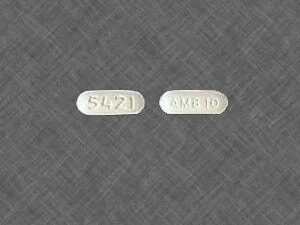
Generic Ambien 10 mg
Price range: $538.00 through $1,514.00
| Variation | Price | Quantity | Add To Cart |
|---|---|---|---|
| 360 pills | $1,514.00 |
|
Add to cart |
| 180 pills | $913.00 |
|
Add to cart |
| 90 pills | $538.00 |
|
Add to cart |
Ambien 10 mg (Zolpidem): Sleep-Onset Treatment, Dose Limits, and Morning Safety
Ambien 10 mg is an immediate-release prescription tablet containing zolpidem tartrate. It is indicated for short-term treatment of insomnia characterized by difficulty falling asleep. Ambien is a Schedule IV controlled substance. Ten milligrams is the maximum labeled total for one night, not the recommended starting dose for every adult. The current label recommends 5 mg initially for women and 5 mg or 10 mg for men, taken once immediately before bedtime with 7 to 8 hours remaining before the planned wake time.
The different starting recommendations reflect slower average zolpidem clearance in women and concern about next-morning impairment. Even when taken as prescribed, the 10 mg dose can leave some patients with blood levels high enough to impair driving and other alertness-dependent activities. A patient can feel awake and still perform poorly. That makes morning planning part of the prescription, not an optional warning.
This page supports legitimate searches such as “Ambien 10 mg prescription,” “zolpidem 10 mg patient information,” “Ambien refill online,” and “generic zolpidem licensed pharmacy.” It does not support no-prescription sales. A pharmacy should verify a valid prescription and the patient’s eligibility before dispensing.
What Immediate-Release Ambien Is Intended to Do
Immediate-release Ambien is used for short-term insomnia involving sleep initiation. It should not be confused with Ambien CR, which has an extended-release design and a different dosage range, or with middle-of-the-night zolpidem products that have their own lower strengths and instructions. A patient should never substitute one formulation for another based on the word “zolpidem.”
In clinical studies supporting Ambien, formal evaluations occurred over a short treatment period. Treatment should be as short as possible and use the lowest effective dose. If insomnia continues, the prescriber should reassess the cause and the ongoing benefit-risk balance instead of allowing a product page to imply indefinite use.
The Nightly Gate: Four Questions Before the Prescribed Dose
- Is this the exact prescribed immediate-release dose? Do not infer a dose from a previous prescription, a friend’s regimen, or tablet availability.
- Can you go directly to bed? Ambien should be taken immediately before bedtime, not while finishing chores or using screens in another room.
- Are 7 to 8 hours available? If not, next-day impairment is more likely. Do not take it earlier while staying awake.
- Was alcohol or another sleep medicine used? Do not layer sedatives. Contact the pharmacist if the evening plan has changed.
Ambien is taken as a single dose and should not be readministered during the same night. The total should not exceed 10 mg once daily. A patient who wakes at 2 a.m. should not automatically take another immediate-release tablet or add a different sleep aid.
Boxed Warning: Sleepwalking, Sleep-Driving, and Other Complex Behaviors
Zolpidem carries an FDA boxed warning for complex sleep behaviors. A person may get out of bed while not fully awake and walk, drive, cook, eat, make phone calls, have sex, take other medicines, or do other activities. They may have no memory of the event. Serious injuries and death have occurred.
Complex sleep behavior can happen after the first or a later dose, at recommended doses, with or without alcohol or another sedative. If a patient has ever experienced a complex sleep behavior after taking zolpidem, Ambien is contraindicated. If a new episode occurs, stop taking the medicine and contact the healthcare professional immediately. Obtain emergency care if driving, injury, overdose, exposure, or danger to another person is involved.
Household observations matter because the patient may not remember. A partner should report missing food, unusual messages, moved objects, unexplained injuries, or nighttime activity. Environmental safeguards can reduce harm, but they do not replace discontinuation and medical evaluation after an episode.
Why the 10 mg Dose Requires a Gender and Age Check
The current label recommends an initial dose of 5 mg for women and 5 or 10 mg for men. If 5 mg is not effective, a clinician may increase to 10 mg, recognizing the greater next-day impairment risk. For geriatric patients, the recommended dose is 5 mg regardless of sex. Patients with mild to moderate hepatic impairment also have a recommended 5 mg dose, while Ambien should be avoided in severe hepatic impairment because of encephalopathy risk.
A product listing for 10 mg should therefore not say that it is the “standard adult dose.” It is a maximum nightly amount that may be selected for some adults. The patient’s sex, age, liver function, morning duties, other medicines, and response to 5 mg are clinically relevant.
Next-Morning Impairment Can Be Invisible
Zolpidem can reduce mental alertness, coordination, reaction time, and driving performance the morning after use. The risk increases with the 10 mg dose, less than a full night available, alcohol, other CNS depressants, and medicines that raise zolpidem levels. Patients may feel fully awake and still be impaired.
Before using 10 mg, discuss commuting, commercial driving, machinery, work at heights, healthcare responsibilities, childcare, and any task in which a delayed response could injure someone. If the patient must wake early or be safety-critical, the prescriber may need to reconsider dose or treatment.
Insomnia Should Be Diagnosed, Not Merely Timed
A clinician should ask how long the problem has lasted, whether it occurs despite adequate opportunity for sleep, and how it affects the day. Insomnia may be driven by anxiety, depression, bipolar disorder, pain, reflux, menopause, thyroid disease, medication effects, alcohol, cannabis, stimulant use, restless legs syndrome, circadian disruption, or sleep apnea.
Worsening insomnia or lack of improvement after roughly 7 to 10 days may signal an unrecognized medical or psychiatric condition and should prompt reassessment. An increase beyond 10 mg is not a solution and would exceed the labeled maximum.
Bring this information to the sleep visit
- bedtime, estimated time to sleep, awakenings, final wake time, naps, and schedule changes;
- snoring, choking, witnessed apnea, restless legs, pain, reflux, hot flashes, or nightmares;
- daytime sleepiness, near-miss accidents, mood change, concentration, and work impairment;
- caffeine, nicotine, alcohol, cannabis, supplements, and recreational substances with timing;
- all sleep aids, allergy products, pain medicines, anxiety medicines, and psychiatric treatment;
- previous complex sleep behavior, falls, memory gaps, unusual reactions, or dependence.
How Zolpidem Works
Zolpidem is a GABA-A receptor positive modulator that slows central nervous system activity. It is not a benzodiazepine by chemical structure, but it shares sedating and impairment risks with other CNS depressants. It can shorten the time to sleep for an appropriate patient but does not correct every underlying cause of insomnia.
The outcome should be improved sleep initiation and better daytime function, not simply unconsciousness. A patient who falls asleep faster but has morning confusion, dangerous driving, falls, or memory loss needs reassessment.
Who Should Not Take Ambien?
Do not take Ambien if you have experienced a complex sleep behavior after zolpidem or have known hypersensitivity to zolpidem. Serious allergic reactions, including anaphylaxis and angioedema involving the tongue, glottis, or larynx, may obstruct the airway. Seek emergency care for throat or tongue swelling or breathing difficulty.
Avoid Ambien in severe hepatic impairment. Extra caution is necessary with compromised breathing, sleep apnea, depression, suicidal thinking, substance use history, older age, fall risk, pregnancy, breastfeeding, and other sedating medicines. Ambien is not recommended for children under 18.
Interactions: What Must Not Be Added Casually
Alcohol should not be used with Ambien. It can intensify sedation, memory loss, disinhibition, complex sleep behavior, and next-day impairment. Other central nervous system depressants—including benzodiazepines, opioids, other hypnotics, sedating antihistamines, muscle relaxants, antipsychotics, and some antidepressants—can produce additive effects.
Drug interactions can also change zolpidem exposure. Tell the prescriber about prescription and nonprescription products, vitamins, and herbal supplements. Do not correct a possible interaction by cutting, delaying, or doubling tablets; ask the pharmacist.
Common Side Effects and Serious Warning Signs
Drowsiness, dizziness, headache, lightheadedness, coordination problems, and gastrointestinal symptoms may occur. Memory impairment, abnormal thinking, decreased inhibition, agitation, hallucinations, worsening depression, falls, and next-day impairment require particular attention. Older patients are more vulnerable to cognitive and balance effects.
Stop and contact the prescriber after any complex sleep behavior. Seek urgent or emergency care for severe allergic swelling, breathing difficulty, inability to wake, suspected overdose, serious injury, severe confusion, or immediate suicidal risk. Do not take an extra tablet to manage agitation or a poor night.
Misuse, Dependence, Tolerance, and Rebound Sleep Problems
Ambien is controlled because it can be abused or lead to dependence. Misuse includes taking more than prescribed, using it during the day, combining it to intensify effects, or sharing it. Store it securely and report a pattern of wanting a stronger effect.
After regular use, stopping can be followed by withdrawal symptoms or rebound insomnia. The prescriber should decide whether gradual reduction is needed. A temporary poor night is not permission to restart leftover tablets or alternate between multiple sleep medicines.
Pregnancy and Breastfeeding
Tell the prescriber if pregnant, planning pregnancy, or breastfeeding. Zolpidem exposure late in pregnancy may cause newborn respiratory depression and sedation. The care team should balance maternal insomnia, other health conditions, medicine exposure, and alternatives. Do not stop a regularly used sedative without advice.
Zolpidem passes into human milk in small amounts. The prescriber and pediatric clinician should discuss treatment necessity, timing, alternative feeding or treatment options, and infant monitoring. A retail product page cannot determine individual safety.
A One-Week Effectiveness and Safety Log
Without changing the prescribed dose, record the time Ambien is taken, lights-out time, estimated sleep latency, awakenings, final wake time, total time in bed, morning alertness, unusual behavior, memory gaps, falls, and whether driving or safety-sensitive work occurs. Also record caffeine, alcohol, naps, and other sedating medicines.
The log should help the prescriber answer whether 10 mg produces enough additional benefit to justify greater morning risk. Do not turn it into a self-titration experiment.
Cognitive Behavioral Therapy for Insomnia
CBT-I addresses the patterns that keep insomnia going, including inconsistent schedules, time awake in bed, conditioned arousal, and catastrophic beliefs about sleep. It often includes stimulus control, sleep-schedule work, cognitive strategies, and relapse planning. It can provide longer-lasting benefit than relying only on a hypnotic.
Regular wake time, an appropriate wind-down period, reduction of late caffeine, treatment of sleep apnea or pain, and a dark quiet environment support care. Alcohol is not a sleep treatment and is unsafe with zolpidem. Behavioral improvement does not mean Ambien should be stopped abruptly without a plan.
How to Fill an Ambien 10 mg Prescription Online Safely
Search terms such as “Ambien 10 mg online prescription,” “zolpidem 10 mg refill,” and “generic Ambien price” can lead to illegal sellers. A legitimate transaction begins with a clinician assessment and valid prescription. It includes pharmacy verification, interaction screening, counseling, and follow-up.
Verify a U.S. online pharmacy through the relevant state board of pharmacy. Confirm that it requires a prescription, provides a verifiable U.S. address and telephone number, and makes a licensed pharmacist available. Do not use a site that guarantees 10 mg, sells without a prescription, hides the dispensing pharmacy, or offers bulk loose tablets.
Details to verify before checkout
- Immediate-release Ambien or generic zolpidem is prescribed—not Ambien CR or another formulation.
- The clinician intentionally selected 10 mg after considering the 5 mg option, sex, age, and liver function.
- The prescription says once nightly and the quantity and refill status are correct.
- The pharmacist has reviewed alcohol, opioids, benzodiazepines, sleep medicines, and morning driving.
- The price identifies brand versus generic, quantity, insurance processing, and delivery fees.
- The tablet appearance and manufacturer match the official pharmacy record.
Brand Ambien and Generic Zolpidem
Ambien is the brand; zolpidem tartrate is the active ingredient. Approved generic tablets may look different and contain different inactive ingredients. Confirm any change in color, imprint, shape, or manufacturer with the dispensing pharmacist. Do not identify an unfamiliar tablet through a marketplace image.
Compare Ambien 10 mg prescription cost and generic zolpidem 10 mg price using the same quantity and formulation. A cheaper approved generic may be appropriate. A seller that removes the prescription requirement is not a legitimate discount source.
Storage, Nighttime Error Prevention, and Disposal
Keep Ambien in the original labeled container in a locked location at the recommended storage conditions. Read the label in adequate light before taking a dose. Do not place loose sleep tablets beside other nightly medicines. Keep car keys, alcohol, and additional sedatives inaccessible after dosing.
Use an authorized medicine take-back location for unused tablets. Never share Ambien with someone who cannot sleep and do not save tablets for unsupervised future use. Follow the Medication Guide and pharmacist advice for disposal.
Frequently Asked Questions About Ambien 10 mg
Is 10 mg the standard dose for women?
No. The current immediate-release label recommends an initial dose of 5 mg for women because zolpidem is cleared more slowly on average. A clinician may make a different decision only after considering benefit and next-day risk.
Is 10 mg the standard dose for men?
The labeled initial dose for men is 5 or 10 mg. The lowest effective dose should be used, and 10 mg has more next-day impairment risk. Individual clinical review is required.
Can I take more than 10 mg if it does not work?
No. The total should not exceed 10 mg once nightly. Do not repeat it during the same night. Contact the prescriber if it is ineffective or insomnia persists.
Can I drive if I feel awake?
Feeling awake does not reliably exclude impairment. The risk is higher after 10 mg, inadequate sleep time, alcohol, or other sedatives. Follow the prescriber’s driving restriction and arrange transportation when needed.
Can I take Ambien after a late heavy meal?
Food can delay the effect. Do not compensate by taking extra medicine. Follow the pharmacy instructions and discuss meal timing with the pharmacist.
Can I use alcohol to help Ambien work?
No. Alcohol can increase dangerous sedation, memory loss, complex sleep behavior, and impairment. Do not take Ambien after drinking unless a clinician gives specific safe instructions—which typically means skipping and following the missed-night plan.
What should I do after sleep-driving?
Stop zolpidem and contact the healthcare provider immediately. Prior complex sleep behavior is a contraindication to further use. Seek emergency help for injury, collision, overdose, or danger to others.
Can I order Ambien 10 mg without a prescription?
No legitimate pharmacy should provide it that way. Zolpidem is a controlled prescription medicine. No-prescription products may be counterfeit or contain dangerous ingredients.
Why is Ambien usually short term?
The indication is short-term treatment, and ongoing insomnia needs evaluation for underlying causes. Continued use also requires reassessment of impairment, dependence, and alternatives such as CBT-I.
When is emergency care needed?
Call emergency services for breathing difficulty, inability to wake, severe allergic swelling, serious injury during a complex behavior, suspected overdose, severe confusion, or immediate self-harm risk.
Ten Milligrams Is a Ceiling, Not a Sales Feature
An accurate Ambien 10 mg page should help a patient decide whether the prescription and pharmacy process are legitimate. It should not imply that the maximum tablet provides the best sleep. Confirm formulation, sex-specific starting guidance, age, liver function, full-night availability, morning duties, interactions, and follow-up before filling.
Ten-Milligram Eligibility Review
A responsible clinician should be able to explain why 10 mg was selected instead of 5 mg. The answer may include previous response, sex-specific labeling, age, liver function, concurrent medicines, and the exact insomnia complaint. “The patient asked for the stronger tablet” is not adequate clinical reasoning.
The review should also establish that immediate-release Ambien is the intended formulation. Patients sometimes confuse Ambien, Ambien CR, sublingual zolpidem, and other sleep medicines. Each has different strengths, release characteristics, and timing instructions. Pharmacy substitution should preserve the prescribed formulation, not just the ingredient name.
Seven Situations That Change the Bedtime Decision
An early flight requires waking in five hours
Do not take bedtime Ambien when less than 7 to 8 hours remain. Taking it earlier while packing or traveling is also unsafe. Use the missed-night plan supplied by the prescriber or pharmacist.
A glass of wine was consumed at dinner
Do not combine alcohol and zolpidem. Contact the pharmacist if unsure about that night. Alcohol can increase sedation, disinhibition, memory loss, complex sleep behavior, and next-day impairment.
A child may need care during the night
A sedated caregiver may be unable to respond safely. Discuss caregiving responsibilities before treatment and arrange a fully alert adult. Do not assume an alarm or lower lighting eliminates the risk.
The tablet was taken, but sleep did not begin quickly
Do not take a second dose. A heavy meal, anxiety, timing, tolerance, or another condition may affect the experience. Remain in a safe sleep environment and report the pattern to the prescriber.
There is evidence of nighttime eating with no memory
This may be a complex sleep behavior. Stop zolpidem and contact the clinician immediately. Do not take another dose to confirm the association. Seek urgent help for injury, overdose, fire risk, or dangerous behavior.
The patient feels alert after only six hours
Subjective alertness does not guarantee safe performance. The full-night instruction and morning restriction still matter. Avoid driving or hazardous work and contact the clinician if the schedule repeatedly prevents adequate sleep opportunity.
The refill contains a different-looking tablet
Do not use an online pill identifier as the final check. Contact the dispensing pharmacist, who can compare the manufacturer, imprint, strength, and prescription record. A generic change can be legitimate, but it should be verified.
What a Sleep Partner or Household Member Should Know
Explain the signs of complex sleep behavior and next-day impairment. A household member should note wandering, cooking, calls, driving attempts, unexplained injuries, or conversations that the patient does not remember. They should keep the environment safe, prevent driving if possible without placing themselves at risk, and seek emergency help when necessary.
They should not administer another tablet, alcohol, or an over-the-counter sleep medicine. They should not assume snoring means normal sleep if the person is difficult to wake or breathing abnormally. Accurate observations can help the clinician, but immediate danger comes first.
How to Review Morning Function
Morning safety is broader than sleepiness. Ask about slowed thinking, lane drifting, delayed braking, balance, dropped objects, forgotten conversations, work errors, irritability, and reliance on large amounts of caffeine. Note whether these occurred after a 10 mg dose, less than a full night, or another sedative.
Caffeine may make a person feel more awake without fully correcting psychomotor impairment. Do not use an energy drink as permission to drive. If morning performance is unsafe, contact the prescriber before continuing the same dose.
Insomnia Care After the Short Prescription Ends
Chronic insomnia often requires treatment beyond a hypnotic. CBT-I can help recalibrate sleep opportunity, reduce conditioned arousal, address catastrophic thinking, and prevent relapse. Evaluation may identify sleep apnea, restless legs, circadian rhythm disorder, depression, anxiety, pain, reflux, menopause, or a medication effect that needs direct care.
Do not replace Ambien with multiple over-the-counter sedatives. Diphenhydramine-type products can also cause impairment and anticholinergic effects, especially in older adults. Melatonin products vary and are not a universal substitute. Ask the clinician for a diagnosis-based plan.
Questions to Ask Before an Ambien Refill
- Does immediate-release zolpidem still match the sleep-onset complaint?
- What additional benefit does 10 mg provide compared with 5 mg?
- Were all doses taken with 7 to 8 hours available?
- Did any complex sleep behavior, fall, memory gap, or next-day driving concern occur?
- Have liver function, respiratory symptoms, mood, pregnancy status, alcohol use, or medications changed?
- Is the treatment still intended to be short, and what is the discontinuation plan?
- Has CBT-I or evaluation for another sleep disorder begun?
Telehealth and Pharmacy Quality Standards
A legitimate online clinician may prescribe a controlled sleep medicine only when authorized and clinically appropriate. The service should verify identity and location, take a meaningful sleep and medication history, assess substance use and complex behavior, and provide follow-up. It should allow the clinician to say no or select 5 mg instead of 10 mg.
The pharmacy should identify the dispensing location, require the valid prescription, provide pharmacist access, and explain the exact total price. A promise of guaranteed Ambien 10 mg, no prescription, or automatic monthly shipping is a warning sign. The patient should independently verify the pharmacy license and avoid marketplace or social-media sellers.
Claims to Avoid on an Ambien Product Page
Do not promise eight uninterrupted hours, instant sleep, no morning grogginess, or safety for all adults. Do not describe 10 mg as the recommended dose for women, older adults, or liver impairment. Do not imply that taking the tablet after alcohol is acceptable if several hours have passed. Do not use “FDA approved” to imply that the website or dispensing service itself has FDA approval.
Use accurate terms such as “may help with sleep initiation when prescribed,” “maximum once-nightly dose,” “licensed pharmacy,” and “valid prescription required.” This language supports patient intent while reducing unsafe sales pressure.
Travel and Overnight-Stay Guidance
Do not use Ambien for the first time in an aircraft, train, hotel, or another unfamiliar setting. Travel can reduce available sleep time and require sudden alertness for announcements, emergencies, transfers, or immigration. Alcohol exposure and time-zone changes further complicate safe use.
Keep zolpidem in its original labeled container and check controlled-medicine rules for the destination. Do not take two doses close together to reset a schedule. Ask the pharmacist for a time-zone plan. At a hotel, locate the bathroom, secure keys and balcony access, and remove trip hazards before dosing, while recognizing that these steps do not remove complex-behavior or next-day impairment risks.
Additional Questions About Ambien 10 mg
Can a 10 mg tablet be split to make 5 mg?
Only if the exact immediate-release product is designed for splitting and the prescriber or pharmacist directs it. Not every tablet has the same score or formulation. If 5 mg is appropriate, obtaining the correct strength may reduce dosing errors.
Does more sleep time eliminate morning impairment?
A full 7 to 8 hours reduces one risk factor but does not guarantee unimpaired performance, especially at 10 mg or with interacting medicines. Follow the clinician’s driving advice and assess actual morning function.
Can Ambien be used every night?
Use it only at the frequency and duration on the prescription. The indication is short-term treatment, and ongoing use requires reassessment for benefit, dependence, adverse effects, and underlying causes.
What if a patient cannot swallow the tablet?
Do not crush or alter it without pharmacist approval. Confirm the exact formulation and ask about an appropriate alternative. Instructions for one zolpidem product do not automatically apply to another.
Can a person take an over-the-counter sleep aid on a night without Ambien?
Ask the prescriber or pharmacist. Sedating antihistamines and other products can cause next-day impairment and may overlap with residual zolpidem. Alternating drugs without a plan can obscure adverse effects.
How should a suspected counterfeit tablet be handled?
Do not take it. Keep the packaging, contact the legitimate dispensing pharmacy, and follow official reporting guidance. Do not taste or compare it with photos. Seek urgent care if an unknown tablet was taken and unusual symptoms occur.
Medical review note: Verify this educational content against the current FDA-approved Ambien labeling and the Medication Guide supplied with the dispensed product. The patient’s pharmacy label and clinician instructions control.
Before the first fill and each renewal, the patient should be able to state that immediate-release Ambien is prescribed, 10 mg is the maximum once-nightly amount, redosing during the same night is not permitted, 7 to 8 hours must remain, alcohol is avoided, and complex sleep behavior requires stopping and contacting the clinician. Repeating this teach-back is useful because sedation and memory effects can interfere with recall.
Also confirm the patient has a plan for nights when the medicine should be skipped, a safe alternative to morning driving, and a clinician contact if insomnia persists beyond the initial trial. The purpose of the prescription is safer sleep treatment, not making every night identical.
Keep the pharmacist’s number available before bedtime questions arise.
Never rely on guesswork overnight.
| Select Variation |
360 pills ,180 pills ,90 pills |
|---|