
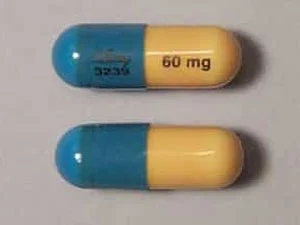
Generic Strattera 60 mg
Price range: $1,374.30 through $4,500.00
| Variation | Price | Quantity | Add To Cart |
|---|---|---|---|
| 300 pills | $4,500.00 |
|
Add to cart |
| 180 pills | $2,748.60 |
|
Add to cart |
| 240 pills | $3,664.80 |
|
Add to cart |
| 90 pills | $1,374.30 |
|
Add to cart |
Strattera 60 mg (Atomoxetine): Understanding an Intermediate ADHD Capsule Strength
Strattera 60 mg is a prescription capsule containing 60 mg of atomoxetine, a nonstimulant medicine approved for ADHD in adults and pediatric patients age 6 and older. Sixty milligrams is a marketed capsule strength, but current U.S. labeling does not identify it as the standard starting or target total daily dose for most adults. Adults and patients weighing 70 kg or more generally start at 40 mg and have a labeled target of 80 mg. Patients under 70 kg follow weight-based dosing.
A clinician may use a 60 mg capsule when it fits an individualized titration, a calculated pediatric dose, a tolerability adjustment, a combination of strengths, or a plan influenced by liver function and metabolism. The number on the capsule does not reveal why it was chosen. Patients should ask whether 60 mg is the total daily dose, one part of a divided schedule, or a temporary step.
Atomoxetine is not federally controlled and is not a stimulant, but it is prescription-only. It carries a boxed warning for suicidal ideation in children and adolescents and has important cardiovascular, liver, psychiatric, urinary, and interaction risks. A person searching to buy Strattera 60 mg online needs a valid prescription and licensed pharmacy, not a consumer-selected strength.
Three Ways a 60 mg Capsule May Appear in a Plan
- A total daily dose: the prescriber may individualize 60 mg daily because of response and tolerability.
- A component: 60 mg may be combined with another strength to produce a prescribed total.
- A titration step: the clinician may use 60 mg while moving from one total dose to another.
These are examples, not instructions. Never combine a 60 mg capsule with leftover 10, 18, 25, 40, 80, or 100 mg capsules without a current written prescription. A dosing error can occur when the capsule strength is mistaken for the total daily amount.
Labeled Dosing Context
For children and adolescents weighing under 70 kg, the labeled initial total daily dose is about 0.5 mg/kg and the target is about 1.2 mg/kg after at least three days. The maximum is 1.4 mg/kg or 100 mg, whichever is less. The clinician translates the weight-based amount into available capsule strengths.
For adults and patients 70 kg or more, the labeled initial total is 40 mg per day and the target is 80 mg after a minimum of three days. If response remains suboptimal after an additional 2 to 4 weeks, the total may be increased to a maximum of 100 mg.
Strong CYP2D6 inhibition or known poor-metabolizer status slows the labeled escalation. Moderate and severe hepatic impairment can require dose reduction. Those factors can explain an individualized total but do not allow patients to design one.
Confirm These Details Before the First 60 mg Dose
- Is 60 mg the total amount for the whole day?
- Is the medicine taken once in the morning or divided?
- If another capsule is used, what strength and at what time?
- Is 60 mg intended for a set number of days before reassessment?
- What is the patient’s current weight if under 70 kg?
- Are fluoxetine, paroxetine, quinidine, or other CYP2D6 inhibitors present?
- Has liver impairment been considered?
- What pulse, blood-pressure, mood, appetite, weight, and adverse-effect monitoring is planned?
If the product page, shopping cart, and prescription do not match, stop before checkout. Contact the pharmacist rather than deciding that “close enough” is acceptable.
How Atomoxetine Treats ADHD
Atomoxetine selectively inhibits the presynaptic norepinephrine transporter. The exact therapeutic pathway is not fully defined, but increased noradrenergic signaling is associated with reduced inattention, hyperactivity, and impulsivity.
Benefit usually develops gradually. Patients may not feel an immediate switch after taking 60 mg. Evaluate real-world function over the prescriber’s chosen period: completing tasks, managing transitions, driving safely, following conversations, reducing impulsive errors, and organizing work or school.
Medication may be used with psychological, educational, social, coaching, or behavioral measures. A higher capsule strength does not replace skill-building or accommodations.
How to Take Strattera 60 mg
Take exactly as written, with or without food. The total may be given once in the morning or divided into morning and late-afternoon/early-evening doses. The label on the patient’s bottle controls the schedule.
Swallow the capsule whole. Do not open, crush, chew, dissolve, or sprinkle it. Atomoxetine powder is an ocular irritant. If powder gets into an eye, rinse with water immediately and obtain medical advice; wash hands and contaminated surfaces.
For a missed dose, follow the pharmacy instructions and do not exceed the prescribed amount in 24 hours. Do not double. Although labeling allows discontinuation without tapering, coordinate stops and restarts so symptom return and adverse effects can be interpreted.
Boxed Warning: Suicidal Ideation
Short-term pediatric studies found an increased risk of suicidal ideation with atomoxetine. Children, adolescents, families, and caregivers should monitor closely, especially at the beginning and after any dose change.
Report new hopelessness, self-harm talk, preoccupation with death, severe irritability, agitation, panic, insomnia, aggression, withdrawal, impulsive danger, or an abrupt behavior change. Seek emergency help for a plan, intent, attempt, psychosis, or inability to remain safe.
Adults should also report suicidal thoughts and major mood change. The boxed warning population does not mean other patients require no monitoring.
Bipolar, Psychotic, and Aggressive Symptoms
Screen for bipolar disorder before treatment. Atomoxetine can be associated with new manic or psychotic symptoms. Reduced need for sleep, racing thoughts, elevated or markedly irritable mood, rapid speech, grandiosity, hallucinations, delusional ideas, or dangerous activity needs prompt assessment.
Monitor new hostility or aggression. Note the relationship to dose changes and stress, but do not delay care while trying to prove the cause.
Cardiovascular Monitoring at 60 mg
Atomoxetine can increase blood pressure and heart rate. Measure both before treatment, after dose changes, and periodically. Personal and family history should cover structural heart disease, cardiomyopathy, rhythm disorders, hypertension, fainting, exertional chest pain, stroke, unexplained seizures, and sudden death at a young age.
The drug is contraindicated in severe cardiovascular disorders that would be expected to deteriorate with clinically important increases in pressure or pulse. Obtain urgent care for chest pain, fainting, severe shortness of breath, sustained palpitations, one-sided weakness, or speech difficulty.
Dizziness, orthostatic symptoms, and syncope can occur. Do not drive or climb until the individual response is known.
MAOIs and Other Contraindications
Do not use atomoxetine with an MAOI or within the required washout period. It is also contraindicated with narrow-angle glaucoma, pheochromocytoma or a history of it, hypersensitivity, and severe cardiac or vascular disorders that could worsen with heart-rate or blood-pressure increases.
A telehealth form should flag these for clinician review. A 60 mg or lower amount does not remove a contraindication.
CYP2D6 and Why Exposure Can Differ
CYP2D6 metabolizes atomoxetine. Poor metabolizers can have much higher exposure than normal metabolizers. Strong inhibitors such as fluoxetine, paroxetine, and quinidine can produce a similar effect. A dose that looks moderate on paper may act like a higher exposure in one patient.
Tell the prescriber when these medicines start or stop. Do not alternate 40 and 60 mg capsules to compensate. The clinician should create a new plan.
Liver Injury and Hepatic Adjustment
Rare severe liver injury has occurred. Stop and obtain prompt medical advice for dark urine, yellow skin or eyes, itching, right-upper abdominal pain, or unexplained flu-like symptoms. The clinician may check liver tests and should not restart atomoxetine after drug-related liver injury.
Moderate hepatic impairment may require reducing the normal target and starting doses to half, while severe impairment may require one-quarter, according to labeling. The prescriber translates this into available strengths; patients must not open capsules to approximate a fraction.
Appetite, Weight, and Growth
Reduced appetite, nausea, vomiting, abdominal pain, fatigue, and weight loss can occur. Pediatric growth should be monitored over time. Adults should also report meaningful or unintended weight change.
Use regular meals and discuss whether food timing improves nausea. Do not add appetite medicines or high-dose supplements without review. Persistent vomiting, dehydration, or weight loss requires care.
Sexual and Urinary Effects
Adults may experience decreased libido, erectile or ejaculation problems, urinary hesitation, or retention. Report symptoms; do not skip doses around sexual activity. Acute inability to urinate needs urgent care.
Priapism—an erection lasting more than four hours—requires emergency treatment, whether painful or not. It can occur in pediatric or adult patients.
Other Common Side Effects
Possible effects include dry mouth, constipation, dizziness, sweating, tiredness, headache, sleepiness, insomnia, mood change, nausea, and stomach discomfort. Response varies by age and exposure. Record severity, timing, and effect on function.
Do not use alcohol, cannabis, sedatives, or unreviewed nonprescription products to counteract side effects. Cold and weight-loss products can also affect heart rate and blood pressure.
Pregnancy and Breastfeeding
Discuss pregnancy, plans for pregnancy, and breastfeeding. Decisions consider ADHD severity, safety-sensitive functioning, prior response, alternatives, and available fetal or infant data. Do not stop or restart based only on product-page advice.
Evaluating 60 mg Benefit Without Dose Bias
Patients may assume that a larger number must work better. Instead, compare defined outcomes and harms. Useful targets include fewer missed tasks, improved sustained attention, reduced interruptions, safer driving, better homework completion, and more consistent routines.
At follow-up, review blood pressure, pulse, appetite, weight, sleep, mood, suicidality, urination, sexual effects, adherence, and interacting medicines. If benefit is partial, the clinician considers time, diagnosis, behavioral treatment, exposure, tolerability, and alternatives—not only an increase.
Buying Strattera 60 mg Online Safely
Transactional keyword searches include “buy Strattera 60 mg online,” “order atomoxetine 60 mg,” “Strattera 60 mg price,” “generic atomoxetine 60 mg delivery,” and “online nonstimulant ADHD prescription.” A safe transaction requires a valid prescription and regulated dispensing.
Verify that:
- the clinician is licensed for the patient’s location and performs an adequate ADHD assessment;
- the prescription explains whether 60 mg is the total, a component, or titration step;
- suicide risk, bipolar disorder, cardiovascular history, pulse, blood pressure, liver health, contraindications, and interactions are reviewed;
- the pharmacy is licensed and offers pharmacist access;
- the listing states brand or generic, 60 mg strength, count, manufacturer, and total price;
- the shipment has a sealed patient label and Medication Guide; and
- follow-up occurs before automatic dose escalation or large refills.
Avoid no-prescription products, guaranteed ADHD approval, bulk capsules, no pharmacist, and sellers that advise combining strengths through chat.
Brand Strattera Versus Generic Atomoxetine 60 mg
An approved generic contains the same active ingredient and strength and meets applicable quality and bioequivalence requirements. Appearance, imprint, inactive ingredients, manufacturer, packaging, and price may differ.
Verify any changed capsule with the pharmacist. Never open it to compare powder.
Strattera 60 mg Price and Insurance
Price varies by brand or generic, quantity, pharmacy, insurance formulary, deductible, coupon, consultation, and shipping. Compare the same 60 mg product and count. Ask whether prior authorization, generic use, step therapy, or preferred mail order applies.
Avoid a long automatic supply when 60 mg is a titration step. If the prescription changes, contact the pharmacy before the next shipment.
Delivery Verification
Check patient name, atomoxetine or Strattera, 60 mg strength, exact directions, quantity, prescriber, pharmacy, manufacturer or imprint, and expiration or beyond-use date. Confirm whether another capsule strength is part of the plan.
Do not use mixed, broken, loose, or incompletely labeled capsules. Contact the pharmacist and keep the package for investigation.
Storage and Disposal
Store in the original closed container under labeled conditions, away from heat and moisture. Keep out of reach of children and do not share. Use a medication take-back program for discontinued or outdated capsules.
Capsule Strength Versus Total Daily Dose: Worked Safety Examples
A prescription can be misunderstood even when every number is mathematically correct. “Atomoxetine 60 mg capsule” describes one unit. “Take 60 mg daily” describes a total. “Take 60 mg each morning and 20 mg later” describes an 80 mg total, but 20 mg is not among the standard U.S. Strattera capsule strengths, so such directions would require formulation clarification. “Take one 60 mg plus one 40 mg” describes 100 mg total.
These examples are not recommended regimens; they show why the pharmacy label must list exact capsules and timing. A patient should never infer a combination from the adult target or maximum. If an electronic portal displays only the 60 mg product and hides the rest of the directions, open the full prescription or call the pharmacist.
At home, write the total daily milligrams on the medication list and keep each capsule strength in its original bottle. Do not pour 40 and 60 mg capsules together. Color is not a reliable safeguard because generic manufacturers differ.
When 60 mg Is Used in a Patient Under 70 kg
A 60 mg total can be near the labeled maximum for some lower-weight patients and above it for others. The maximum is 1.4 mg/kg or 100 mg, whichever is less. That makes an accurate, current weight essential. A dose that once fit may need review after weight loss, illness, appetite suppression, or a major growth change.
The prescriber should show the caregiver the calculated total and the maximum, then translate it into capsules. Families should not repeat the calculation from memory or round upward because 60 mg is convenient. Growth, appetite, pulse, blood pressure, mood, and school/home response need monitoring.
If a child cannot swallow the 60 mg capsule, do not open it. Ask about an appropriate alternative formulation or treatment.
Understanding the CYP2D6 Decision
Two patients taking the same 60 mg can have very different exposure. CYP2D6 poor metabolizers process atomoxetine more slowly. Strong inhibitors such as fluoxetine, paroxetine, and quinidine can make a normal metabolizer function more like a poor metabolizer for this pathway.
A prescriber may know poor-metabolizer status from pharmacogenetic testing, but testing is not required for every patient. Clinical clues such as unusually strong effects at lower doses may prompt review, yet symptoms alone cannot diagnose genotype. Do not order direct-to-consumer testing and change the dose without professional interpretation.
When an inhibitor is stopped, exposure can fall over time. The answer is not to add another capsule immediately. Coordinate changes between the mental-health clinician, primary-care clinician, and pharmacist.
An Eight-Week Evaluation Timeline
Week 0: establish target symptoms, blood pressure, pulse, weight, growth if pediatric, mood and suicide safety, cardiac and liver history, current medicines, and the role of 60 mg.
Week 1: review nausea, appetite, dizziness, sleep, urinary symptoms, mood, and adherence. Confirm that the capsule is swallowed whole and that no duplicate strengths are being used.
Weeks 2 to 4: look for changes in task initiation, sustained attention, impulsivity, organization, driving, and school or work function. Check vital signs after dose changes as directed. Ask directly about self-harm and possible mania.
Weeks 4 to 8: decide whether benefit is continuing to build, has plateaued, or is absent. Review CYP2D6 inhibitors, missed doses, behavioral supports, sleep, substances, and alternative diagnoses. A capsule-number change should follow this assessment, not a retail suggestion.
Comparing Atomoxetine With Stimulant Treatment
Atomoxetine and stimulants differ in mechanism, controlled status, time course, side effects, and misuse potential. Atomoxetine’s noncontrolled status may be useful in some situations, but it does not guarantee better tolerability or effectiveness for a particular patient. Stimulants may act more quickly but have their own cardiovascular, appetite, sleep, psychiatric, and misuse concerns.
A patient should not combine an old stimulant with 60 mg atomoxetine to obtain immediate benefit. Switching or combination treatment requires a prescriber who reviews blood pressure, pulse, sleep, appetite, mood, and substance-use risk. Return unused controlled stimulants through an approved process.
Online Consultation Questions Specific to 60 mg
Ask the clinician:
- Why does 60 mg fit better than the labeled 40 mg adult start or 80 mg target?
- Is this a temporary step or an intended maintenance total?
- Does current weight affect the choice?
- Do liver function or CYP2D6 medicines change exposure?
- When will pulse, blood pressure, mood, weight, and response be reassessed?
- If another strength is combined, can the exact schedule be sent in writing?
- What happens to unused capsules after the plan changes?
A service that cannot answer these questions should not sell a 60 mg refill. The clinician and pharmacy must share the same active directions.
Work, School, and Functional Measurement
For an adult, define outcomes such as fewer missed invoices, improved follow-through on meetings, safer driving, reduced impulsive messages, or better household planning. For a student, consider assignment completion, sustained participation, transition behavior, and home routines. Measure across several weeks and settings.
Do not treat emotional flatness, excessive quietness, or loss of spontaneity as the desired result. The goal is improved self-regulation and attention with acceptable quality of life. Report personality change, severe fatigue, withdrawal, or sadness.
School staff should receive only the information needed and should use the original labeled container if administering medicine. A dose log prevents duplication at home.
Overdose and Unknown-Capsule Events
If an extra 60 mg capsule, an unknown number, or a mixed-strength combination is taken, contact poison control or emergency medical services immediately for case-specific advice. Do not wait for symptoms or induce vomiting. Provide age, weight, all capsule strengths, number missing, time, other medicines, and symptoms.
Possible overdose findings can include sleepiness, agitation, abnormal behavior, gastrointestinal symptoms, increased heart rate, blood-pressure changes, dilated pupils, or other neurologic and cardiovascular effects. Severe symptoms, seizure, collapse, chest pain, or inability to awaken normally require emergency care.
Keep the bottles for identification. For a child, lock all strengths separately after the event and ask the pharmacist to reconcile the remaining counts.
Caregiver and Partner Observation
Another person may notice changes the patient misses: reduced appetite, pacing, irritability, less sleep with more energy, social withdrawal, urinary difficulty, or improved follow-through. With consent, invite concise observations at follow-up. The observer should not secretly adjust the dose.
Ask directly about suicidal thoughts rather than relying only on outward appearance. In immediate danger, call emergency services. In nonemergency concerns, contact the prescriber promptly and document the timing relative to the 60 mg change.
Refill Transitions and Pharmacy Synchronization
When 60 mg replaces 40 mg, an old 40 mg prescription may remain active at another pharmacy or in auto-refill. Cancel or pause outdated orders with professional guidance. When 60 mg is later replaced by 80 mg, do the same. Duplicate active prescriptions increase accidental combination risk.
Do not use two leftover strengths to approximate a new total unless the prescriber and pharmacist explicitly write that plan. The expiration date, manufacturer, and remaining quantity should be reviewed. Use take-back disposal after the clinician confirms the old capsules are no longer needed.
Travel With an Intermediate Strength
Keep 60 mg capsules in the original patient-labeled bottle and carry a current medication list showing total daily dose. Time-zone changes can compress dosing intervals, especially with divided plans. Ask the pharmacist how to adjust without exceeding the 24-hour total.
Do not carry mixed loose capsules. Before international travel, check entry rules and bring prescriber documentation if required. Never mail atomoxetine to yourself through an unverified forwarding service.
Why “Noncontrolled” Still Requires Secure Storage
Atomoxetine is not scheduled, but an unintended dose can harm a child, and sharing prescription medicine is unsafe. Lock it away from young children, visitors, and anyone who may confuse it with another capsule. Do not store it beside candy, vitamins, or pet medicine.
Secure storage also preserves dose accuracy. A mixed bottle or missing capsule can make it impossible to determine whether 60 mg or another strength was taken.
Frequently Asked Questions About Strattera 60 mg
Is 60 mg a standard adult starting dose?
No. The labeled adult and 70 kg-or-more starting dose is 40 mg. A clinician may individualize 60 mg later.
Is 60 mg the standard adult target?
The labeled target is 80 mg for adults and patients 70 kg or more. Sixty milligrams may still be selected for individual reasons.
Can a child be prescribed 60 mg?
Patients under 70 kg use weight-based dosing. A prescriber may use 60 mg only when it fits the calculated and monitored plan.
Can I combine 60 mg with another capsule?
Only when the current prescription states the exact combination and timing.
Can the capsule be opened to make a smaller dose?
No. Swallow whole. The powder is an ocular irritant.
How long does atomoxetine take to work?
Benefit may build gradually over several weeks. Do not judge from one dose.
Does Strattera 60 mg raise blood pressure?
Atomoxetine can increase blood pressure and pulse. Monitor as directed.
Can it be taken with fluoxetine?
Fluoxetine strongly inhibits CYP2D6 and can raise atomoxetine exposure. The prescriber must adjust and monitor the plan.
Can I buy Strattera 60 mg without a prescription?
No legitimate pharmacy should dispense it without a valid prescription.
What if I accidentally take another strength too?
Contact poison control, the pharmacist, or a clinician immediately and do not wait for symptoms. Call emergency services for severe symptoms.
What liver symptoms are urgent?
Dark urine, jaundice, itching, or right-upper abdominal pain requires prompt medical review.
Can it cause suicidal thoughts?
Atomoxetine carries a boxed warning for suicidal ideation in children and adolescents. Monitor and act promptly.
What is priapism?
An erection lasting more than four hours; it requires emergency treatment.
Is generic atomoxetine equivalent?
An approved generic has the same active drug and strength and meets applicable standards.
Can Strattera be stopped without tapering?
The label permits discontinuation without tapering, but coordinate the decision with the prescriber.
Patient Summary
Strattera 60 mg is a legitimate capsule strength, but it is not the universal adult start or target. Its safest use begins by clarifying whether it is a total daily dose, combination component, or titration step. Metabolism, interacting antidepressants, liver function, weight, response, and side effects all influence the plan.
When ordering atomoxetine 60 mg online, use a licensed prescriber and pharmacy, verify the exact schedule and brand or generic product, avoid automatic long supplies during titration, and inspect the delivered label. Never open capsules or combine strengths on your own.
Before every refill, use a three-line reconciliation: “My capsule strength is ___ mg. My total daily dose is ___ mg. I take it at ___.” Ask the patient, caregiver, prescriber record, and pharmacy label to agree. If any answer differs, the pharmacist should pause dispensing and contact the prescriber. This simple process is particularly valuable for 60 mg because it often appears between more familiar adult milestones.
Keep the treatment decision anchored to benefit and safety rather than capsule size. Document functional gains, pulse, blood pressure, appetite, weight, sleep, mood, urinary or sexual effects, and new medicines. A change to 80 or 100 mg should never occur because a search result describes them as “stronger.” Conversely, remaining at 60 mg can be reasonable only when the prescriber has assessed whether that individualized exposure is effective and tolerable.
Online convenience is useful for follow-up and delivery, but the store must not become the titration tool. The clinical record should lead; the cart should reproduce it exactly.
If 60 mg appears on an old after-visit summary but a newer message mentions 80 mg, do not choose between them by date alone. Ask the clinic to issue one final active instruction and ask the pharmacy to cancel the superseded order. Save that confirmation with the medication list. This protects against portal delays and duplicate prescriber records. When several clinicians are involved, designate one clinician to own atomoxetine dosing and ensure the others receive updates. Fragmented prescribing is a common source of strength confusion.
At home, attach the current directions to the bottle rather than a separate unmarked note. If a caregiver cannot explain the schedule in plain language, the dose should be clarified before it is given. Precision is more important than staying on the planned titration calendar.
Medical Disclaimer
This content is educational and does not diagnose ADHD, recommend atomoxetine, establish a dose, or replace current prescribing information, the Medication Guide, the prescription label, or advice from licensed clinicians and pharmacists. Seek emergency help for immediate self-harm risk, severe cardiovascular symptoms, seizure, severe allergy, priapism, or suspected overdose.
Authoritative References
| Select Variation |
300 pills ,180 pills ,240 pills ,90 pills |
|---|