


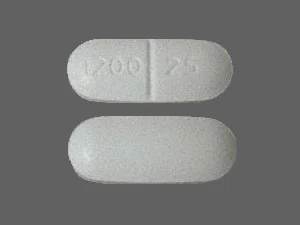
Generic Gabapentin 1200 mg
Price range: $231.00 through $337.00
| Variation | Price | Quantity | Add To Cart |
|---|---|---|---|
| 90 pills | $231.00 |
|
Add to cart |
| 300 pills | $337.00 |
|
Add to cart |
| 180 pills | $297.00 |
|
Add to cart |
| 240 pills | $306.00 |
|
Add to cart |
Gabapentin 1200 mg: understand the daily-dose description before ordering
Important product clarification: In the United States, “Gabapentin 1200 mg” usually describes a prescribed total amount over a day, not one standard immediate-release 1200 mg tablet or capsule. Common immediate-release strengths include 100 mg, 300 mg, and 400 mg capsules and 600 mg and 800 mg tablets, with some additional products from specific manufacturers. A page labelled Gabapentin 1200 mg should therefore not promise a single 1200 mg pill unless the exact lawfully marketed product and formulation can be verified.
This distinction matters for patient safety and purchasing accuracy. A total daily amount can be assembled using different strength combinations and schedules, but only a prescriber should select the regimen and only a pharmacist should translate it into the tablets or capsules dispensed. A patient should never use arithmetic from a product page to create a 1200 mg schedule.
If you searched “buy Gabapentin 1200 mg online,” “Gabapentin 1200 mg a day,” or “Gabapentin 1200 mg price,” first determine what the prescription actually says. The correct transaction may involve 300 mg capsules, 400 mg capsules, 600 mg tablets, or another authorized product—not a bottle marked “1200 mg tablets.”
Three different meanings that must not be confused
| Phrase | What it means | Why it matters |
|---|---|---|
| 1200 mg per tablet | The amount in one tablet | This is not a standard immediate-release U.S. gabapentin strength described in the conventional label. |
| 1200 mg per dose | The amount taken at one scheduled time | This is not the same as a full-day amount and could carry substantial sedation risk; it must never be inferred. |
| 1200 mg per day | The total amount across all prescribed doses in 24 hours | This is the meaning commonly encountered in studies and clinical discussions, but the exact schedule remains patient specific. |
Online listings sometimes omit “per day,” turning a regimen description into what looks like a product strength. That can lead to duplicate dosing or purchase of an unverified product. Before fulfillment, the pharmacy should reconcile the medicine name, formulation, unit strength, number of units per dose, frequency, and total daily amount.
What immediate-release gabapentin is approved to treat
Gabapentin is an anticonvulsant. U.S. immediate-release labelling includes management of postherpetic neuralgia in adults and adjunctive treatment of partial-onset seizures, with or without secondary generalization, in adults and pediatric patients aged 3 years and older. It is not an opioid and is not a routine treatment for every form of acute or inflammatory pain.
Clinicians may prescribe gabapentin off label for selected conditions. The phrase “off label” means that the use is outside the FDA-approved indication for that formulation, not that the medicine can be selected without an evaluation. Evidence and recommended approaches differ among diabetic neuropathic pain, other neuropathies, fibromyalgia, anxiety, sleep complaints, hot flashes, and other uses frequently promoted online.
A product page should state the limitations plainly. Gabapentin does not regenerate nerves, cure epilepsy, remove the cause of shingles, or guarantee pain-free sleep. Treatment should have a defined clinical goal and follow-up plan.
How a 1200 mg daily amount may appear in clinical information
Research papers and prescribing discussions often report total daily amounts. For example, a study may say participants received 1200 mg/day in divided doses. That wording does not establish a standard retail “Gabapentin 1200 mg tablet,” and it does not tell an individual reader to use the same regimen.
Current immediate-release prescribing information contains clinician-directed dosing frameworks for approved indications and explains that renal impairment requires adjustment. For partial-onset seizures in patients aged 12 and older, the label discusses divided dosing and a maximum interval between doses. For postherpetic neuralgia, the label describes gradual initiation and subsequent titration. Pediatric dosing is weight based.
The pharmacy may use a combination of authorized strengths to fill a valid 1200 mg/day prescription. The choice affects pill burden, tablet splitting, insurance processing, manufacturer availability, and clarity of directions. Let the prescriber and pharmacist make and document that selection.
Do not convert “1200 mg daily” into your own schedule
A total daily amount alone is incomplete. It does not say whether the medicine is immediate release or extended release, when doses should occur, how rapidly treatment was titrated, what to do after a missed dose, or whether kidney adjustment applies. Rearranging the same total into fewer, larger doses can change peak effects, tolerability, and the gap between doses.
Do not assume that 1200 mg once at night is equivalent to a divided 1200 mg/day regimen. Do not combine several capsules before sleep because drowsiness seems convenient. Do not copy a schedule from a forum, clinical trial, friend, or prior prescription. If the directions are absent or ambiguous, the pharmacy must clarify them with the prescriber before dispensing.
Why this page should not use a conventional “Buy 1200 mg pills” claim
Healthcare product pages have a duty to identify what is actually being sold. Advertising a standard “Gabapentin 1200 mg tablet” without a verified product can mislead search users and undermine trust. It also creates a medication-error risk if a patient interprets “1200 mg” as the amount in each unit.
A medically accurate transactional pathway uses language such as “fill a prescription for a 1200 mg/day gabapentin regimen” or “verify the prescribed gabapentin strengths used for a 1200 mg total daily amount.” It should require a valid prescription, confirm the component strengths, and make a pharmacist available.
If the existing WooCommerce listing has an inventory item called “Gabapentin 1200 mg,” the product title, variation, price, stock keeping unit, package image, and label claim should be reviewed by a licensed U.S. pharmacist before sales are enabled.
Prescription translation checklist
Ask the pharmacy to state the following in plain language:
- The exact generic or brand product and whether it is immediate release, extended release, or gabapentin enacarbil.
- The milligrams in each tablet or capsule being dispensed.
- The number of tablets or capsules at each scheduled time.
- The number of scheduled times per day.
- The resulting total amount per 24 hours.
- Any planned titration, temporary step, or taper and its start and end dates.
- The authorized quantity and days’ supply.
These fields should agree. If the calculated days’ supply does not match the quantity, or if the portal’s directions differ from the bottle, do not decide which is correct. Ask the pharmacist to contact the prescriber and document the resolved order.
Kidney function can make 1200 mg/day inappropriate for some patients
Gabapentin is excreted largely unchanged by the kidneys. In renal impairment its clearance decreases and half-life can increase markedly, which means repeated doses may accumulate. The U.S. label recommends dosage adjustment for reduced creatinine clearance and for patients receiving hemodialysis.
A total daily amount used by someone with normal kidney function may be excessive for another person. Older adults are more likely to have reduced renal clearance, and acute illness, dehydration, or kidney injury can change a previously stable situation. Do not rely on an old prescription or an online dose chart after kidney health changes.
Tell the clinician about kidney disease, dialysis, recent laboratory results, and any new severe drowsiness, confusion, tremor, slurred speech, double vision, or loss of coordination. These symptoms need assessment rather than an automatic refill.
Respiratory depression: review every sedating medicine
The FDA warns of serious breathing difficulties with gabapentin in patients who have respiratory risk factors. Important factors include use of opioid pain medicines or other central nervous system depressants, underlying lung impairment, and older age. Postmarketing reports include life-threatening and fatal respiratory depression.
Tell every prescriber and the dispensing pharmacist about morphine, oxycodone, hydrocodone, codeine, tramadol, methadone, buprenorphine, opioid cough medicine, benzodiazepines, sleeping tablets, muscle relaxants, sedating antihistamines, alcohol, cannabis, and other substances. A medicine taken only occasionally still counts.
Call emergency services for slowed, shallow, difficult, or irregular breathing; blue-gray lips or skin; extreme sleepiness; confusion; unresponsiveness; or inability to wake. Do not wait for symptoms to become dramatic and do not leave the person alone.
Common adverse effects at prescribed doses
Dizziness, somnolence, and peripheral edema are among common adverse reactions reported in adults treated for postherpetic neuralgia. In adjunctive epilepsy treatment, somnolence, dizziness, ataxia, fatigue, and nystagmus have been reported. Nausea, visual disturbance, and concentration problems may also occur.
Side-effect risk cannot be predicted solely from “1200 mg/day.” A person who has just titrated upward, has reduced kidney clearance, is older, or takes other sedatives may be more affected. Do not drive, operate machinery, work at height, or perform other hazardous tasks until you know the effect and your clinician agrees the activity is safe.
Report swelling, repeated falls, problematic daytime sleepiness, vision changes, or poor coordination. The appropriate response might be monitoring, timing adjustment, slower titration, dose change, treatment change, or evaluation for another cause; patients should not decide alone.
Severe reactions that should interrupt routine use
Gabapentin can cause anaphylaxis or angioedema after the first dose or later. Swelling of the lips, tongue, throat, or face; difficulty breathing or swallowing; widespread hives; faintness; or collapse requires emergency care.
DRESS, also called multiorgan hypersensitivity, can be fatal or life threatening. Warning features can include fever, swollen lymph nodes, rash, facial swelling, hepatitis, kidney inflammation, blood abnormalities, heart inflammation, or muscle symptoms. Fever or lymph-node swelling may occur before a visible rash. Seek immediate medical evaluation.
Severe or spreading skin symptoms, blistering, or mouth and eye involvement also need urgent assessment. Do not continue the regimen while relying on an online symptom checker.
Suicidal thoughts and unusual behavior changes
Antiepileptic drugs, including gabapentin, increase the risk of suicidal thoughts or behavior in a small proportion of patients. Patients, caregivers, and families should monitor for new or worsening depression, anxiety, agitation, hostility, impulsivity, panic, insomnia, mania-like behavior, withdrawal from others, or thoughts of self-harm.
Report concerning changes promptly. If there is immediate danger, contact emergency or crisis support and ensure the person is not left alone. Do not abruptly discontinue gabapentin without professional direction unless emergency clinicians instruct otherwise; sudden stopping can create withdrawal and seizure risks.
Withdrawal and the danger of an interrupted online refill
Gabapentin can produce withdrawal symptoms after abrupt discontinuation, particularly after repeated or higher-than-recommended use. Reported symptoms include anxiety, insomnia, nausea, pain, sweating, agitation, confusion, and disorientation. People with epilepsy may experience increased seizure frequency or status epilepticus risk.
The U.S. prescribing information advises reducing, discontinuing, or substituting gabapentin gradually over at least one week, with a longer clinician-directed period when needed. A 1200 mg daily regimen may require multiple strengths during tapering. Do not improvise by skipping days, cutting unscored capsules, or taking all remaining medicine at once.
Order refills with enough time for prescription verification, insurer processing, and delivery. If interruption is likely, contact both the pharmacy and prescriber before the supply runs out.
Missed dose guidance must match the actual schedule
General patient information for immediate-release gabapentin advises taking a missed dose when remembered unless it is almost time for the next dose, in which case the missed dose is skipped. A double dose should not be taken. However, “almost time” depends on the prescribed schedule, and epilepsy care may require specific advice.
Because 1200 mg describes a total rather than a standard unit, never take “the remaining amount for the day” to catch up. Ask a pharmacist what to do under the exact tablet strength and timing written on your label.
Antacid and formulation interactions
Antacids containing aluminum and magnesium can reduce gabapentin absorption. U.S. labelling recommends taking gabapentin at least two hours after such an antacid. Provide the pharmacist with the exact heartburn product because combination ingredients vary.
Immediate-release gabapentin must not be freely substituted with Gralise, Horizant, or another extended-release or prodrug formulation. Food and timing instructions differ among products. “1200 mg of gabapentin” in one formulation is not automatically equivalent to “1200 mg” of another.
The pharmacy should identify the full product name on the checkout page and container, not only the active-ingredient family.
Pregnancy, breastfeeding, and reproductive planning
Tell the prescriber about pregnancy, plans to become pregnant, and breastfeeding. Human pregnancy data are limited, and labelling discusses developmental toxicity observed in animal studies at certain exposures. The risk of treatment must be balanced against the risk of uncontrolled seizures or the untreated condition.
Do not abruptly stop a 1200 mg/day regimen after a positive pregnancy test. Contact the prescribing clinician and prenatal team. The North American Antiepileptic Drug Pregnancy Registry collects information about pregnancy outcomes after exposure to antiepileptic medicines.
Gabapentin can pass into human milk. The decision to continue treatment while breastfeeding and the need to monitor an infant require individualized professional guidance.
Online pharmacy standards for a 1200 mg/day prescription
A safer online pharmacy should require a valid prescription, hold appropriate state licensure, provide a physical U.S. address and phone number, and offer access to a licensed pharmacist. The FDA warns consumers about sites that sell prescription medicines without a prescription, are not licensed, hide pharmacist access, or offer prices that seem too good to be true.
For a 1200 mg/day order, the pharmacy should also:
- Clarify that 1200 mg is the total daily amount if that is what the prescriber intended.
- List the actual strength and quantity of tablets or capsules being shipped.
- Calculate an accurate days’ supply from the complete directions.
- Screen for duplicate gabapentin products and interacting sedatives.
- Explain any manufacturer, formulation, or strength substitution before dispatch.
- Provide a Medication Guide and patient-specific label.
How to compare the price of a 1200 mg/day regimen
There is no meaningful single “Gabapentin 1200 mg tablet price” comparison when no standard single immediate-release product is being offered. Compare the actual prescribed component strength, quantity, manufacturer if relevant, and days’ supply. A quote for 300 mg capsules can differ from one for 600 mg tablets even when both could theoretically contribute to the same daily total.
Ask whether the price uses insurance or a cash discount, whether it counts toward the deductible, and whether delivery and dispensing charges are included. Confirm that the selected quantity covers the authorized period without excess or shortage.
Do not accept a loose, compounded, imported, or relabelled “1200 mg pill” without explicit prescriber authorization, clear pharmacy documentation, and verification that the product is lawfully dispensed. A very low price does not compensate for uncertainty about identity or potency.
State law can affect online dispensing
Gabapentin is a prescription drug. It is not federally scheduled under current U.S. product labelling, but some states regulate or monitor it more strictly. State requirements can affect prescription monitoring, refills, transfers, identification, days’ supply, and shipment.
A pharmacy must be permitted to dispense into the patient’s state. Do not use a forwarding address or conceal location to bypass restrictions. If the order cannot be shipped, ask the prescriber to send the prescription to a properly licensed local or mail-order pharmacy.
When a 1200 mg daily plan changes
A change in total daily amount should generate a new, complete set of directions. Avoid shorthand such as “increase to 1200” because it may not state which dose changes, when the new schedule begins, or whether an old strength should be stopped. Ask the prescriber to send a clarified electronic prescription and ask the pharmacy to deactivate obsolete orders.
During titration, keep a dated schedule that lists morning, afternoon, and evening units in separate columns if those are the prescribed times. Record the actual strength, not simply “one pill.” When the adjustment is complete, remove the temporary plan so it cannot be reused later. Never alternate old and new directions based on daily symptoms unless the prescription explicitly provides that option.
If the change follows kidney injury, hospitalization, opioid initiation, or severe side effects, arrange closer follow-up. The reason for the change can matter as much as the new total.
Health-literacy safeguards for caregivers
Caregivers should ask the pharmacist to use plain language and demonstrate the schedule. “Take one capsule TID” may be misunderstood; a patient-specific label should use clear timing consistent with the authorized order. If language access is needed, request an interpreter or translated medication information from a reliable source.
Use teach-back: after counseling, explain the regimen in your own words and ask the pharmacist to correct it. Include the actual unit strength, number of units, times, total daily amount, and missed-dose plan. A calculator may confirm arithmetic, but it cannot decide the regimen.
When several family members take gabapentin, store each prescription in a separate labelled location. Never refer to all of them as “the 1200 mg medicine.” Patient name and unit strength must remain visible at every administration.
What to document if an error nearly occurs
A near miss—such as almost taking a 600 mg tablet twice because the portal called the regimen “1200 mg”—is valuable safety information. Tell the pharmacist what wording, package design, or workflow caused confusion. Ask whether labels, alerts, or separate storage can prevent recurrence.
Do not wait for an actual overdose before correcting ambiguous product naming. Ecommerce pages, confirmation emails, packing slips, and pharmacy labels should all distinguish the daily total from the unit strength.
The same 1200 mg total can still represent a different prescription
Two orders may both total 1200 mg in 24 hours yet differ in unit strengths, timing, formulation, or titration stage. They are not automatically interchangeable. A patient who says “my amount did not change” may overlook that a new schedule concentrates more medicine at one time or substitutes a product with different release characteristics.
Whenever the component strengths change, ask the pharmacist to cancel old directions, explain the new units, and verify the days’ supply. Do not finish leftover capsules under the prior plan unless the prescriber has incorporated them explicitly. Keeping two mathematically equivalent arrangements active can cause accidental duplication.
This is why a search landing page should not offer a generic 1200 mg “pack” without showing the actual prescription product. Total-dose SEO terminology must not replace unit-level dispensing information.
Automatic shipment can repeat an obsolete regimen
Mail-order and online pharmacies may invite patients to enable automatic refills. Use that feature only with regular review. Pause it after hospitalization, kidney changes, new severe sedation, pregnancy, a taper decision, or any change in the prescribed strengths. Confirm the active directions before every dispatch.
If multiple strengths were used temporarily, ask the pharmacy to remove inactive prescriptions from automatic processing. An old 300 mg or 600 mg refill arriving unexpectedly can create confusion and excess supply. Do not combine it into the current plan without authorization.
When to seek a second clinical review
Consider reassessment when the diagnosis is uncertain, there is no meaningful benefit, side effects interfere with function, dose increases continue without a defined goal, or several sedatives are being combined. A second review does not mean treatment was necessarily wrong; it can clarify evidence, alternatives, monitoring, and a safe continuation or taper plan.
Package verification for a multi-strength regimen
When the delivery arrives, compare each container with the current written plan. The labels should identify the patient, active ingredient, actual unit strength, dosage form, directions, quantity, prescriber, dispensing pharmacy, and dates. If more than one strength is supplied for titration or tapering, the labels should make the phases unmistakable.
Keep different strengths in their original containers. Do not pour them together into one bottle even if the tablets look different. Use a medication organizer only after the pharmacist confirms the schedule, and refill it from one labelled container at a time to prevent cross-strength errors.
Generic appearance varies. If a capsule or tablet changes color, shape, or imprint, confirm the change with the dispensing pharmacist before use. Do not authenticate medicine through social media.
Storage, travel, and household security
Store immediate-release tablets and capsules in the original tightly closed container at the conditions on the pharmacy label, away from excessive heat and moisture. Keep the medicine secured from children, pets, visitors, and anyone at risk of misuse. Gabapentin misuse and abuse have been reported, particularly among people with polysubstance-use histories.
For travel, carry the labelled containers and documentation needed at the destination. Rules differ among countries and states. Do not prepare an unlabelled bag containing “1200 mg per day” without showing the individual strengths.
Use a medication take-back program for unneeded or expired supplies. Do not share, resell, or save obsolete strengths for a future self-directed regimen.
Overdose or dose-confusion response
Gabapentin overdose can cause double vision, tremor, slurred speech, marked drowsiness, altered mental status, dizziness, lethargy, diarrhea, and respiratory depression. Fatal breathing suppression has been reported, both alone in overdose and with other central nervous system depressants.
If a person accidentally takes the whole daily amount at once, duplicates a dose, mixes up strengths, or combines gabapentin with an opioid or sedative, contact a poison-control service or medical professional promptly. In the United States, Poison Control is available at 1-800-222-1222. Call emergency services for breathing difficulty, collapse, seizure, severe confusion, blue-gray skin, or inability to wake.
Clinical review questions for a 1200 mg daily plan
- What diagnosis is being treated, and is the use FDA approved or off label?
- Does “1200 mg” mean per day, and how is it divided?
- Which exact tablet or capsule strengths will be dispensed?
- Has kidney function been reviewed recently?
- Which opioids, sleep medicines, anxiety medicines, antihistamines, or substances increase risk?
- What benefit should be evident at follow-up?
- What side effects require a call, an urgent visit, or emergency care?
- What is the missed-dose plan for the actual schedule?
- How will treatment be tapered if it is no longer appropriate?
Frequently asked questions about Gabapentin 1200 mg
Does a Gabapentin 1200 mg tablet exist as a standard U.S. immediate-release product?
Not as a conventional standard strength in the commonly referenced immediate-release U.S. labelling. “1200 mg” generally describes a total daily amount. Verify the exact product rather than assuming a single tablet exists.
Can I buy Gabapentin 1200 mg online?
You can lawfully fill a valid prescription for a regimen totaling 1200 mg/day through a pharmacy licensed to serve your location. The pharmacy should disclose the actual strengths and quantities dispensed. Avoid any seller offering unverified 1200 mg pills or no-prescription sales.
Is 1200 mg/day a high dose?
It falls within daily amounts discussed in clinical contexts, but suitability depends on indication, kidney function, age, schedule, other medicines, and response. It can be excessive for some patients and insufficient or inappropriate for others.
Can I take all 1200 mg at bedtime?
Only if a prescriber has explicitly ordered that exact product and schedule. Do not combine a divided daily regimen into one dose; doing so can change tolerability and risk.
Is 1200 mg/day the same as two 600 mg tablets?
The arithmetic total may be the same, but a safe regimen also requires the correct timing, formulation, patient, and instructions. Do not substitute or schedule tablets without pharmacist or prescriber confirmation.
Why might the pharmacy dispense 300 mg capsules instead?
Available strengths, titration needs, swallowing, manufacturer supply, insurance, and prescriber directions can influence the product selected. The pharmacist should explain any authorized change and provide unambiguous directions.
Will 1200 mg/day treat every type of nerve pain?
No. Causes of neuropathic symptoms differ, evidence varies by condition, and response is individual. The dose number cannot confirm a diagnosis or guarantee benefit.
Can I increase from 600 mg/day to 1200 mg/day on my own?
No. Doubling a total daily amount can increase dizziness, sedation, falls, and other risks. Titration should follow a current prescription and monitoring plan.
What if the regimen causes severe sleepiness?
Avoid driving and contact the prescriber promptly. Call emergency services if severe sleepiness occurs with slow or difficult breathing, confusion, blue-gray skin, or inability to wake.
Is gabapentin addictive?
Gabapentin is not federally scheduled, but misuse, abuse, physical dependence, and withdrawal have been reported. “Not an opioid” does not mean “no misuse risk.” Take only as prescribed and taper under supervision.
Can I stop a 1200 mg/day regimen suddenly?
No. Abrupt discontinuation can cause withdrawal symptoms and increase seizure risk. Obtain a gradual clinician-directed reduction plan.
What if the order page shows one 1200 mg tablet?
Do not purchase until a licensed pharmacist identifies the manufacturer, dosage form, regulatory status, packaging, and prescription match. A product title alone is not adequate verification.
Responsible ordering summary
“Gabapentin 1200 mg” should be treated as a regimen query, not automatically as a single-pill product. Confirm whether the prescription means 1200 mg per day, identify the exact immediate-release or other formulation, verify each unit strength and timing, and use a licensed prescription pharmacy. Do not create the regimen yourself from smaller products or buy a purported 1200 mg tablet from an unverified source.
Read the Medication Guide and follow the patient-specific label. Review kidney health, respiratory disease, opioids, sedatives, pregnancy, adverse effects, and treatment goals with the clinical team. Seek emergency care for severe allergy, dangerous breathing symptoms, overdose, unresponsiveness, or immediate self-harm risk.
Authoritative references
| Select Variation |
300 pills ,180 pills ,240 pills ,90 pills |
|---|


