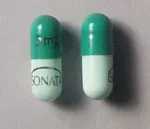

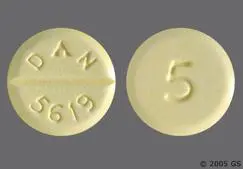
Generic Valium 5 mg
Price range: $533.00 through $1,507.00
| Variation | Price | Quantity | Add To Cart |
|---|---|---|---|
| 360 pills | $1,507.00 |
|
Add to cart |
| 180 pills | $908.00 |
|
Add to cart |
| 90 pills | $533.00 |
|
Add to cart |
Valium 5 mg tablet is the middle-strength of Valium, Roche’s brand of diazepam. It is a yellow tablet in the benzodiazepine class. Prescribers use the 5 mg tablet for anxiety, for acute alcohol withdrawal, for muscle spasm, and as an add-on treatment for some seizure disorders. This Diazepam dan 5619 yellow pill stays in the body much longer than most medicines in its class, and that long action shapes how a 5 mg dose is scheduled, how it feels from day to day, and how it is stopped. This page covers what the Valium 5 mg tablet is, how it is dosed for each approved use, the side effects and safety warnings, its drug interactions, and what to expect when filling a prescription for it.
Prescription only: Valium 5 mg is a federally controlled Schedule IV medicine. It can be dispensed only against a valid prescription from a licensed prescriber who has evaluated the patient. Doses on this page are taken from the FDA-approved label and are for education only. They do not replace a prescriber’s instructions.
Valium 5 mg Tablet at a Glance
| Detail | Information |
|---|---|
| Brand name | Valium |
| Generic name | Diazepam |
| Strength | 5 mg per tablet |
| Drug class | Benzodiazepine (long-acting) |
| Tablet appearance (brand) | Yellow, scored, engraved “5 VALIUM” on one side and “ROCHE” on the scored side |
| Other brand strengths | 2 mg (white) and 10 mg (blue) |
| Onset | Peak blood level about 1 to 1.5 hours after an oral dose |
| Half-life | Diazepam: up to 48 hours. Active metabolite desmethyldiazepam: up to 100 hours |
| DEA schedule | Schedule IV controlled substance |
| Storage | Room temperature, 59°F to 86°F (15°C to 30°C), in a tight, light-resistant container |
What Valium 5 mg Is Prescribed For
Diazepam has four FDA-approved uses. The 5 mg tablet appears in the dosing plan for each of them. It may be the whole dose, part of a divided daily schedule, or a step during a gradual reduction.
| Approved use | Where the 5 mg tablet fits |
|---|---|
| Anxiety disorders and short-term relief of anxiety symptoms | The usual adult range is 2 mg to 10 mg taken two to four times a day. Many adults are kept at or near 5 mg per dose. |
| Acute alcohol withdrawal (tremor, agitation, impending or acute delirium tremens, hallucinosis) | The label calls for 10 mg three or four times in the first 24 hours, then 5 mg three or four times a day as needed. The 5 mg tablet is the step-down dose. |
| Skeletal muscle spasm as an add-on (local injury, inflammation, cerebral palsy, paraplegia, athetosis, stiff-man syndrome) | 2 mg to 10 mg three or four times a day. A 5 mg tablet is a common single dose in this range. |
| Convulsive disorders as an add-on to other treatment | 2 mg to 10 mg two to four times a day, alongside the patient’s main anti-seizure medicine. |
The label notes that anxiety from the ordinary stress of daily life usually does not need an anxiolytic. Doctors are also asked to reassess the need for diazepam periodically when it is used for longer than about four months. Diazepam is not a first-line long-term treatment for most anxiety conditions, and many prescribers use it for a defined period while other therapy is set up.
How Diazepam Works in the Body
Diazepam binds to a site on the GABA-A receptor in the brain and spinal cord. GABA is the nervous system’s main calming chemical messenger. When diazepam is attached, each GABA signal has a stronger effect. The result is less anxiety, relaxed skeletal muscle, a higher seizure threshold, and some sedation.
Why Valium Lasts So Long
Diazepam is absorbed quickly but cleared slowly. The liver processes it mainly through the enzymes CYP3A4 and CYP2C19. Those enzymes turn it into desmethyldiazepam (also called nordiazepam), an active metabolite with a half-life of up to 100 hours, and later into temazepam and oxazepam, which are also active. In practice this means three things:
- The drug builds up over several days. With repeated dosing, blood levels rise for about a week before they level off, so the full effect of a regular 5 mg schedule may not be clear in the first few days.
- Drowsiness can carry into the next day, especially in older adults and people with liver disease.
- Effects fade gradually after stopping. Because the body clears diazepam slowly, withdrawal symptoms tend to start later and develop more slowly than with short-acting benzodiazepines. This is one reason diazepam is often used for tapering.
The First Dose of dan 5619 pill, Hour by Hour
| Time after a 5 mg tablet | What typically happens |
|---|---|
| 15–45 minutes | Absorption begins and a calming effect may start to be felt |
| 1–1.5 hours | Peak blood concentration. Relaxation and any drowsiness are strongest |
| 2–6 hours | The drug spreads into body tissues and the strongest sedation eases, though diazepam is still active |
| Next day and beyond | Diazepam and desmethyldiazepam are still in the blood. Repeated doses raise the levels further |
Valium 5 mg Dosage by Patient Group
Diazepam dosing is set for each person. The figures below are the label’s usual daily ranges. The prescriber decides the actual schedule. People respond very differently to the same benzodiazepine dose, a point covered in our page on why some people need less medication.
| Patient group | Label starting guidance | How a 5 mg tablet may be used |
|---|---|---|
| Adults (anxiety, spasm, seizures) | 2–10 mg, two to four times daily, depending on the condition | One tablet per dose, two to four times daily |
| Adults in alcohol withdrawal | 10 mg three or four times on day one, then 5 mg three or four times as needed | The maintenance step after the first 24 hours |
| Older or debilitated adults | 2–2.5 mg once or twice daily at first, increased gradually | Used only after a lower dose has been tolerated |
| Children 6 months and older | 1–2.5 mg three or four times daily at first, increased gradually | Usually too strong as a starting dose for a child |
| Infants under 6 months | Not used | Contraindicated |
Taking the Tablet
- Swallow the tablet with water, with or without food. Taking it at the same times each day keeps blood levels steady.
- Do not take an extra tablet if one dose seems weak. Diazepam builds up, so extra doses add up over the following days.
- If a dose is missed, take it when remembered unless the next dose is close. Never take two doses at once.
- Keep a written or app-based log of each dose. This helps avoid the double-dosing errors described in common medication mistakes.
- Do not drive or operate machinery until it is clear how the 5 mg dose affects alertness the next day as well as on the same day.
Side Effects of Valium 5 mg
The label lists drowsiness, fatigue, muscle weakness, and ataxia (unsteady movement) as the most common reactions. These are usually strongest in the first days of treatment or after a dose increase.
| Category | Examples | What to do |
|---|---|---|
| Common | Drowsiness, tiredness, muscle weakness, unsteadiness | Avoid driving and alcohol. Tell the prescriber if these persist |
| Less common | Confusion, blurred or double vision, headache, slurred speech, low blood pressure, constipation, nausea, changes in libido, urinary retention or incontinence, skin rash | Report to the prescriber, who may adjust the dose |
| Paradoxical reactions | Agitation, restlessness, irritability, aggression, nightmares, hallucinations | Stop and contact the prescriber. These are more likely in children and older adults |
| Memory effects | Gaps in memory for events after a dose (anterograde amnesia) | Report it, especially if it is frequent |
| Serious – urgent care | Very slow or shallow breathing, extreme sleepiness, bluish lips, unresponsiveness | Call 911 immediately |
Mood changes need prompt attention. Benzodiazepines can unmask or worsen depression, and anyone with thoughts of self-harm should reach the 988 Suicide & Crisis Lifeline by calling or texting 988.
Boxed Warning on the Valium Label
Boxed warning: risks from use with opioids; abuse, misuse, and addiction; and dependence and withdrawal reactions.
- With opioids: Taking diazepam with an opioid medicine can cause profound sedation, respiratory depression, coma and death. The two should be prescribed together only when other options are not adequate, at the lowest doses and for the shortest time.
- Abuse and misuse: Using diazepam in ways other than prescribed raises the risk of overdose and death, particularly when combined with alcohol, opioids or other drugs.
- Dependence: Physical dependence can develop with regular use. Stopping suddenly or cutting the dose quickly can cause withdrawal reactions, some of them life-threatening, such as seizures.
The FDA expanded this warning for the whole benzodiazepine class in 2020. The FDA safety communication explains the change.
Anyone who has both a benzodiazepine and an opioid in the medicine cabinet should know the combined risks. Our page on oxycodone drug interactions explains why the two classes are so dangerous together.
Who Should Not Take Valium 5 mg
The label lists these contraindications:
- Known hypersensitivity to diazepam
- Infants younger than 6 months
- Myasthenia gravis
- Severe respiratory insufficiency
- Severe hepatic (liver) insufficiency
- Sleep apnea syndrome
- Acute narrow-angle glaucoma (diazepam may be used in open-angle glaucoma that is being treated)
Situations That Call for Extra Caution
- Older adults: Older people clear diazepam more slowly, so sedation, confusion and falls are more likely. The label starts them at 2–2.5 mg, not 5 mg.
- Mild to moderate liver or kidney disease: Accumulation is more likely, so lower or less frequent doses may be needed.
- History of substance use disorder: The risk of misuse is higher, so closer monitoring is needed.
- Depression or psychosis: Diazepam is not a treatment for either, and it can worsen depressive symptoms.
- Lung disease such as COPD: Breathing suppression is more of a concern.
Drug and Substance Interactions
Because two liver enzymes (CYP3A4 and CYP2C19) break diazepam down, many common medicines can raise or lower its level. Anything that adds sedation makes the problem worse.
| Interacting substance | Effect | Typical response |
|---|---|---|
| Opioids (oxycodone, hydrocodone, codeine, tramadol and others) | Severe sedation and breathing suppression | Avoid unless essential. Use the lowest doses with close monitoring |
| Alcohol | Added sedation, poor coordination, breathing risk | Avoid alcohol completely |
| Cimetidine, ketoconazole, fluvoxamine, fluoxetine, omeprazole | Slow diazepam clearance and raise its levels | The prescriber may lower the diazepam dose |
| Antipsychotics, barbiturates, MAO inhibitors, sedating antidepressants, other sedatives | More central nervous system depression | Dose review and monitoring |
| Antacids | May slow diazepam absorption | Separate the doses if advised |
| Phenytoin | Diazepam may change phenytoin levels | Seizure medicine levels may be checked |
| Sedating antihistamines (diphenhydramine and similar) | Additive drowsiness | Ask a pharmacist before using sleep aids or cold medicines |
The NIH’s alcohol and medicine interactions guide lists other everyday products that should not be combined with a benzodiazepine.
Dependence, Tolerance and Stopping Valium
Daily use of a 5 mg dose over weeks or months can lead to physical dependence. This is an expected response to the drug and is different from addiction. It means the body has adjusted to diazepam and reacts when it is withdrawn. Over time, tolerance can also develop to the sedative effect, and sometimes to the anti-anxiety effect.
Possible Withdrawal Symptoms
- Rebound anxiety, restlessness, irritability
- Insomnia and vivid dreams
- Tremor, sweating, muscle aches
- Sensitivity to light and sound, a sense of unreality
- In severe cases, seizures or delirium
Because diazepam leaves the body slowly, these symptoms may not appear until several days after the last tablet. A prescriber will reduce the dose step by step, often by a small amount every one to two weeks, and slow the pace if symptoms return. Stopping on one’s own is unsafe, even when the 5 mg dose feels mild. Regular check-ins during treatment make a taper easier to plan. The questions to ask at every follow-up visit are a good starting list.
If use has moved beyond the prescription, the SAMHSA National Helpline (1-800-662-4357) offers free, confidential referrals 24 hours a day.
Pregnancy and Breastfeeding
Using a benzodiazepine late in pregnancy can cause sedation (breathing problems, poor feeding, low muscle tone) and withdrawal symptoms in the newborn. Some studies have raised questions about early-pregnancy exposure, though the evidence is mixed. Anyone who is pregnant or planning a pregnancy should talk with the prescriber before starting, continuing or stopping Valium 5 mg, and should not stop abruptly. The National Pregnancy Registry for Psychiatric Medications collects outcome data for people who take these medicines during pregnancy.
Diazepam and desmethyldiazepam pass into breast milk. Because they clear slowly, they can build up in a nursing infant and cause sleepiness or poor feeding. Breastfeeding while taking diazepam needs a specific discussion with the prescriber and the baby’s pediatrician.
Overdose Signs
Diazepam taken alone is rarely fatal in overdose. The danger rises sharply when it is combined with opioids or alcohol. Warning signs include:
- Deep sleepiness and inability to wake normally
- Confusion and slurred speech
- Slow or shallow breathing
- Weak reflexes and loss of coordination
- Low blood pressure, coma
Call 911 for anyone who is hard to wake or breathing poorly. For a possible accidental extra dose without symptoms, Poison Control can help at 1-800-222-1222 or online through webPOISONCONTROL.
Identifying the Valium 5 mg Tablet
The brand tablet is yellow and engraved “5 VALIUM” on the front and “ROCHE” on the scored back. Its yellow color comes from FD&C Yellow No. 6 and D&C Yellow No. 10. Generic diazepam 5 mg tablets are made by several manufacturers. They are often yellow as well, but their shape and imprint differ by maker. A change in how a refill looks is not unusual, as explained in why generic pills don’t always look the same. The pharmacist should still be asked to confirm any unfamiliar tablet before it is taken.
Storage and Disposal
- Store at room temperature (59°F to 86°F) in the original light-resistant container.
- Keep the bottle out of sight and out of reach of children, visitors and pets. A locked box is best.
- Count the tablets regularly. A missing tablet is easier to notice when the count is known.
- Never share tablets. Giving diazepam to another person is illegal and can be dangerous, as outlined in what happens if someone else takes your prescription.
- Dispose of unused tablets through a drug take-back program, or follow the FDA’s guidance on disposing of unused medicines.
Filling a Valium 5 mg Prescription
Diazepam is listed in Schedule IV of the Controlled Substances Act. Federal rules for Schedule IV prescriptions include:
- The prescription must be issued for a legitimate medical purpose by a DEA-registered prescriber.
- It can be refilled up to five times within six months of the date written, if the prescriber authorizes refills (21 CFR 1306.22). After that, a new prescription is needed.
- Many states set tighter limits or require electronic prescribing for controlled substances.
Pharmacists check controlled prescriptions before filling them. This can include a check of the patient’s history in the state monitoring database. See how pharmacies verify controlled prescriptions and the prescription drug monitoring program (PDMP) pages for details. Planning a refill a few days ahead helps avoid gaps. A gap matters with a benzodiazepine because a sudden interruption can trigger withdrawal. The page on prescription refills covers timing.
Frequently Asked Questions
Is Valium 5 mg a strong dose?
It is a moderate dose. The label’s adult range is 2 mg to 10 mg per dose, so 5 mg sits near the middle. For an older adult, or for someone who has never taken a benzodiazepine, 5 mg can be quite sedating. For an adult already on regular treatment, it may be a routine maintenance dose.
How long does one Valium 5 mg tablet last?
The noticeable calming effect usually lasts several hours. Diazepam and its active metabolite stay in the blood much longer: up to 48 hours for diazepam and up to 100 hours for desmethyldiazepam. That is why effects can build with daily dosing and why next-day drowsiness is possible.
How quickly does Valium 5 mg start working?
Most people notice an effect within 30 to 60 minutes. Peak blood levels arrive about 1 to 1.5 hours after the tablet is swallowed.
Can the 5 mg tablet be split?
The brand Valium 5 mg tablet is scored. A prescriber may tell a patient to split it, for example to make 2.5 mg doses during a taper. Tablets should only be split when the prescriber or pharmacist says to.
Is diazepam 5 mg the same as Valium 5 mg?
Yes, in terms of the active ingredient and strength. Generic diazepam 5 mg must meet FDA standards for equivalence with the brand. The inactive ingredients, color and imprint may differ.
Can Valium 5 mg be taken with alcohol?
No. Alcohol adds to the sedative and breathing effects of diazepam and raises the risk of accidents and overdose.
Does Valium 5 mg cause next-day grogginess?
It can, especially in the first week, in older adults, and when doses are taken late in the evening. Because diazepam builds up over several days, grogginess may show up after a few days of treatment, not just after the first dose.
How long does diazepam stay detectable?
Because of its long-lived metabolites, diazepam can be detected in urine for days to weeks after regular use. The exact window depends on dose, duration, age and liver function.
What is the safest way to stop Valium 5 mg?
A gradual taper planned with the prescriber. Stopping suddenly after regular use can cause withdrawal symptoms, including seizures in severe cases.
| Select Variation |
360 pills ,180 pills ,90 pills |
|---|