
Generic Strattera 18 mg
Price range: $1,267.20 through $4,215.00
| Variation | Price | Quantity | Add To Cart |
|---|---|---|---|
| 300 pills | $4,215.00 |
|
Add to cart |
| 180 pills | $2,529.00 |
|
Add to cart |
| 240 pills | $3,369.60 |
|
Add to cart |
| 90 pills | $1,267.20 |
|
Add to cart |
Prescription and safety notice: Strattera 18 mg contains atomoxetine and is available only by prescription. The information below helps patients prepare for a clinician or pharmacist conversation; it is not a personal dose recommendation. Use the medicine exactly as written on the dispensing label. Do not purchase from a website that skips the prescription requirement, and do not share capsules with anyone else.
Strattera 18 mg: understanding the prescription before the first dose
An 18 mg Strattera prescription raises practical questions that a short product listing rarely answers. Is atomoxetine a stimulant? Why did the clinician select 18 mg? How should the capsule be taken? What changes should a family watch for? Can brand Strattera be replaced with generic atomoxetine? What should a patient check before ordering Strattera 18 mg online?
This guide approaches those questions in the order a patient usually encounters them: diagnosis, dose selection, daily use, follow-up, safety, and purchase verification. The 18 mg capsule is one available strength of atomoxetine; it is not a universal starting dose and it is not “stronger treatment” simply because the number is higher than 10 mg. The correct regimen is based on the whole patient, not the product page.
The current U.S. labeling indicates Strattera for treatment of ADHD in adults and children age six and older. It should be one component of a total program that can include psychological, educational, and social measures. Atomoxetine may improve attention and reduce impulsiveness and hyperactivity, but it does not cure ADHD or guarantee a particular school, work, or relationship outcome.
Start here: seven facts about the 18 mg capsule
- Ingredient: each capsule contains atomoxetine hydrochloride equivalent to 18 mg of atomoxetine.
- Form: oral capsule. Current instructions say to swallow it whole; it should not be opened, crushed, or chewed.
- Medicine class: non-stimulant selective norepinephrine reuptake inhibitor.
- Approved ADHD population: adults and pediatric patients six years of age and older.
- Prescription status: a valid prescription and individualized monitoring are required.
- Controlled status: Strattera is not a controlled substance under the current U.S. product label.
- Major warning: pediatric patients must be monitored closely for suicidal thoughts and behaviors, clinical worsening, or unusual behavioral changes, particularly early in therapy and when the dose changes.
Why 18 mg may be selected
Atomoxetine is offered in several fixed capsule strengths because one capsule size cannot serve every patient or every stage of titration. For children and adolescents weighing less than 70 kg, the labeled dosing framework is calculated by body weight. For adults and pediatric patients who weigh at least 70 kg, the labeled framework uses fixed total daily doses. Separate adjustments are described for certain patients with liver impairment and for people taking strong CYP2D6 inhibitors or known to metabolize atomoxetine slowly through CYP2D6.
Those rules can lead to an 18 mg prescription for different reasons. It may be the closest available capsule strength to a calculated dose, one step in a carefully supervised titration, part of a divided regimen, or a modified dose chosen for tolerability or metabolism. Only the prescriber can explain the reason in a specific case. The patient should not reverse-engineer the plan from a dosing table and should never round a calculated dose upward without authorization.
Strength is not the same as total daily dose
A label that says “18 mg capsule” describes the contents of one capsule. A prescription must also specify how many capsules to take, whether the total is taken once or divided, and when. Before leaving the pharmacy or completing an online order, compare these five items:
- Patient name
- Atomoxetine or Strattera name
- 18 mg strength per capsule
- Number of capsules and frequency
- Quantity supplied and refill instructions
If an old prescription and a new prescription differ, follow neither by assumption. Ask the pharmacist to confirm which order is active. A dose change is a common point for accidental duplication, especially when unused capsules from a previous strength remain at home.
What a good ADHD assessment should establish
Difficulty concentrating is not enough by itself to establish ADHD. A clinician considers the pattern, duration, age of onset, degree of impairment, and whether symptoms occur across relevant settings. The evaluation may also examine sleep, mood, anxiety, learning, substance use, medical conditions, and other medicines. A responsible prescriber does not promise atomoxetine solely because a patient requests a specific strength.
Define the treatment goals in functional language. “Focus better” is hard to measure. “Complete the morning routine with no more than two prompts,” “submit weekly reports by the deadline,” or “interrupt less often during family conversations” provides a clearer baseline. Good monitoring looks for meaningful change, not just a feeling that a capsule was taken.
How atomoxetine differs from stimulant ADHD medicines
Atomoxetine affects norepinephrine signaling and is categorized as a non-stimulant. Amphetamine and methylphenidate products are central nervous system stimulants with different mechanisms, onset patterns, risks, and prescribing controls. Patients should not compare milligram numbers between these medicine families; 18 mg of atomoxetine is not equivalent to 18 mg of a stimulant.
Atomoxetine may be discussed when a clinician and patient prefer a non-stimulant approach or when the individualized risk-benefit assessment supports it. It is often taken consistently rather than only on selected high-demand days. Benefit may build over time, so an immediate sensation is not the proper test of effectiveness. Conversely, “non-stimulant” does not mean that mental-health, liver, heart-rate, blood-pressure, urinary, or allergic risks can be ignored.
A practical first-month framework
The prescriber determines the actual appointment schedule, but the following framework shows what patients and caregivers may be asked to observe. It is not a substitute for urgent reporting when warning symptoms appear.
Before day one
Record the prescribed schedule and a complete medicine list. Note baseline appetite, sleep, weight where appropriate, mood, relevant ADHD behaviors, and any blood-pressure or pulse readings the clinician requests. Remove outdated atomoxetine prescriptions from the active medication area so a family member cannot confuse the strengths.
During the early days
Take the capsule at the instructed time and note nausea, stomach discomfort, dizziness, tiredness, headache, appetite change, sleep change, irritability, or unusual behavior. Avoid making several lifestyle or medication changes at once unless medically necessary; otherwise, it can become difficult to identify what caused a symptom. Do not increase the dose because no immediate effect is felt.
After a dose adjustment
Return to closer observation. The boxed warning emphasizes monitoring around dose changes, and cardiovascular or tolerability effects may also change. Confirm that the new pharmacy label matches the new plan. If the prescriber changes from one capsule strength to another, ask what to do with the previous supply.
At the follow-up
Bring examples from daily life, not only a rating. Explain what became easier, what did not change, which adverse effects occurred, how often a dose was missed, and whether cost or availability disrupted treatment. The clinician can then judge benefit, tolerability, adherence, and whether the diagnosis or plan needs reconsideration.
Taking Strattera 18 mg correctly
Strattera may be taken with or without food under the current label. Take it exactly as directed, at a consistent time or times. A patient who experiences stomach upset should ask whether taking it with food fits the prescribed plan. Do not use a high-caffeine drink as a routine “booster” without discussing cardiovascular symptoms and total caffeine intake.
Swallow the capsule intact. Opening a Strattera capsule is specifically discouraged, and the powder can irritate the eyes. If contents reach an eye, rinse promptly with water, clean contaminated surfaces and hands, and obtain professional advice. A child or adult unable to swallow the capsule should not have it secretly mixed into food; the prescriber and pharmacist should propose a legitimate alternative.
Missed dose
Current instructions say to take the missed dose as soon as possible while never exceeding the prescribed total daily amount in a 24-hour period. If the next dose is near, or if a twice-daily schedule makes the calculation confusing, call the pharmacist. Do not double up. Document repeated missed doses because apparent lack of effect may actually be inconsistent use.
Discontinuation
The current FDA label says Strattera does not require a taper when discontinued. A clinician should still be involved. Sudden self-discontinuation can leave the original symptoms untreated and may hide an adverse effect that deserves evaluation. If suicidal thinking, severe allergic symptoms, jaundice, chest pain, or another emergency occurs, seek immediate help rather than waiting for a routine discontinuation discussion.
Common adverse effects and day-to-day management
Commonly reported effects can include nausea, vomiting, stomach pain, constipation, reduced appetite, tiredness, dizziness, headache, dry mouth, sweating, mood changes, and weight change. Adults may report urinary or sexual effects. The exact pattern differs across age groups and patients, and a complete list appears in the official Medication Guide.
Simple tracking is more useful than silently tolerating symptoms. Record what occurred, when it began relative to the dose, how long it lasted, and whether it affected eating, hydration, sleep, school, driving, or work. Call the prescriber for persistent or significant problems. Do not cut, open, or alter the capsule to reduce exposure.
Appetite and growth
A child’s height and weight should be followed during treatment. Reduced appetite is not an acceptable weight-management strategy. Caregivers can discuss meal timing and nutrition with the clinician, but should not skip doses on selected days or add supplements without approval. Adults should also report substantial unplanned weight loss or inability to maintain nutrition.
Dizziness and tiredness
Atomoxetine can cause dizziness, lightheadedness, or drowsiness. Rise slowly if positional dizziness occurs. Until the individual response is known, avoid driving, power tools, unsupervised swimming, cycling in traffic, or other activities where impaired alertness could cause harm.
Warnings that should never be buried below the order button
Suicidal thoughts and behavioral changes
The FDA-approved Strattera label carries a boxed warning for increased suicidal thoughts and behaviors in pediatric patients in short-term studies. Daily observation by caregivers is especially important during the first months and after a dose increase or decrease. New agitation, panic symptoms, severe irritability, hostility, unusual impulsivity, insomnia, hypomania, mania, suicidal statements, or self-harm behavior requires prompt contact with a healthcare professional. If there is immediate danger, use emergency services.
Severe liver injury
Rare but serious liver injury has been reported after marketing. Stop-and-restart decisions belong to a clinician. Contact a healthcare professional immediately for dark urine, yellowing of the skin or eyes, unexplained itching, right-upper abdominal tenderness, or unexplained flu-like symptoms. The label says Strattera should be discontinued and not restarted in patients with jaundice or laboratory evidence of liver injury.
Heart and circulation concerns
Atomoxetine may raise pulse and blood pressure. Patients with severe cardiac or vascular disorders that could worsen with clinically important increases should not take it under the listed contraindication. Tell the clinician about congenital heart disease, rhythm problems, fainting, chest pain, hypertension, stroke history, or sudden death in close relatives. Seek urgent care for chest pain, fainting, or severe unexplained breathlessness.
Psychosis, mania, aggression, and bipolar risk
New psychotic or manic symptoms can occur at recommended doses, and bipolar risk should be assessed before treatment. Report hallucinations, beliefs disconnected from reality, abnormally elevated or activated mood, sharply reduced need for sleep, dangerous behavior, or new/worsening aggression. ADHD itself and coexisting disorders can also affect behavior, so a professional must assess the cause.
Urinary retention and priapism
Urinary hesitation or retention may be related to atomoxetine. Rare prolonged erections have also been reported. An erection lasting more than four hours needs prompt medical attention, whether or not it is painful. Patients may feel embarrassed, but delay can cause harm.
Allergic reaction
Hives, rash, swelling, angioedema, and anaphylactic reactions have been reported. Facial or throat swelling, breathing difficulty, or collapse is an emergency. Do not take another capsule until a qualified professional has evaluated a suspected allergy.
Who should not take Strattera
The current label lists contraindications that include hypersensitivity to atomoxetine or product components; current MAOI treatment or treatment within the required 14-day window; narrow-angle glaucoma; pheochromocytoma or a history of it; and certain severe cardiovascular disorders. This summary does not replace the official label. A pharmacy sale should never bypass clinical screening for these conditions.
Medication interactions and metabolism
Make a list that includes exact drug names and doses. “An antidepressant” is not specific enough. Strong CYP2D6 inhibitors such as paroxetine, fluoxetine, and quinidine can substantially affect atomoxetine exposure and may require a modified dosing approach. Genetic CYP2D6 poor metabolizers may also have higher exposure.
MAOIs require strict separation. Other medicines that affect blood pressure or heart rate, including some decongestants and stimulants, may add risk. The label also addresses interactions with albuterol and other agents. Tell the prescriber about inhalers, cold remedies, weight-loss products, pre-workout supplements, herbal products, nicotine, and recreational substances. Do not assume that an over-the-counter item is irrelevant.
Using feedback from school or work without compromising privacy
For a child, teachers may be able to describe observable changes in task completion, interruptions, seat behavior, or emotional regulation. They do not need confidential medical detail unless the family chooses to provide it or a care plan requires it. Use consistent, neutral questions rather than asking whether the child “seems medicated.”
Adults can use work examples without disclosing a diagnosis to an employer. Track deadlines, error rates, meeting interruptions, or the need to reread material. Improvement should be balanced against sleep, appetite, mood, and cardiovascular effects. Medication is only one part of an effective system; calendars, task breakdown, environmental changes, coaching, or therapy may still be needed.
Brand-name Strattera 18 mg and generic atomoxetine 18 mg
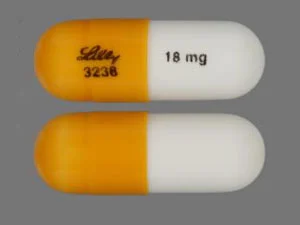
Both brand and approved generic products provide atomoxetine at the stated strength, but the capsule’s appearance and inactive ingredients can differ. Current brand labeling describes the 18 mg capsule as gold and opaque white. That description should not be used to authenticate every generic capsule. Product photos online can be outdated, edited, or taken under different lighting.
When a refill looks different, compare the pharmacy label, active ingredient, strength, dosage form, manufacturer, imprint, quantity, and expiration. Ask the pharmacist to verify it. Do not search the imprint and take the capsule solely because an image result looks similar. A licensed pharmacist has access to the dispensing record and product data.
How to order Strattera 18 mg online with a prescription
Transactional searches such as “buy Strattera 18 mg online,” “generic atomoxetine 18 mg price,” “order Strattera 18 mg capsules,” and “Strattera 18 mg delivery” should lead to a legal pharmacy process, not a shortcut around medical care. A responsible purchase has three checkpoints: an appropriate prescription, a verifiable pharmacy, and a product that matches the order.
Before choosing the pharmacy
- Verify licensure through the relevant pharmacy regulator rather than trusting a website badge.
- Confirm that a pharmacist is reachable for counseling.
- Read how the pharmacy receives and validates prescriptions.
- Check whether the seller provides a real physical address and clear privacy and return policies.
- Avoid sites that guarantee approval, sell unlimited quantities, or advertise prescription atomoxetine without a prescription.
- Confirm where the medicine will be dispensed and whether shipment is permitted to the patient’s location.
Before paying
- Match “atomoxetine 18 mg capsule” or “Strattera 18 mg capsule” to the prescription.
- Review quantity, brand/generic selection, manufacturer information when available, and estimated delivery date.
- Calculate total cost, including consultation, dispensing, shipping, taxes, and membership or automatic-refill charges.
- Understand whether a coupon price applies to the selected pharmacy, quantity, insurance status, and location.
- Do not approve substitution to another strength or dosage form without pharmacist and prescriber confirmation.
When the package arrives
Check tamper evidence, the patient-specific pharmacy label, medicine name, 18 mg strength, directions, quantity, manufacturer or imprint, and expiration date. The package should include required patient information. If the shipment is hot, wet, damaged, open, unlabeled, or different from the order, do not use it until the dispensing pharmacy advises you.
Strattera 18 mg cost: comparing offers responsibly
Retail and online prices change with brand or generic selection, insurance benefits, deductibles, pharmacy contracts, quantity, location, discount cards, and stock. A search snippet is not a binding quote. The apparent unit price may omit shipping or may require a larger supply than the prescription authorizes.
Ask whether generic atomoxetine is covered, whether prior authorization is needed, and whether a 30-day or 90-day supply is permitted. If cost threatens continuity, contact the prescriber before skipping doses or rationing capsules. A new prescription for another strength or medicine should be based on clinical judgment, not made solely to fit a coupon.
Storage, household safety, and disposal
Keep capsules in the original pharmacy-labeled container at the conditions stated on the product label, away from excess heat and moisture. Store them where children cannot see or reach them. Even though atomoxetine is not controlled, it remains prescription medicine and should not be left in a shared bowl, desk drawer, backpack, or unlocked travel bag.
Use a medicine take-back service for unwanted or expired capsules when available. Otherwise, follow pharmacist and local-authority disposal guidance. Remove or obscure personal information from discarded packaging. Never sell, trade, donate, or give the remaining medicine to another patient.
Frequently asked questions about Strattera 18 mg
Is Strattera 18 mg an immediate-release or extended-release capsule?
Strattera is not labeled with the same immediate-release/extended-release categories used for stimulant products. It is an atomoxetine capsule taken on the prescribed schedule. Do not compare its release behavior with amphetamine capsules or substitute another ADHD medicine based on capsule strength.
Is 18 mg the usual starting dose?
There is no universal starting capsule strength. The labeled framework depends on body weight and patient group, with modifications for liver impairment and certain CYP2D6 factors. The prescriber chooses the actual regimen.
Can an 18 mg capsule be divided?
No. The capsule should be swallowed whole and not opened. Ask the pharmacist or prescriber if the prescription cannot be followed because of swallowing difficulty.
Can I take Strattera only on work or school days?
Do not create an intermittent schedule yourself. Atomoxetine is generally prescribed for consistent use, and benefit may develop over time. The prescriber should authorize any schedule change.
What happens if I miss the 18 mg dose?
Take it as soon as possible without exceeding the prescribed total daily amount in 24 hours. If timing is close to the next dose or directions are unclear, call the pharmacist. Never double the dose.
Can Strattera be stopped suddenly?
The current label states that no taper is needed, but the prescriber should still guide discontinuation and evaluate the reason. Urgent adverse symptoms require immediate medical advice or emergency care.
Does Strattera 18 mg work on the first day?
Patients should not expect or chase an immediate stimulant-like feeling. Some changes may appear earlier, but clinicians often assess benefit across a longer, consistent trial. Do not increase the dose to force faster results.
Does a gold-and-white capsule prove it is Strattera 18 mg?
No. That matches the current brand description, but appearance alone cannot authenticate medicine. Generic designs differ, and counterfeit products can imitate color. Use the licensed pharmacy label and pharmacist verification.
Is generic atomoxetine the same as brand Strattera?
An approved generic has the same active ingredient and strength and must meet regulatory requirements, while appearance and inactive ingredients may differ. Ask the prescriber or pharmacist whether brand-specific dispensing is medically required.
Can Strattera 18 mg be used for depression?
Strattera is labeled for ADHD, not as an antidepressant treatment. A patient with depression, bipolar symptoms, or suicidal thinking needs an appropriate mental-health assessment rather than self-treatment with atomoxetine.
Is it safe during pregnancy?
The answer is individualized. Inform the prescriber promptly if pregnant, planning pregnancy, or breastfeeding so the benefits, risks, and alternatives can be reviewed. Do not rely on product reviews for this decision.
Why might the clinician order pulse, blood pressure, height, or weight checks?
Atomoxetine can affect heart rate and blood pressure, appetite, and pediatric growth patterns. Monitoring helps the clinician judge whether treatment remains appropriate and whether the plan needs adjustment.
What should I do if the online pharmacy sends 10 mg instead of 18 mg?
Do not combine capsules or change the regimen. Keep the product separate, photograph the sealed package if requested, and contact the dispensing pharmacist. The pharmacy must resolve the mismatch against the prescription.
Patient checklist for the next appointment
- Bring the actual container or an accurate label photo.
- List every prescription, over-the-counter medicine, supplement, inhaler, and substance used.
- Report missed doses honestly.
- Provide two or three concrete examples of symptom change.
- Describe appetite, sleep, mood, dizziness, urinary or sexual changes, and stomach symptoms.
- Report any chest pain, fainting, jaundice, allergic reaction, hallucination, mania, aggression, or suicidal thought immediately rather than waiting.
- Ask how long the current 18 mg regimen should continue before review.
When the result is not what the patient expected
A disappointing first impression does not always mean atomoxetine has failed, but it should not be ignored. Several different situations can look like “the medicine is not working”: the trial may have been too short, doses may have been missed, the prescribed amount may still be in a supervised titration phase, side effects may be masking improvement, the main impairment may come from a coexisting condition, or the original treatment target may have been vague. The appropriate response is a structured review, not an unsupervised increase.
Bring the clinician a timeline. Include the date treatment started, dates of any dose changes, missed doses, changes in sleep or routine, and examples of function before and after treatment. If the patient seems calmer but more withdrawn, finishes tasks but cannot eat, or focuses better while mood worsens, that is not a simple success. Benefits and harms must be weighed together.
If side effects appear before benefit
Contact the prescriber rather than opening the capsule, taking it every other day, or changing the time on your own. Some symptoms can be managed with an authorized change in timing or treatment plan; others require stopping and urgent evaluation. The seriousness, timing, and patient history determine the answer. A pharmacist can help distinguish a common tolerability question from a warning that needs immediate medical attention.
If benefit fades
Do not assume the body has “become immune” or that a higher dose is required. Check adherence, sleep, new medicines, stress, growth or weight change, substance use, and whether the observed problem is actually an ADHD symptom. Long-term treatment should be periodically reevaluated for usefulness. The prescriber may continue, modify, or replace treatment based on that review.
Planning refills, travel, and continuity of care
Even though atomoxetine is not a controlled substance, prescription validity, insurance rules, pharmacy stock, and cross-border regulations still apply. Request a refill with enough time for the pharmacy to contact the prescriber if needed. Do not wait until the final capsule before reporting a strength shortage. If 18 mg is unavailable, the pharmacist cannot simply substitute a different strength and invent a new schedule; an authorized prescription change may be required.
For travel, keep the medicine in the original patient-specific container. Pack it in carry-on baggage when appropriate so it is not exposed to extreme temperatures or lost with checked luggage. Review airline, destination, and customs rules before crossing borders. Carry a copy of the prescription or clinician letter if advised, but protect personal medical information from unnecessary exposure.
If care is transferred to a new clinician, provide the treatment history rather than asking only for “the same refill.” Include the diagnosis process, previous strengths, response, adverse effects, relevant vital signs, and current medicines. Continuity is safer when the new prescriber can understand why 18 mg was chosen.
Questions that make an online or local pharmacy conversation more useful
A pharmacist can answer product-specific questions that a general web page cannot. Before purchase or pickup, consider asking:
- Is this brand Strattera or generic atomoxetine, and who manufactured it?
- Does the prescription specify brand medically necessary, or is generic substitution permitted?
- Are there differences in inactive ingredients relevant to an allergy or dietary restriction?
- Does this medicine interact with the patient’s newly prescribed antidepressant, inhaler, cold medicine, or supplement?
- What should the capsule and pharmacy label look like for this specific dispensed manufacturer?
- What is the correct response if a dose is missed late in the day?
- How should the medicine be stored during hot-weather delivery or travel?
- Who should be contacted after hours for an urgent dispensing error?
These questions are also a useful legitimacy test. A real pharmacy should not discourage contact with its pharmacist or tell a patient that prescription directions do not matter. If a seller’s only response is to complete payment quickly, do not treat it as a healthcare service.
Bottom line
Strattera 18 mg is a specific atomoxetine capsule strength used within individualized ADHD care. Safe use depends on much more than choosing the correct product from a dropdown: the patient needs an appropriate diagnosis, an exact prescription, interaction screening, early mental-health observation, cardiovascular and growth monitoring when indicated, and follow-up based on real-life outcomes. Safe online ordering means using a licensed pharmacy that requires the prescription, clearly identifies the product, and provides access to a pharmacist.
Medical reference note: This original patient guide is based on current FDA-approved Strattera labeling, DailyMed information, and MedlinePlus atomoxetine guidance. It does not reproduce the complete Medication Guide and should be reviewed when the official label changes.
Authoritative references
| Select Variation |
300 pills ,180 pills ,240 pills ,90 pills |
|---|