
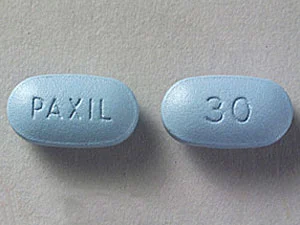
Generic Paxil 30 mg
Price range: $740.70 through $2,400.00
| Variation | Price | Quantity | Add To Cart |
|---|---|---|---|
| 300 pills | $2,400.00 |
|
Add to cart |
| 180 pills | $1,458.00 |
|
Add to cart |
| 240 pills | $1,944.00 |
|
Add to cart |
| 90 pills | $740.70 |
|
Add to cart |
Paxil 30 mg (Paroxetine): Mid-Range Dose Review and Patient Safety
Paxil 30 mg is an immediate-release paroxetine tablet used only with a prescription. It belongs to the selective serotonin reuptake inhibitor (SSRI) class and may appear in adult treatment plans for major depressive disorder, obsessive-compulsive disorder, panic disorder, social anxiety disorder, generalized anxiety disorder, or posttraumatic stress disorder. Thirty milligrams is not the standard labeled starting dose for these conditions. It is usually reached after a prescriber evaluates response and tolerability at another dosage or chooses a patient-specific plan.
A shopper searching for Paxil 30 mg online should already have an appropriate prescription or use a legitimate clinical service that performs a real assessment. This page explains product identity, 30 mg dosing context, safety warnings, interactions, side effects, refill checks, and ways to compare the paroxetine 30 mg price through licensed pharmacies. It is not a recommendation to escalate treatment, and it cannot determine whether 30 mg is right for a particular person.
Product specification
| Active medicine | Paroxetine |
|---|---|
| Common brand | Paxil |
| Strength | 30 mg per immediate-release tablet |
| Class | SSRI antidepressant |
| U.S. status | Prescription only |
| Standard labeled administration | Single daily morning dose, with or without food, as prescribed |
| Not the same as | Paxil CR controlled-release tablets |
| Important warning | Close monitoring for suicidal thoughts and behaviors, especially in younger patients and around dosage changes |
Why the 30 mg page requires more than generic drug information
The practical question at 30 mg is often not “What is Paxil?” but “Why has my prescription moved to this dose, and what should be reassessed?” Immediate-release Paxil is commonly started at 10 mg or 20 mg depending on the indication. Current labeling permits dose increases in 10 mg increments at intervals of at least one week for several indications when response is inadequate and tolerability is acceptable.
That makes 30 mg a potential titration or maintenance point rather than a universal destination. The clinical value of the dose should be supported by improvement in the diagnosed condition. If the only change is more side effects, or if symptoms are worsening, the prescriber needs that information before another increase.
Where 30 mg may sit within labeled adult ranges
For major depressive disorder, the labeled adult starting dosage is 20 mg and the maximum is 50 mg. For OCD, treatment starts at 20 mg and may go as high as 60 mg. Panic disorder starts at 10 mg and may reach up to 60 mg. PTSD starts at 20 mg, with a maximum of 50 mg. Social anxiety disorder and generalized anxiety disorder generally use 20 mg as the starting and recommended dosage; labeling notes limited evidence of additional benefit above 20 mg for these conditions even though higher doses have been studied.
Consequently, the meaning of 30 mg differs by diagnosis. It may be a reasonable prescriber-selected step for one patient, unnecessary for another, or poorly tolerated by a third. Maximum dose is a ceiling in labeling, not a goal.
Five questions that justify a 30 mg review
- Which target symptoms improved at the previous dosage, and which remain impairing?
- Did side effects change after reaching 30 mg?
- Has sleep, energy, impulsivity, or suicidal thinking changed?
- Have any prescriptions, over-the-counter drugs, or supplements been added?
- Is the current benefit large enough to justify continuing this dose?
These questions help separate a thoughtful adjustment from automatic dose escalation. They also create useful information for the next appointment.
Expected treatment goals by condition
Depression
Improvement should involve symptoms and functioning: mood, interest, energy, concentration, sleep, appetite, guilt, psychomotor change, safety, and the ability to manage daily responsibilities. Feeling emotionally blunted is not the same as remission and should be discussed.
Obsessive-compulsive disorder
Track the time consumed by obsessions and compulsions, distress, avoidance, reassurance-seeking, and interference. Exposure and response prevention is a central evidence-based therapy and may be used with medication.
Panic disorder
Relevant outcomes include fewer or less intense panic attacks, reduced anticipatory anxiety, less avoidance, and restored activity. Paxil is not an immediate rescue treatment for an attack.
Social anxiety and generalized anxiety
Look for meaningful changes in avoidance, worry control, physical tension, sleep, and daily participation. Since labeling does not show clear additional benefit above 20 mg for every patient in these conditions, the rationale for 30 mg deserves explicit review.
Posttraumatic stress disorder
Assess intrusive symptoms, avoidance, negative mood/cognition, arousal, sleep, safety, and function. Trauma-focused psychotherapy may remain important even when medication reduces some symptoms.
How to take Paxil 30 mg correctly
Take the tablet exactly as shown on the patient-specific label. Immediate-release Paxil is generally administered once daily in the morning and may be taken with or without food. Swallow with water. If the medicine causes nausea, sedation, or insomnia, ask before changing the dose time.
Do not take 30 mg “as needed.” Do not alternate 20 mg and 40 mg tablets to create an average unless the prescriber has written that exact schedule. Day-to-day changes can increase side effects and discontinuation symptoms and make response difficult to interpret.
Missed tablet or interrupted supply
If one dose is missed, follow the Medication Guide or pharmacist’s instructions. General guidance is to take it when remembered unless the next dose is close, in which case the missed dose is skipped. Do not double the next dose.
If several days are missed, contact the prescriber before resuming 30 mg. The appropriate restart may depend on the length of the gap, withdrawal symptoms, reason for stopping, and changes in health or other medicines. A pharmacy delivery delay should be handled early through the licensed pharmacy and prescriber, not by buying a questionable emergency supply.
Why 30 mg should not be reached faster than directed
Current labeling generally spaces dose increases by at least one week, but a prescriber may use a slower schedule. Rapid escalation can increase adverse effects and may obscure whether a lower dose was sufficient. It also creates a period when suicidal thoughts, activation, panic, or mania-like symptoms require close observation.
A previous history of tolerating another SSRI does not prove that paroxetine 30 mg will be tolerated. Paroxetine has its own metabolism, interaction profile, and discontinuation burden.
Boxed warning and dose-change vigilance
Antidepressant studies showed an increased risk of suicidal thoughts and behaviors in pediatric and young adult patients. Paxil is not approved for pediatric use. Regardless of age, all patients should be monitored for clinical worsening and unusual behavioral changes, especially during early treatment and after a dose increase.
Call the prescriber promptly for new self-harm thoughts, worsening hopelessness, severe agitation, marked irritability, dangerous impulsivity, insomnia, panic, aggression, or an abrupt mood shift. If a person is at immediate risk, seek emergency assistance and remain with them until help arrives.
Activation of mania or hypomania
Before prescribing an antidepressant, clinicians screen for bipolar disorder. Tell them about past episodes of very high or irritable mood, little need for sleep, racing thoughts, unusually fast speech, intense goal-directed activity, grandiosity, psychosis, or high-risk behavior. Include family history.
At 30 mg, a new surge in energy with reduced sleep should not be dismissed as the medication “kicking in.” Mania, hypomania, a mixed state, substance effects, and ordinary recovery require different interpretations. Prompt assessment protects the patient.
Serotonin syndrome and prohibited MAOI combinations
Do not use Paxil with an MAOI intended to treat psychiatric disorders or during the specified washout periods. Linezolid and intravenous methylene blue also create a serious interaction concern. Switching must be planned by clinicians.
Serotonin syndrome may present with agitation, confusion, hallucinations, fever, sweating, rapid heart rate, unstable blood pressure, tremor, rigidity, overactive reflexes, incoordination, nausea, vomiting, or diarrhea. It is more likely with multiple serotonergic products, but it can occur in other circumstances. Seek urgent care when the pattern is suspected.
Other drugs and supplements that need review
Give the pharmacist a full list. Products that may matter include other antidepressants, lithium, buspirone, tramadol, triptans, certain opioids, amphetamine medicines, St. John’s wort, anticoagulants, antiplatelets, NSAID pain relievers, and drugs metabolized by CYP2D6. Do not use this list as proof that an unlisted product is safe.
Paxil is contraindicated with thioridazine and pimozide because of dangerous rhythm risks. Paroxetine’s strong CYP2D6 inhibition can raise exposure to other medicines or reduce activation of tamoxifen. Oncology, psychiatry, primary care, and pharmacy teams may need to coordinate.
Bleeding risk at prescription and nonprescription checkout
Aspirin, ibuprofen, naproxen, anticoagulants, and antiplatelet medicines can increase bleeding risk when combined with an SSRI. Before adding an over-the-counter pain medicine, ask a pharmacist who can see the full medication list. Report unexplained bruises, nosebleeds, or prolonged bleeding.
Black stool, bloody stool, vomiting blood, or uncontrolled bleeding needs urgent medical attention. Do not independently stop a prescribed anticoagulant because the combination worries you.
Pregnancy planning is essential with paroxetine
Current labeling describes an association between first-trimester paroxetine exposure and cardiovascular malformations, and it discusses complications associated with later-pregnancy SSRI exposure. Untreated serious illness also carries risk, so the decision is individualized.
Tell the prescriber before conception when possible. If pregnancy is discovered during treatment, arrange a prompt review but do not suddenly stop 30 mg. Abrupt discontinuation can produce significant symptoms and a return of the treated illness.
Breastfeeding and infant observation
Paroxetine is present in human milk. The healthcare team weighs the benefit of treatment, benefit of breastfeeding, and potential infant exposure. Tell the infant’s clinician about the medicine and report unexpected feeding problems, sleepiness, irritability, or other changes.
Sexual effects and emotional blunting
Paroxetine can cause decreased libido, delayed or absent orgasm, erectile difficulty, and delayed or absent ejaculation. Ask about these effects directly at follow-up; patients may not volunteer them. Emotional blunting or feeling detached should also be reported, because it may affect treatment satisfaction and functioning.
Do not reduce from 30 mg without a plan or buy an unverified sexual-enhancement drug. The prescriber can consider the timing, other causes, dose-benefit balance, and evidence-based options.
Common side effects
Nausea, dry mouth, sleepiness, dizziness, sweating, tremor, weakness, headache, insomnia, constipation, diarrhea, reduced appetite, and sexual dysfunction may occur. The frequency and severity vary. Some symptoms settle; others persist or intensify after an increase.
Contact the prescriber when side effects interfere with eating, hydration, work, driving, or adherence. Severe rash, facial swelling, difficulty breathing, seizures, fainting, serotonin-syndrome symptoms, or a dangerous mental-health change requires urgent care.
Sorting symptoms by urgency
| Situation | Reasonable next action |
|---|---|
| Mild, short-lived nausea or dry mouth | Record it and ask the pharmacist about supportive measures; call sooner if it prevents hydration or worsens |
| Persistent sexual dysfunction, sweating, insomnia, or emotional blunting | Arrange a prescription review; do not skip or abruptly stop tablets |
| New confusion, severe weakness, repeated falls, or fainting | Seek prompt medical assessment because low sodium, blood-pressure changes, interactions, or other illness may be involved |
| Fever with rigidity, agitation, tremor, and diarrhea | Seek urgent care for possible serotonin syndrome |
| Suicidal intent, a seizure, severe allergic reaction, collapse, or inability to awaken | Call emergency services immediately |
This table is a navigation aid, not a complete triage system. When symptoms are rapidly worsening or the patient feels unsafe, choose urgent evaluation.
Appetite, weight, and metabolic expectations
Paroxetine can affect appetite and weight, and the direction or timing may differ among patients. A change is not automatically dangerous, but steady gain, marked loss, binge eating, inability to eat, or distress about body image should be discussed. Other factors such as recovery from depression, sleep, activity, thyroid disease, and additional medicines can contribute.
Do not use paroxetine 30 mg as a weight-control drug and do not counter a weight change with unregulated supplements. Some “fat burner” or “mood” products contain stimulants or serotonergic ingredients that can worsen anxiety, heart rate, sleep, or interaction risk. The clinician can assess nutrition, medication contribution, and alternatives.
Documenting a dose increase from 20 mg to 30 mg
A simple before-and-after comparison reduces guesswork. Note the date 30 mg began, the previous daily dose, target symptoms, baseline side effects, and any new medicine or life event. At the review, describe changes in concrete terms—for example, panic attacks decreased from four to one per week, compulsions use one less hour per day, or morning nausea now prevents breakfast.
Do not rely only on a global 1-to-10 rating. Function often shows whether the change matters: attending work, leaving home, completing care tasks, sleeping a sustainable amount, or participating in therapy. If there is no meaningful benefit after an appropriate trial, the prescriber can reconsider rather than escalating automatically.
New prescriptions from another clinician
Urgent care, dental, surgical, fertility, pain, and telehealth clinicians may not see the complete psychiatric record. Tell them you take paroxetine 30 mg before accepting a new prescription. The exact strength matters because interaction risk can be exposure-dependent, and paroxetine’s CYP2D6 inhibition can persist during use.
Ask the dispensing pharmacist to run a full interaction check whenever a new medicine is added. Particular attention may be needed for tramadol, other serotonergic drugs, blood thinners, NSAIDs, tamoxifen, and medicines affecting heart rhythm or sodium. Do not assume that prescriptions from two licensed professionals are automatically compatible when neither saw the other list.
Surgery, dentistry, and planned procedures
Inform the procedural team about paroxetine because bleeding risk, sedation, pain management, and postoperative medicines may be relevant. Do not stop it on the morning of surgery unless the responsible clinician gives that direction. Abrupt withdrawal can complicate recovery and can be mistaken for another postoperative problem.
If the procedure is soon, provide the last dose time and full medication list. The surgeon, anesthetic team, prescriber, and pharmacist can balance continuation, modification, and interaction risks. A retail product page cannot make that decision.
Laboratory monitoring is symptom- and risk-based
There is no single blood test that confirms whether Paxil 30 mg is effective. Clinical response is evaluated through symptoms and functioning. However, a clinician may order sodium, liver, kidney, pregnancy-related, or other tests when age, symptoms, illness, or interacting medicines justify them.
If testing is recommended, ask what question it is intended to answer and what symptoms should trigger earlier assessment. Do not buy home tests as a substitute for care. A normal result also does not eliminate the need to report suicidal thoughts, mania-like symptoms, bleeding, or sexual adverse effects.
Duplicate paroxetine and combination-product checks
Do not take immediate-release Paxil together with Paxil CR, another paroxetine brand, or a duplicate generic unless a prescriber has explicitly designed the regimen. Pharmacy systems may catch duplication, but fragmented care, samples, imported products, and old bottles can bypass that safeguard.
Read the active-ingredient line rather than relying on brand names. Bring all bottles to an appointment or use an accurate written list. If two prescriptions have different directions, pause and call the pharmacy before choosing one.
A personal safety plan is part of treatment
Before a dose change, identify whom to contact during business hours, after hours, and in an emergency. A trusted adult may help observe changes when clinically appropriate and with the patient’s consent. Secure large medicine quantities if there is a self-harm risk, following professional guidance.
An online order-support team cannot replace crisis care. If there is imminent danger, use emergency services. For non-immediate worsening, contact the treating clinician promptly so the medication and diagnosis can be reviewed.
Low sodium, bone health, and falls
SSRIs can cause hyponatremia. Risk may be higher in older adults, people taking diuretics, and those who are volume-depleted. Headache, confusion, memory difficulty, poor concentration, weakness, and unsteadiness may be signs. Severe cases can progress to seizure, coma, or respiratory arrest.
Observational research has also linked SSRI exposure with fractures, although multiple factors may contribute. Tell the clinician about falls, osteoporosis, balance problems, and sedating medicines. A fall after a dose change deserves review.
Eye and seizure precautions
Pupillary dilation from antidepressants can precipitate angle-closure glaucoma in susceptible patients with untreated narrow angles. Sudden eye pain, visual halos, redness, nausea, or vision change is an emergency. Ask whether an eye evaluation is appropriate if there is a relevant history.
Paroxetine should be used cautiously with seizure disorders. Report any seizure immediately. Also disclose heavy alcohol use or planned withdrawal, head injury, and medicines that lower seizure threshold.
Discontinuation syndrome from 30 mg
Stopping or rapidly reducing paroxetine can produce dizziness, sensory disturbances, abnormal dreams, anxiety, agitation, nausea, sweating, headache, tremor, confusion, insomnia, lethargy, emotional lability, and tinnitus. Because 30 mg is above the smallest tablet strength, tapering often requires planned dose steps.
There is no universal taper schedule. A person treated for years or with previous severe withdrawal may need a different approach from someone with short exposure. Do not use leftover strengths to design a taper independently, and do not crush a dosage form without pharmacist confirmation.
Distinguishing withdrawal from relapse
Withdrawal may begin soon after a reduction and can include prominent dizziness or sensory symptoms. Relapse often resembles the original condition, though timing and presentation overlap. A clinician reviews the sequence, prior symptoms, dose changes, and response to adjustments.
Keeping a brief timeline can help: last full dose, first reduced dose, symptom onset, physical symptoms, and mood changes. If suicidal thinking or severe symptoms occur, seek prompt care rather than waiting to classify the cause.
Older adults and kidney or liver impairment
Older patients and people with severe renal or hepatic impairment generally start at 10 mg under current labeling and have lower recommended maximums. A 30 mg prescription therefore warrants confirmation that the prescriber has considered these factors. Never infer dosing solely from age or a lab value viewed online.
The clinician may monitor sodium, falls, interactions, and tolerability more closely. Bring updated kidney and liver information when available.
Use with psychotherapy and other care
Paxil may be combined with evidence-based psychotherapy. Exposure and response prevention is particularly important for OCD; cognitive behavioral approaches may help panic and anxiety disorders; trauma-focused therapies may be used for PTSD; and structured psychotherapy may support depression treatment.
Medication response does not eliminate the need to address sleep, substance use, social stressors, safety, and medical contributors. A dose increase should not become the only response to every problem.
Brand versus generic paroxetine 30 mg
FDA-approved generic paroxetine must meet regulatory requirements for quality and bioequivalence. Generic tablets may differ in color, shape, imprint, inactive ingredients, and price. Check the dispensing label and ask the pharmacist if the manufacturer changes.
Do not identify the product by color alone. A branded Paxil 30 mg tablet and a generic may look different while containing the same active ingredient and strength. A loose pill without a traceable package should not be used.
Buying Paxil 30 mg online with a prescription
Legitimate transactional keywords include “buy Paxil 30 mg online with prescription,” “paroxetine 30 mg refill,” “generic Paxil 30 mg price,” and “licensed online pharmacy paroxetine.” A safe online pharmacy requires a valid prescription, is licensed to dispense to the patient’s location, provides a verifiable address and phone number, and makes a pharmacist available.
A site that lets shoppers choose 10, 20, 30, or 40 mg without prescriber authorization is encouraging self-dosing. Avoid sellers that advertise “no prescription,” use only anonymous chat, request gift-card or cryptocurrency payment, or ship unlabeled tablets. The FDA warns that unsafe online pharmacies may sell fake, expired, contaminated, or otherwise dangerous medicine.
Price-comparison framework
- Compare immediate-release paroxetine 30 mg with the same quantity.
- Separate brand price from generic price.
- Include delivery, membership, and consultation fees in the total.
- Check whether insurance requires an in-network pharmacy or prior authorization.
- Verify refill limits and prescription expiration before paying.
Do not buy 60 mg tablets to split into 30 mg unless that exact product and approach are prescribed and confirmed by the pharmacist. A theoretical arithmetic saving is not a safe dispensing plan.
When the order arrives
Check the patient name, medicine, 30 mg strength, immediate-release formulation, directions, quantity, pharmacy, prescriber, expiration or beyond-use information, seal, manufacturer, and tablet imprint. The package should not show tampering or moisture damage.
If any item differs, quarantine the package from household medicines and contact the dispensing pharmacy. Do not taste or take a tablet to identify it. Photographing the package may help the pharmacy investigate, but pharmacist verification is still required.
Pharmacist counseling questions for a 30 mg refill
- Has the manufacturer changed, and do any inactive ingredients differ?
- Do my new pain, migraine, sleep, or cold medicines interact with paroxetine?
- What should I do if vomiting occurs soon after the dose?
- How should I handle a missed dose with my usual morning schedule?
- Does this prescription replace a 20 mg bottle, or are both meant to be used?
- What storage conditions apply during hot-weather delivery or travel?
- Which package changes suggest tampering or dispensing error?
The pharmacist can answer product and medication-use questions and contact the prescriber when the directions are inconsistent. Use that access before taking a questionable refill.
Storage and disposal
Store in the original labeled container at the conditions stated by the manufacturer, away from excess heat and moisture. Keep it secured from children, pets, and anyone for whom it was not prescribed. Do not mix 20 mg, 30 mg, and 40 mg tablets in one bottle.
Use a medicine take-back program for expired or unused paroxetine when available. A pharmacist can provide local disposal instructions. Never resell or give away tablets.
Frequently asked questions
Is Paxil 30 mg a standard starting dose?
No. Labeled adult starting doses are generally 10 mg or 20 mg depending on the condition. Thirty milligrams is usually a titration or maintenance strength.
Is 30 mg appropriate for generalized anxiety?
Paroxetine is approved for GAD, but labeling identifies 20 mg as the starting and recommended dosage and does not establish greater benefit above 20 mg for all patients. A prescriber may still make an individualized decision.
Can I switch directly from Paxil CR to Paxil 30 mg?
Do not switch release formulations or strengths without an authorized plan. They are not automatically interchangeable milligram for milligram.
Can the 30 mg tablet be used only on difficult days?
No. Paroxetine is generally prescribed as consistent daily treatment, not an as-needed calming tablet.
What if 30 mg causes more side effects but no benefit?
Contact the prescriber. Provide the timing, symptoms, and functional impact. Do not increase further or stop abruptly.
Can I drink alcohol?
Alcohol may worsen drowsiness, impaired judgment, depression, anxiety, and sleep. Discuss it with the prescriber and avoid hazardous activities until individual effects are known.
Is paroxetine addictive?
It is not considered an addictive intoxicant, but physical adaptation and significant discontinuation symptoms can occur. Gradual supervised reduction is important.
Can I order Paxil 30 mg without a prescription?
A legitimate U.S. pharmacy should require a valid prescription. A seller willing to bypass it is a safety warning.
Decision summary before a 30 mg refill
The patient should be able to answer why 30 mg is being continued, what has improved, which adverse effects remain, whether any new medicine or health change has occurred, and when treatment will next be reviewed. If those questions cannot be answered, arrange a prescription review rather than treating the refill as an automatic purchase.
Price and delivery speed matter, but accurate dose, formulation, licensed dispensing, and pharmacist access matter more. Search for paroxetine 30 mg online only within a lawful, prescription-based process.
Keep a current medication list with the prescription record and update it after every appointment. Include nonprescription pain medicines, sleep aids, supplements, and products used only occasionally. This small step helps the prescriber and pharmacist identify duplication, serotonin risk, bleeding risk, and CYP2D6 interactions before they become preventable problems. Carry the list during travel and emergency visits so unfamiliar clinicians can make safer decisions quickly.
Authoritative sources
| Select Variation |
300 pills ,180 pills ,240 pills ,90 pills |
|---|