
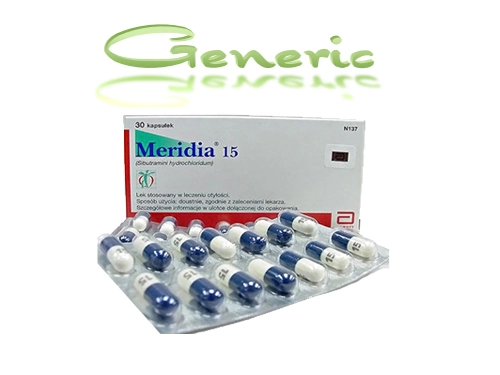
Generic Meridia 15 mg
Price range: $499.00 through $809.00
| Variation | Price | Quantity | Add To Cart |
|---|---|---|---|
| 300 pills | $809.00 |
|
Add to cart |
| 240 pills | $709.00 |
|
Add to cart |
| 180 pills | $599.00 |
|
Add to cart |
| 90 pills | $499.00 |
|
Add to cart |
Meridia 15 mg pill was the highest approved daily strength of Meridia, a prescription weight-loss capsule that contained the active ingredient sibutramine. For more than a decade, doctors used it as part of long-term obesity treatment alongside a reduced-calorie diet and exercise. Many people still search for “Meridia 15 mg” because they remember the brand, because they once took it, or because they have seen it advertised online. This page gives you the full picture in one place: how the 15 mg Meridia capsule fitted into treatment, how it worked in the body, the side effects that were seen in clinical trials, the heart-safety study that ended its approval, and the questions you should ask before trusting any product that claims to contain sibutramine.
Meridia 15 mg Tablet at a Glance
| Detail | Information |
|---|---|
| Brand name | Meridia |
| Active ingredient | Sibutramine hydrochloride monohydrate |
| Strength covered on this page | 15 mg capsule (the top approved dose) |
| Other strengths that existed | 5 mg and 10 mg capsules |
| Drug class | Centrally acting appetite suppressant (serotonin and norepinephrine reuptake inhibitor) |
| Original U.S. approval | November 1997 |
| U.S. federal schedule | Schedule IV controlled substance |
| Market status | Withdrawn in the U.S. in 2010; approval formally withdrawn December 21, 2010 |
| Reason for withdrawal | Higher risk of non-fatal heart attack and stroke in a large outcomes trial |
What Was Meridia 15 mg Pill Used For?
Meridia was approved for the management of obesity, which included both losing weight and keeping that weight off. It was meant for adults with a body mass index (BMI) of 30 kg/m² or more, or 27 kg/m² or more when another risk factor such as diabetes, high cholesterol, or controlled high blood pressure was present. The capsule was never designed as a stand-alone fix. The prescribing information described it as an add-on to a calorie-controlled eating plan and regular physical activity.
The 15 mg capsule had a specific place in that plan. It was not a starting dose. A doctor first prescribed 10 mg once daily and then reviewed progress. Only when a patient had not lost enough weight after about four weeks did the label allow an increase to 15 mg a day. That step-up design matters because it shows that 15 mg was the ceiling: the label said that doses above 15 mg daily were not recommended.
Where the 15 mg Meridia Capsule Sat in the Meridia Dose Ladder
| Capsule | Role in treatment | Who it was meant for |
|---|---|---|
| 5 mg | Lower option | People who did not tolerate 10 mg well |
| 10 mg | Standard starting dose | Most adults beginning treatment |
| 15 mg | Maximum daily dose | Adults whose weight loss was not adequate after about four weeks on 10 mg |
Because each person responds to medicine a little differently, two people of the same weight could end up on different strengths. If you want to understand why one patient does well on a lower dose while another needs more, our guide on the science behind individual dosing explains the factors involved, including metabolism, body size, and other medicines.
For reference, the U.S. label described the 15 mg capsule as yellow and white, printed with “MERIDIA” on the cap and “-15-” on the body. Any capsule sold today with that marking is either very old stock that expired years ago or a copy made outside the regulated supply chain.
How Sibutramine 15 mg Worked in the Body
Sibutramine affected appetite through brain chemistry rather than through the stomach or gut. After the capsule was swallowed, the liver converted most of the parent drug into two active metabolites, known as M1 and M2. The liver’s CYP3A4 enzyme carried out much of this work. These metabolites, not sibutramine itself, did most of the job.
M1 and M2 slowed the reabsorption (reuptake) of two chemical messengers, serotonin and norepinephrine, and to a smaller extent dopamine. With more of these messengers active between nerve cells, people tended to feel full sooner and to stay satisfied longer after eating. The metabolites had elimination half-lives of roughly 14 to 16 hours, which is why a single daily dose was enough.
The same norepinephrine effect that helped with fullness also acted on the heart and blood vessels. In the original trials, sibutramine raised average blood pressure by about 1 to 3 mmHg and average pulse by about 4 to 5 beats per minute compared with placebo. Those averages looked small, but some individuals had much larger rises. This cardiovascular effect was the thread that later led to the drug’s removal. If you are curious how reuptake-blocking medicines differ from stimulants that release these messengers, our explainer on how Adderall works in the brain offers a useful comparison of the two mechanisms.
What Results Did Meridia Deliver?
In the trials that supported approval, sibutramine was studied for periods of up to two years. Most weight loss happened in the first six months, and in longer studies it was largely maintained through 12 months while patients stayed on treatment. The effect was real but modest. When European regulators reviewed the full body of evidence in 2010, they concluded that people lost only about 2 to 4 kilograms more than people taking placebo, and that it was unclear whether the loss lasted after treatment ended.
That modest benefit is central to the Meridia story. A medicine with a small benefit needs a very clean safety record to stay on the market. When a large study raised concerns about the heart, the balance tipped.
Side Effects Reported With Meridia
The U.S. prescribing information listed the adverse events that happened more often with sibutramine than with placebo. The most common are shown below.
| Side effect | Sibutramine | Placebo |
|---|---|---|
| Headache | 30.3% | 18.6% |
| Dry mouth | 17.2% | 4.2% |
| Loss of appetite (anorexia) | 13.0% | 3.5% |
| Constipation | 11.5% | 6.0% |
| Insomnia | 10.7% | 4.5% |
Other effects described in the label included raised blood pressure, faster heart rate, palpitations, sweating, nervousness, and changes in taste. Some people also reported mood changes or feeling unusually worn out. Our articles on day-to-day mood swings and feeling more tired than usual cover how to tell normal variation from something worth reporting to a doctor.
Less common but serious warnings
- Seizures: convulsions were reported in about 0.1% of treated patients in placebo-controlled trials.
- Serotonin syndrome: a dangerous reaction was possible when sibutramine was combined with other serotonin-affecting drugs, such as SSRIs or triptans.
- Narrow-angle glaucoma: sibutramine could widen the pupils, which may trigger a glaucoma attack in people at risk.
- Gallstones: rapid weight loss of any kind can raise the risk of gallstone formation.
- Heart rhythm and blood pressure: sustained rises in blood pressure or pulse were a reason to lower the dose or stop.
Who Was Told Not to Take Meridia 15 mg
Even while it was approved, Meridia carried a clear list of contraindications. It was not to be used by people:
- Taking a monoamine oxidase inhibitor (MAOI), or within two weeks of stopping one
- With uncontrolled or poorly controlled high blood pressure
- With a history of anorexia nervosa or bulimia
- Taking other centrally acting appetite suppressants
- With known allergy to sibutramine
In early 2010, after the first SCOUT data were reviewed, the U.S. label was strengthened to add a contraindication for people with a history of cardiovascular disease, including coronary artery disease, stroke, heart failure, arrhythmia, and peripheral artery disease. That update came only months before the product was withdrawn entirely.
The SCOUT Trial: Why Meridia 15 mg Was Withdrawn
The Sibutramine Cardiovascular Outcomes Trial (SCOUT) was a large study requested by European regulators. It set out to answer a simple question: did sibutramine-led weight loss protect the heart, or harm it? The results were published in the New England Journal of Medicine in September 2010.
Who was studied
SCOUT enrolled overweight and obese adults aged 55 and older who had existing cardiovascular disease, type 2 diabetes with at least one other risk factor, or both. After a six-week lead-in on 10 mg, about 9,800 participants were randomly assigned to sibutramine (10 mg, increased to 15 mg if needed) or placebo and followed for an average of 3.4 years.
What the results showed
| Outcome | Sibutramine | Placebo |
|---|---|---|
| Primary outcome (cardiovascular death, heart attack, stroke, or resuscitated cardiac arrest) | 11.4% | 10.0% |
| Non-fatal heart attack | 4.1% | 3.2% |
| Non-fatal stroke | 2.6% | 1.9% |
| Cardiovascular death | 4.5% | 4.7% |
Figures as summarized by the American College of Cardiology.
In plain language, people taking sibutramine had about a 16% higher relative risk of the combined heart and stroke outcome. The difference was driven by more non-fatal heart attacks and non-fatal strokes. Deaths from cardiovascular causes were similar in both groups. At the same time, the extra weight loss was small.
How regulators responded
The timeline below shows how quickly the evidence changed the product’s status.
| Date | Event |
|---|---|
| November 1997 | Meridia approved in the U.S. for obesity management |
| January 21, 2010 | European Medicines Agency committee recommends suspending all sibutramine medicines in the EU |
| Early 2010 | U.S. label adds a contraindication for people with cardiovascular disease |
| September 2010 | Full SCOUT results published |
| October 8, 2010 | Manufacturer agrees to withdraw Meridia from the U.S. market at the FDA’s request |
| December 21, 2010 | FDA formally withdraws approval of the Meridia application (NDA 20-632) |
The FDA’s notice in the Federal Register stated that the benefits of Meridia “no longer outweigh the risks in any identifiable patient population.” That wording is important. The agency did not say the drug was only unsafe for people with heart disease. It concluded there was no group of patients for whom it still made sense. Regulators in many other countries reached the same conclusion around the same time; the European Medicines Agency’s sibutramine review sets out the European reasoning in detail.
Is Meridia 15 mg Still Available?
No licensed U.S. pharmacy can dispense Meridia 15 mg today, because there is no approved product to dispense. Sibutramine also remains on the federal list of Schedule IV controlled substances, so it is still regulated even though it is no longer sold.
Despite this, the name “Meridia 15 mg” still appears on websites, social media posts, and marketplace listings. There are three realities behind those listings:
- Unapproved imports. Capsules made in places with weak oversight may contain the wrong amount of sibutramine, no sibutramine, or a different drug.
- Hidden ingredients. The FDA has repeatedly found sibutramine concealed in products sold as “herbal” or “natural” slimming supplements. Its page on avoiding products contaminated with hidden ingredients explains the problem and how to check alerts.
- Expired stock. Any genuine Meridia capsule would now be well over a decade past its expiry date.
A legitimate pharmacy has to confirm that a prescription is valid and that the product is approved. Our guide on how pharmacies verify controlled prescriptions explains those checks, and they are exactly why a real pharmacy cannot fill a Meridia order. The FDA’s BeSafeRx program also shows how to spot unsafe online sellers.
If You Took Meridia 15 mg in the Past
Many adults used Meridia before 2010 without problems. The SCOUT findings related to people taking the drug at the time, and there is no established evidence that past use creates an ongoing risk years after stopping. Still, it is sensible to:
- Mention past sibutramine use when a doctor reviews your medical history, especially if you have heart disease, high blood pressure, or diabetes.
- Keep up routine blood pressure and cholesterol checks, which matter for anyone managing weight.
- Safely discard any old capsules rather than taking them. The FDA explains how to dispose of unused medicines.
Doctors also look at your full record of controlled-medicine prescriptions before prescribing a new weight-loss drug. Our article on why doctors check prescription history explains what they look for and why it protects you.
If You Have Taken a Product Sold as “Meridia 15 mg” Recently
Stop taking it and speak with a doctor or pharmacist. Bring the packaging if you still have it. Seek emergency care right away if you notice chest pain or pressure, sudden shortness of breath, a racing or irregular heartbeat, a severe headache, weakness or numbness on one side of the body, trouble speaking, or a seizure. For questions about a possible overdose or a mix with other medicines, U.S. residents can call Poison Control at 1-800-222-1222 or use poison.org. You can also report a bad reaction or a suspicious product to the FDA through MedWatch.
Never pass weight-loss capsules to a friend or family member, even if they worked for you. Our guide on what happens if someone else takes your prescription covers the health and legal risks.
Approved Alternatives to Meridia 15 mg
Weight-loss medicine has changed a great deal since 2010. Several prescription options are now approved in the U.S., each with its own benefits and cautions. A doctor chooses based on your BMI, health conditions, other medicines, and cost. The National Institute of Diabetes and Digestive and Kidney Diseases keeps an overview of these medicines.
| Option | How it works | Typical use |
|---|---|---|
| Phentermine | Stimulant-type appetite suppressant | Short-term add-on to diet and exercise |
| Phentermine / topiramate ER | Appetite suppression plus increased fullness | Long-term weight management |
| Naltrexone / bupropion ER | Acts on brain reward and hunger pathways | Long-term weight management |
| Orlistat | Blocks absorption of some dietary fat | Long-term weight management |
| GLP-1 and GLP-1/GIP medicines | Slow stomach emptying and reduce appetite | Long-term weight management, often with strong results |
Unlike Meridia, the newer GLP-1 class has outcomes data showing cardiovascular benefit for some patient groups, which is a complete reversal of the Meridia story. Your doctor can explain which options fit your health profile.
Questions to Ask Your Doctor Instead of Searching for Meridia
- Is my BMI and health history a good fit for a prescription weight-loss medicine?
- Which approved medicine has the best balance of benefit and risk for my heart health?
- How will we measure whether the medicine is working, and when will we review it?
- What side effects should make me call you straight away?
- Do any of my current medicines, supplements, or conditions rule out certain options?
Our list of questions to ask at every follow-up visit can help you prepare for that appointment.
Frequently Asked Questions About Meridia 15 mg
Is Meridia 15 mg the same as sibutramine 15 mg?
Yes. Meridia was the U.S. brand name, and sibutramine hydrochloride monohydrate was the active ingredient. Outside the U.S., the same drug was sold under other names, most widely as Reductil.
Why was Meridia banned?
Strictly speaking, it was withdrawn rather than banned. The manufacturer removed it from the market at the FDA’s request after the SCOUT trial showed a higher rate of non-fatal heart attacks and strokes, and the FDA then withdrew approval in December 2010. Regulators concluded the modest weight loss did not justify the heart risk.
How much weight did people lose on Meridia 15 mg?
Results varied, but across studies the average extra loss compared with placebo was small, about 2 to 4 kg according to European regulators. Most of the loss happened in the first six months.
Can a doctor still prescribe Meridia 15 mg?
No. With approval withdrawn, there is no legal U.S. product for a doctor to prescribe or for a pharmacy to dispense. Doctors now choose from currently approved weight-loss medicines.
Is it safe to buy Meridia 15 mg online?
No. Any product sold as Meridia today is not from the regulated supply chain. It may contain unknown doses, other drugs, or contaminants, and it carries the same heart risks that led to withdrawal.
Was Meridia a controlled substance?
Yes. Sibutramine was placed in Schedule IV in the U.S. and remains listed there, which means it has a recognized potential for misuse and is subject to federal controls.
What is the closest approved alternative to Meridia?
No current medicine works in exactly the same way. Phentermine is the most widely prescribed appetite suppressant today, while combination products and GLP-1 medicines are commonly used for longer-term weight management. Your doctor can recommend the right fit.
| Select Variation |
300 pills ,180 pills ,240 pills ,90 pills |
|---|