
Health Tips
Can You Take Acetaminophen with Oxycodone?

A woman stands at the pharmacy counter two days after her gallbladder surgery. She holds up an amber bottle and points at the label: “Oxycodone-APAP 5-325.” Her surgeon also told her she could use acetaminophen for pain at home, and now she is worried. Is APAP something different? Can you take acetaminophen with oxycodone, or has she already been doing exactly that? The pharmacist smiles, turns the bottle around, and explains that “APAP” is acetaminophen. Every tablet in that bottle already holds 325 mg of it, right next to 5 mg of oxycodone.
That conversation captures the real answer. So, can you take acetaminophen with oxycodone? Yes, and people do it all the time. Doctors pair them on purpose, and the combination has been in use for decades. The catch is not an interaction between the two drugs. The catch is the total amount of acetaminophen reaching your liver each day, from every source, including sources you may not recognize by name.
If you want a brand-by-brand, day-to-day planning guide, our companion article on taking Tylenol with oxycodone in everyday life covers that ground. This post goes underneath it: the pharmacology, the clinical reasoning, the history of the 325 mg rule, and what actually happens inside your body.
Why These Two Medicines Keep Showing Up Together
Oxycodone and acetaminophen relieve pain through completely different routes. Oxycodone is an opioid. It binds opioid receptors throughout the central nervous system and turns down the volume on pain signals. It is strong, but it also slows breathing, causes constipation, and can lead to dependence.
Acetaminophen works differently, and scientists still debate exactly how. The leading explanations involve reducing prostaglandin production inside the central nervous system and nudging the body’s own serotonin-based pain-control pathways. Unlike ibuprofen or naproxen, it does very little to calm inflammation in a swollen joint or wound. It does not slow breathing, does not cause dependence, and does not irritate the stomach the way anti-inflammatory drugs can.
Because the two drugs act on separate pathways, their pain relief adds together. This is the core idea behind “multimodal analgesia,” the approach most surgical teams now use: combine medicines with different mechanisms so each can be used at a lower dose. A modest amount of oxycodone plus acetaminophen often does the work that a larger dose of oxycodone alone would otherwise need to do.
The opioid-sparing evidence
This is not just theory. A frequently cited meta-analysis in the British Journal of Anaesthesia pooled randomized trials of patients recovering from major surgery. Those who received acetaminophen alongside morphine used roughly 20 percent less morphine over the first 24 hours than those who got morphine alone. Researchers call this an acetaminophen opioid-sparing effect.
Two honest caveats belong here. First, the same analysis did not find a clear drop in opioid side effects such as nausea or sedation, so a 20 percent reduction is helpful but not magic. Second, results vary by type of surgery and by how the acetaminophen is given. Even so, the finding helped push hospitals toward scheduled acetaminophen after surgery, meaning doses given at regular times rather than only when pain spikes. Steady dosing keeps a baseline of relief in place, so the opioid is reserved for what breaks through. This is one reason your discharge papers may list acetaminophen “every 6 hours” and oxycodone “as needed.” For more on why a surgeon reaches for oxycodone in the first place, see why doctors choose oxycodone over other pain medicines.
Is there a direct interaction?
Not in the usual sense. Oxycodone is broken down mainly by the liver enzymes CYP3A4 and CYP2D6. Acetaminophen travels mostly through different chemical routes. Neither one meaningfully raises or lowers the blood level of the other. Taking acetaminophen and oxycodone together does not make the oxycodone stronger or more dangerous to your breathing. The risks stay separate: oxycodone carries the breathing and sedation risk, while acetaminophen carries the liver risk. Our overview of oxycodone drug interactions explains which medicines do change oxycodone levels.
One Ingredient, Many Names
A lot of accidental double-dosing starts with vocabulary. Acetaminophen hides behind abbreviations, brand names, and an entirely different word used outside the United States. The chemistry gives us the abbreviations: the full name is N-acetyl-para-aminophenol, which shortens to APAP, and para-acetylaminophenol, which became “paracetamol.” Here is where you are likely to meet each name.
| Name or label you might see | Where it usually appears | What it means |
|---|---|---|
| Acetaminophen | US drug facts labels, prescriptions, hospital records | The official US generic name |
| APAP | Pharmacy bottle labels, insurance records, e.g., “oxycodone/APAP” | Abbreviation of the chemical name; same drug |
| Acet., ACET, or “w/ acet” | Handwritten notes, shortened label text, some electronic records | Shorthand for acetaminophen |
| Paracetamol | UK, Europe, Australia, India, and much of the world | The international name for the same molecule |
| Tylenol, store brands, “non-aspirin pain reliever” | Over-the-counter shelves | Products whose main ingredient is acetaminophen |
| Percocet, Endocet, Nalocet, Primlev | Prescription bottles and prescriber notes | Brand names of fixed-dose oxycodone acetaminophen combination tablets |
If any of these words appear on two different products you are using, you are taking acetaminophen from both.
Travelers and people who move between countries should pay special attention. Paracetamol and oxycodone are the same pairing that US patients know as acetaminophen and oxycodone. A paracetamol tablet bought abroad and a Percocet prescribed at home overlap completely. Safety groups have urged US pharmacies to spell out “acetaminophen” rather than print “APAP,” but plenty of labels still use the shorthand. When you are unsure, our guide to reading an oxycodone prescription label walks through each line.
Three Ways the Pair Reaches Patients
Depending on where you are in your recovery, you might receive the two medicines bundled into one pill, as two separate products, or through an IV line. Each setup has its own logic and its own traps.
Fixed-dose oxycodone APAP tablets and liquids
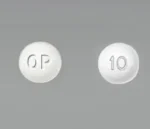
The most familiar form is a single tablet containing both drugs. Labels write the strength as two numbers: oxycodone first, acetaminophen second. Common generic oxycodone APAP strengths include 5/325, 7.5/325, and 10/325, and a 2.5/325 tablet also exists. Percocet and Endocet are well-known brand versions. A few products, such as Nalocet and Primlev, use 300 mg of acetaminophen instead of 325 mg, though what your pharmacy stocks varies. There is also an oral solution, typically 5 mg oxycodone and 325 mg acetaminophen in every 5 mL, according to its DailyMed prescribing information. People who struggle to swallow or who have a feeding tube sometimes use it, and measuring it with an oral syringe rather than a kitchen spoon matters.
The convenience comes with a built-in limitation. Because the two drugs are locked together, raising the oxycodone also raises the acetaminophen. Someone taking two 10/325 tablets every four hours would hit a large acetaminophen total quickly, even though the prescription looks like “just” an opioid. For a closer look at how the combination tablet compares to plain oxycodone, read oxycodone vs. Percocet.
Plain oxycodone plus separate acetaminophen
Many surgeons now prescribe oxycodone by itself and tell patients to take acetaminophen separately. This lets each drug be adjusted on its own. As pain fades, you can taper the opioid while keeping steady acetaminophen in place. Over-the-counter acetaminophen comes in several forms:
- Regular strength: 325 mg tablets.
- Extra strength: 500 mg tablets, caplets, or gelcaps.
- 8-hour or “arthritis” extended release: 650 mg per caplet, designed to release slowly; these should not be crushed or split.
- Liquids: adult and children’s formulas with different concentrations, so the label strength matters every time.
- Rectal suppositories: useful when someone is vomiting or cannot swallow.
People often ask how far apart acetaminophen and oxycodone need to be. Since the two do not interact directly, many clinicians allow them at the same time or staggered, which some patients find smooths out pain between doses. The spacing that matters is between doses of the same drug. Follow the interval printed on each label, and see what happens if oxycodone doses are taken too close together for the opioid side of that question.
Hospital IV acetaminophen plus oral oxycodone
Inside the hospital, acetaminophen is often given through an IV, commonly 1,000 mg infused over about 15 minutes for adults of typical weight. It reaches the bloodstream quickly and does not depend on a working stomach, which helps right after anesthesia. Nurses may pair it with oral oxycodone once you can swallow. The key point for families: IV doses count toward the daily total. If a patient received IV acetaminophen at noon and is discharged at 2 p.m., the first home dose of an oxycodone-acetaminophen tablet should fit into that same 24-hour budget. Ask the discharge nurse when the last hospital dose was given. Our article on oxycodone and healing after surgery covers other questions worth raising before you leave.
What Happens to Acetaminophen Inside Your Liver
To understand acetaminophen liver toxicity, picture your liver as a processing plant with a few different assembly lines. At normal doses, almost everything moves through the safe lines. Trouble only starts when the safe lines get overloaded or when the plant runs low on a key cleanup supply. Here is the journey, step by step.
- Absorption. After you swallow a tablet, acetaminophen is absorbed from the small intestine and carried straight to the liver through the portal vein.
- The main route: glucuronidation. The liver attaches a sugar-based molecule called glucuronic acid to most of the acetaminophen. This tag makes the drug water-soluble and harmless, ready to leave in urine.
- The second route: sulfation. Another large share gets a sulfate group attached instead. It is also safe and also exits through the kidneys. Together, these two routes handle the vast majority of a normal dose.
- The small side route: CYP2E1. A small slice, often estimated at around 5 to 10 percent, is processed by enzymes in the cytochrome P450 family, mainly CYP2E1. This route produces a reactive byproduct called NAPQI (N-acetyl-p-benzoquinone imine). NAPQI is toxic to liver cells.
- The cleanup crew: glutathione. Your liver keeps a supply of an antioxidant called glutathione. It latches onto NAPQI almost instantly and neutralizes it. At normal doses, this happens so quickly that NAPQI never gets a chance to cause harm.
- When the system breaks down. With too much acetaminophen, the safe routes get saturated, more of the drug spills into the CYP2E1 route, and NAPQI production climbs. Once glutathione drops to roughly a third of its normal level, NAPQI starts binding to proteins inside liver cells and injuring them.
This model also explains why certain people are more vulnerable. Regular heavy drinking ramps up CYP2E1 activity, sending more acetaminophen down the toxic route. Fasting, malnutrition, and some chronic illnesses deplete glutathione, leaving less cleanup capacity. And the antidote, N-acetylcysteine (often shortened to NAC), works mainly by restocking glutathione. The clinical overview of acetaminophen toxicity in StatPearls from the National Library of Medicine covers this chemistry in more depth.
Oxycodone itself is also processed by the liver, but through different enzymes. That is why liver disease affects both drugs, in different ways: oxycodone can build up and cause more sedation, while acetaminophen has less safety margin. If you live with a liver condition, our guide to oxycodone and liver disease is worth reading alongside this one.
Where the 325 mg rule came from
Prescription combination pills once contained up to 500, 650, or even 750 mg of acetaminophen per tablet. Patients taking several tablets a day, plus over-the-counter products, regularly exceeded safe totals without realizing it. In January 2011, the FDA asked manufacturers to cap prescription combination products at 325 mg of acetaminophen per tablet or capsule, with a deadline in early 2014. The agency also required a boxed warning, the strongest kind on a drug label, highlighting the risk of severe liver injury. That history is why today’s oxycodone acetaminophen combination tablets almost all end in “/325” or “/300.”
The oxycodone acetaminophen max dose question
Labels for adults generally list 4,000 mg of acetaminophen in 24 hours as the upper limit, from all sources combined. Some over-the-counter extra-strength labels set a lower ceiling of 3,000 mg for self-treatment, and many clinicians advise staying at or under about 3,000 mg for people with extra risk factors. In practice, the oxycodone acetaminophen max dose is usually limited by the acetaminophen, not the oxycodone. Your prescriber chooses the tablet count with that ceiling in mind, which is why adding extra acetaminophen on your own can push you past it. The MedlinePlus page on oxycodone combination products repeats this caution in plain language.
Lower Limits for Some People
The standard daily ceiling assumes a healthy adult with a normal-sized liver, decent nutrition, and stores of glutathione. Many people recovering from surgery do not fit that picture. For them, the answer to “can you take acetaminophen with oxycodone” is usually still yes, but with a lower acetaminophen target.
| Group | Why the margin is smaller | What to ask your clinician |
|---|---|---|
| Heavy or daily alcohol use (often defined as three or more drinks a day) | Alcohol boosts CYP2E1 activity and can lower glutathione, so more NAPQI forms and less gets cleared | “Given how much I drink, what is my personal daily acetaminophen limit?” |
| Existing liver disease (hepatitis, cirrhosis, fatty liver) | Fewer healthy liver cells to process the drug and less reserve if injury occurs | “Should my total be lower, and do I need liver blood tests?” |
| Low body weight, under about 50 kg (110 lb) | Dosing is often calculated by weight, so a standard adult total may be too much | “Should my acetaminophen be dosed by my weight?” |
| Malnutrition, poor appetite, or fasting after surgery | Glutathione stores drop when the body is short on protein and calories | “I’m barely eating right now. Does that change my limit?” |
| Older and frail adults | Less muscle, lower body weight, slower drug clearance, and more medications overall | “Can we review every product I take that has acetaminophen in it?” |
| Chronic illness, including kidney disease, heart failure, or long-term infections | Changes in blood flow, nutrition, and drug clearance can all narrow the margin | “Is daily acetaminophen still a good fit with my other conditions?” |
Only your prescriber or pharmacist can set a personal limit; this table is a starting point for that conversation.
Many of these risk factors overlap in later life. An older adult who lives alone, eats little after a hip repair, and takes several pills a day can carry three or four of them at once. Our page on oxycodone for older adults covers the opioid side of that picture, including fall risk and slower clearance.
Two Overdoses, Two Very Different Timelines
Taking too much of a combination product can cause two completely separate emergencies. They look nothing alike, they unfold on different clocks, and they have different antidotes. Knowing the difference can save a life.
Acetaminophen overdose: slow and deceptive
The dangerous thing about too much acetaminophen is how normal a person can feel at first. Doctors describe the course in four stages.
| Stage | Approximate timing after the overdose | What typically happens |
|---|---|---|
| Stage 1 | 0 to 24 hours | Few or no symptoms. Some people have mild nausea, vomiting, sweating, or tiredness. Many feel fine. |
| Stage 2 | 24 to 72 hours | Liver enzymes start rising on blood tests. Pain or tenderness may appear in the upper right belly, under the ribs. Early symptoms may seem to ease. |
| Stage 3 | 72 to 96 hours | Liver injury peaks. Yellow skin or eyes, confusion, bleeding problems, and kidney trouble can develop. This is the most dangerous window. |
| Stage 4 | About 4 days to 2 weeks | Either gradual recovery, often complete, or liver failure that may require a transplant. |
Timing varies from person to person; the absence of symptoms early on does not mean the dose was safe.
The antidote, N-acetylcysteine, is extremely effective when started early, ideally within about 8 hours of the overdose. It still helps later, but less. That timing is the whole reason to act before you feel sick. If you realize you took more acetaminophen than intended, call Poison Help at 1-800-222-1222 right away, even if you feel perfectly well. The line is free and confidential. Have the bottles in hand so you can report the strengths and roughly when you took them.
Opioid overdose: fast and visible
Too much oxycodone acts within minutes to a few hours. It slows breathing, sometimes to the point of stopping it. Signs include breathing that is slow, shallow, or noisy; pinpoint pupils; extreme sleepiness; limp body; blue or gray lips and fingertips; and being impossible to wake. This is not a “wait and call later” situation. Call 911 immediately.
Naloxone, available as a nasal spray, can quickly reverse opioid effects while help is on the way. It does nothing for acetaminophen poisoning, and NAC does nothing for opioid poisoning. Someone who overdosed on a combination tablet may need both treatments. The CDC’s naloxone guidance explains how and when to give it. Keeping naloxone at home is a reasonable step for anyone prescribed an opioid.
Red flags that need help now
- Call 911 and give naloxone for slow, shallow, or stopped breathing; blue lips; extreme drowsiness; or a person who cannot be woken.
- Call Poison Help (1-800-222-1222) for any suspected extra acetaminophen, even with zero symptoms.
- Seek urgent care for yellowing skin or eyes, dark urine, upper-right belly pain, or new confusion while taking acetaminophen.
For a broader list of situations that justify a trip to the emergency room during treatment, see when to go to the ER while taking oxycodone.
A quieter risk: masking a fever
Acetaminophen lowers fever, which is usually welcome. After surgery, though, a fever can be the first sign of a wound infection, pneumonia, or a blood clot. Steady acetaminophen can blunt that signal. If you are on scheduled doses, watch for other clues: increasing redness or drainage at the incision, chills, a racing heart, or simply feeling worse instead of better. Some surgeons ask patients to check their temperature just before a scheduled dose, when the drug’s effect is lowest. Read more about how fever can change how oxycodone works.
A Pharmacist-Style Review Before Your Next Dose
Back at that pharmacy counter, the pharmacist did not just answer the question. She asked a few of her own. Here is the kind of thing a careful pharmacist might say:
“Let’s line up everything you take on the counter, including the stuff from your bathroom cabinet and the cold medicine in your purse. I’m not looking for a problem with the oxycodone and acetaminophen together. I’m looking for acetaminophen you don’t know you’re taking.”
Before you decide whether you can take acetaminophen with oxycodone today, run the same review yourself:
- Read the second number on your oxycodone label. If it says /325 or /300, your prescription already contains acetaminophen.
- Scan every other product for “acetaminophen,” “APAP,” “acet.,” or “paracetamol,” including cold, flu, sinus, and nighttime sleep aids.
- Add up the milligrams from all sources over the last 24 hours, counting any IV doses from the hospital.
- Compare that total to the personal limit your prescriber gave you, not just the number on a store-brand box.
- Check the timing since your last dose of each medicine against its label interval.
- Ask yourself honestly about alcohol, appetite, and weight changes since surgery.
- Confirm you can recognize the signs of opioid overdose and know where your naloxone is.
- Write down the dose and time in a log or phone note so nobody in the household double-doses you.
If those questions feel intrusive when a real pharmacist asks them, there is a good reason behind each one. Our article on why pharmacists ask questions about oxycodone explains the thinking.
Common Questions on Acetaminophen and Oxycodone
Can you take acetaminophen with oxycodone if my prescription is plain oxycodone?
Often, yes. Plain oxycodone contains no acetaminophen, and many surgeons deliberately pair it with separate acetaminophen. Still, confirm with your prescriber or pharmacist which daily acetaminophen total fits you, especially if you have any of the risk factors listed above.
Is “oxycodone APAP” different from Percocet?
They contain the same two ingredients. Percocet is a brand name; “oxycodone/APAP” is how many pharmacies label the generic version. Tablet strengths, fillers, and appearance can differ, but the active drugs are the same.
Can I add extra acetaminophen to my Percocet or Endocet?
Only if your prescriber has specifically said so and you have done the math. Each tablet already has 325 mg of acetaminophen, so extra doses add up fast. Most people taking a combination tablet should not add more acetaminophen without guidance.
How far apart should acetaminophen and oxycodone be taken?
Because they do not interact directly, they can often be taken at the same time or staggered, depending on your instructions. What matters most is the spacing between doses of the same medicine, which is printed on each label.
Is paracetamol and oxycodone the same as acetaminophen and oxycodone?
Yes. Paracetamol is the international name for acetaminophen. If you take pain relievers bought in another country, count their paracetamol toward your total.
Why does my surgeon want acetaminophen on a schedule instead of as needed?
Regular doses keep a steady baseline of pain control, which research suggests can reduce how much opioid you need. The goal is to use less oxycodone, for fewer days, with the same comfort.
Can a single drink of alcohol matter?
Alcohol is risky with oxycodone at any amount because both slow breathing and cause sedation. It also affects how the liver handles acetaminophen, particularly with regular drinking. Most clinicians advise avoiding alcohol entirely while taking an opioid.
What should I do if I accidentally took too much acetaminophen but feel fine?
Call Poison Help at 1-800-222-1222 now. Feeling fine is typical in the first day of an acetaminophen overdose, and the antidote works best when started early. If anyone is very drowsy or breathing poorly, call 911 instead.
Where This Leaves You
Can you take acetaminophen with oxycodone? In most cases, yes: the two are partners, not rivals. They work through different pathways, they do not interfere with each other’s blood levels, and used together they can trim the amount of opioid a person needs after surgery. The real safety work happens in the liver, where a small, toxic byproduct is normally swept up by glutathione. Keep the total acetaminophen within the limit your prescriber sets, recognize every name it travels under, and know which emergency calls for 911 and which calls for Poison Help.
For a plain-language reference on acetaminophen by itself, the MedlinePlus acetaminophen page is a helpful bookmark. Bring any lingering questions to your next appointment, along with a list of every product in your medicine cabinet.