
Generic Evekeo 10 mg
Price range: $654.30 through $2,181.00
| Variation | Price | Quantity | Add To Cart |
|---|---|---|---|
| 300 pills | $2,181.00 |
|
Add to cart |
| 180 pills | $1,308.60 |
|
Add to cart |
| 240 pills | $1,744.80 |
|
Add to cart |
| 90 pills | $654.30 |
|
Add to cart |
Critical prescription warning: Evekeo 10 mg contains amphetamine sulfate, a federally controlled Schedule II stimulant. The current boxed warning states that abuse and misuse can cause addiction, overdose, and death. Evekeo must be prescribed to an individually evaluated patient and dispensed by a licensed pharmacy. Do not buy it without a prescription, use it for recreational or performance purposes, share it, sell it, or take it differently from the pharmacy label.
Evekeo 10 mg: accurate information for patients with an authorized prescription
Evekeo 10 mg is a blue, round immediate-release tablet containing amphetamine sulfate. It is not the same product as mixed amphetamine salts, dextroamphetamine, lisdexamfetamine, Evekeo ODT, or extended-release amphetamine formulations. Products can contain related stimulant ingredients while differing in isomer composition, absorption, release, dosing, and approved age groups. A prescriber must direct any switch.
The current U.S. label lists three uses for Evekeo tablets: narcolepsy; attention-deficit disorder with hyperactivity as part of a total treatment program; and exogenous obesity as a short-term adjunct to caloric restriction for patients who have not responded to alternative therapy. That third indication does not make Evekeo a routine “anti-obesity medicine,” a casual appetite suppressant, or a safe weight-loss shortcut. The label itself describes limited usefulness for obesity and requires the risks of amphetamine treatment to be weighed carefully.
For a product page in an ADHD category, the clearest description is that Evekeo 10 mg is a prescription CNS stimulant that may help increase attention and reduce impulsiveness and hyperactivity in appropriately diagnosed patients. It treats symptoms; it does not cure ADHD. The rest of this guide explains what to verify before taking or ordering the 10 mg tablet.
The 10 mg tablet at a glance
| Active ingredient | Amphetamine sulfate |
|---|---|
| Strength | 10 mg per tablet |
| Dosage form | Immediate-release oral tablet |
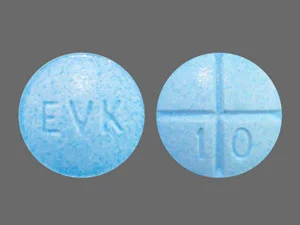
| Current brand appearance | Blue, round tablet marked “EVK” and “10,” with score lines; appearance alone is not proof of identity |
| Drug class | Central nervous system stimulant |
| Prescription status | Prescription only |
| Controlled status | Schedule II (CII) in the United States |
| Key warning | High potential for abuse and misuse leading to addiction; overdose and death can occur |
The tablet’s score lines do not authorize a patient to choose a fraction or create a lower dose. Split only if the prescriber and pharmacist have directed the exact division and explained how to use the tablet accurately. Never crush or alter Evekeo for snorting, injection, or any non-prescribed route; the boxed warning notes increased overdose and death risk with unapproved methods of administration.
What amphetamine sulfate does—and what it should not be used to do
Amphetamines are sympathomimetic medicines with CNS stimulant activity. They affect chemical signaling involved in attention and behavioral regulation and can also raise blood pressure and heart rate. In ADHD, the useful outcome is improved function: better sustained attention, reduced impulsive responding, or less impairing hyperactivity. Feeling energized or euphoric is not a treatment target.
Evekeo should not be used to compensate for sleep deprivation, extend a workday, improve examination performance in a person without a prescription, or suppress appetite for cosmetic weight loss. These uses increase medical and addiction risk and may be illegal. A patient with persistent fatigue or concentration difficulty needs an assessment because sleep disorders, anxiety, depression, thyroid conditions, anemia, substance use, and other medicines can create similar complaints.
Why “10 mg” does not define the regimen
The number describes the amount in one tablet. It does not tell a patient whether to take a whole tablet, when to take it, whether another dose is scheduled, or how long treatment should continue. The current label says to use the lowest effective dosage and adjust individually. For ADHD in children six years or older, it describes a starting dose of 5 mg once or twice daily with weekly 5 mg increases until optimal response, and notes that only rarely is a total above 40 mg daily necessary. For younger children age three to five, the labeled starting framework is different.
This information is not an instruction to start or titrate at home. A clinician may follow updated clinical standards and individual risk factors. A 10 mg tablet may represent one authorized dose, part of a divided schedule, or a later step after lower-dose assessment. The first dose is generally given on awakening, with additional prescribed doses spaced four to six hours apart under the current label. Late doses can cause insomnia.
Evekeo is not interchangeable with Evekeo ODT
Evekeo tablets and Evekeo ODT are distinct formulations. An orally disintegrating tablet has specific packaging and administration instructions. The 10 mg blue Evekeo tablet described here is swallowed according to its prescription; instructions about peeling ODT blister foil or letting a tablet dissolve do not automatically apply. The pharmacist should verify any formulation change.
The evaluation comes before the product
A responsible ADHD assessment considers symptom history, impairment, development, school or work information, sleep, mental health, medical conditions, and substance use. Recent distractibility caused by crisis, poor sleep, another psychiatric disorder, or environmental factors should not automatically lead to stimulant treatment. The current label describes Evekeo as one element of a program that can include psychological, educational, and social measures.
Before prescribing, the clinician should assess abuse, misuse, and addiction risk and evaluate cardiovascular history. The label directs assessment for cardiac disease through history, family history of sudden death or ventricular arrhythmia, and physical examination. It also directs clinicians to assess tics or Tourette’s syndrome. Screening for bipolar and manic risk is important because stimulants can trigger a manic or mixed episode.
Pre-treatment disclosure checklist
Heart and circulation
- Structural heart abnormality, cardiomyopathy, coronary artery disease, serious arrhythmia, high blood pressure, stroke, or other cardiovascular condition.
- Chest pain, fainting, unexplained shortness of breath, exercise intolerance, or palpitations.
- Sudden or unexplained death, ventricular arrhythmia, or serious heart disease in close relatives.
- Raynaud’s phenomenon, numb or painful fingers/toes, temperature sensitivity, color changes, or unexplained wounds.
Mental health, neurologic history, and substance use
- Psychosis, hallucinations, bipolar disorder, mania, depression, suicidal behavior, severe agitation, or aggression.
- Seizure, abnormal EEG, motor or verbal tics, or Tourette’s syndrome.
- Personal or family history of alcohol or drug dependence, prescription misuse, addiction, diversion, or overdose.
- Pressure from peers or family to share stimulant medicine.
Other important information
- Allergy to amphetamine products or any tablet ingredient, including sensitivity to color additives where relevant.
- Pregnancy, plans for pregnancy, or breastfeeding.
- Every prescription and over-the-counter drug, supplement, herbal product, nicotine product, alcohol use, cannabis use, and other substance.
- Current or recent use of an MAOI, including linezolid or intravenous methylene blue in applicable cases.
Who should not take Evekeo
The current label contraindicates Evekeo in patients with known hypersensitivity to amphetamine products and during or within 14 days after use of a monoamine oxidase inhibitor. The MAOI interaction can produce hypertensive crisis. A patient should not try to calculate the separation period without confirming the exact medicine and dates with the prescriber or pharmacist.
The label advises avoiding Evekeo in patients with serious cardiac disease, including structural abnormalities, cardiomyopathy, serious arrhythmia, coronary artery disease, or other serious heart disease. Caution is also required with hypertension, seizure risk, psychiatric conditions, tics, and other factors. An online checkout cannot safely replace this assessment.
How to take Evekeo 10 mg
Follow the pharmacy label exactly. For ADHD, the current label places the first dose on awakening and any additional prescribed doses four to six hours apart. Do not add a dose because a meeting, examination, or long drive is scheduled. Do not take it in the late afternoon or evening unless the prescriber has issued condition-specific directions; insomnia can follow late use.
Take the tablet by mouth as instructed. The medication guide says it may be taken with or without food. Use a consistent routine if advised, and tell the clinician about persistent stomach symptoms or appetite loss. Do not compare the experience with another amphetamine product and adjust the amount; absorption and composition differ across products.
Missed dose
If a dose is missed, do not double the next dose. Because timing affects sleep and later doses, call the pharmacist if the correct response is not clear from the label. Never save a missed tablet for an unauthorized extra dose.
Stopping treatment
Physical dependence can develop after prolonged use, even when Evekeo is taken as prescribed. Sudden discontinuation or major dose reduction after prolonged use may cause depression, fatigue, sleep changes, increased appetite, or agitation. The prescriber should guide discontinuation. If misuse has occurred, disclose the actual amount and pattern so the clinician can plan safely.
A benefit-and-risk diary for the 10 mg tablet
A short daily note can make follow-up more accurate. Record the dose time, setting, target symptom, observable benefit, adverse effects, sleep, meals, and any other substance or medicine used. Avoid a long narrative; consistent entries make patterns easier to see.
Possible benefit markers
- Completing a defined task sequence with fewer redirections.
- Reduced interruption or impulsive action in more than one setting.
- Improved persistence on age-appropriate or job-relevant activities.
- Safer, more regulated behavior without emotional flattening.
Safety markers
- Appetite, weight, height in children, and meal completion.
- Sleep onset, total sleep, and rebound fatigue.
- Blood pressure and pulse when directed.
- Mood, anxiety, agitation, suspiciousness, hallucinations, or mania.
- Tics, seizure, or finger/toe circulation changes.
- Urges to take more, early use, missing tablets, or pressure to share.
Bring the diary to the prescriber, but contact the clinician immediately for serious symptoms. A monitoring sheet is not a reason to delay emergency care.
Common side effects
Amphetamine may cause dry mouth, nausea, stomach cramps, diarrhea or constipation, headache, nervousness, restlessness, sleep difficulty, appetite loss, weight loss, or changes in heart rate and blood pressure. The individual pattern varies. Children treated with stimulants can have slowing of growth rate; height and weight should be followed closely.
Do not misuse appetite suppression as a weight-loss method. If a patient cannot maintain nutrition, loses significant weight, or a child is not growing as expected, contact the prescriber. Likewise, persistent insomnia can worsen attention and create a cycle in which the patient believes more stimulant is needed the next day.
Serious risks and emergency warning signs
Abuse, misuse, addiction, overdose, and death
Evekeo has a high potential for abuse and misuse. Risk rises with higher doses and non-approved routes, but no unauthorized use is safe. Taking extra tablets, using them for euphoria or appetite suppression, crushing for snorting, injecting, or combining with other stimulants can be fatal. Contact emergency services for suspected overdose, seizure, collapse, severe agitation, high fever, chest symptoms, dangerous behavior, or inability to awaken. In the United States, Poison Help is available at 1-800-222-1222.
Serious cardiac events
Sudden death has occurred in patients with structural heart defects or other serious heart disease who received CNS stimulants at recommended ADHD doses. Call the healthcare provider or go to an emergency department for chest pain, shortness of breath, fainting, or other signs of a heart problem. Blood pressure and heart rate should be checked regularly during treatment.
Psychosis and mania
Evekeo may worsen preexisting psychosis, trigger mania in bipolar disorder, or cause new psychotic or manic symptoms. Hallucinations, delusional beliefs, extreme activation, sharply reduced need for sleep, or dangerous behavior needs immediate professional assessment. Do not dismiss these changes as ordinary stimulant energy.
Seizures and tics
Stimulants may lower the seizure threshold. A seizure requires urgent assessment. Motor or verbal tics can begin or worsen, and Tourette’s syndrome should be evaluated before and during treatment. Report repeated movements or sounds that are new, distressing, or increasing.
Peripheral vasculopathy
Numbness, pain, temperature sensitivity, or color change in fingers and toes can occur with stimulants, including Raynaud’s phenomenon. Rare ulceration or tissue damage has been reported. Report symptoms early and seek prompt evaluation for wounds or persistent circulation changes.
Serotonin syndrome
A potentially life-threatening reaction may occur when Evekeo is combined with serotonergic medicines or certain CYP2D6 inhibitors. Symptoms can include agitation, hallucinations, confusion, fever, sweating, fast heart rate, unstable blood pressure, tremor, rigidity, overactive reflexes, poor coordination, seizure, nausea, vomiting, or diarrhea. Obtain urgent medical care for a suspected syndrome.
Allergy
Hives, swelling of the face or throat, trouble breathing or swallowing, or collapse may indicate a severe allergic reaction. Use emergency services and do not take another tablet until medically evaluated.
Interaction review: medicines, supplements, food, and substances
MAOIs are contraindicated. Serotonergic medicines—including SSRIs, SNRIs, triptans, tricyclic antidepressants, fentanyl, lithium, tramadol, tryptophan, buspirone, and St. John’s wort—can raise serotonin-syndrome risk. CYP2D6 inhibitors can increase exposure and risk. Patients should not stop an antidepressant solely to obtain Evekeo; the treating clinicians must coordinate care.
Acidifying agents can lower amphetamine blood levels, while alkalinizing agents can raise them. Products such as vitamin C, sodium bicarbonate, antacids, and some urinary medicines may be relevant. This interaction information must not be used to manipulate Evekeo’s effect. Tell the pharmacist about exact products and use them only as professionally directed.
Other stimulants, decongestants, caffeine concentrates, nicotine, and pre-workout supplements can add cardiovascular or nervous-system effects. Alcohol and cannabis may complicate judgment, anxiety, psychosis risk, sleep, and adherence. A patient should disclose use honestly rather than assuming legal substances are harmless.
Special discussion: Evekeo and weight loss
The current label includes exogenous obesity only as a short-term adjunct—described as a few weeks—to a caloric-restriction program for patients who have not responded to alternative therapy. It also explains that the extra weight loss seen with anorectic drugs over diet and placebo was limited and tended to be greatest early. The risks of stimulant treatment must be weighed against this limited usefulness.
Evekeo is not a general obesity solution, not a substitute for long-term evidence-based weight management, and not appropriate for cosmetic weight loss. The label says it is not recommended for obesity treatment in children under 12. An ADHD patient who loses weight as a side effect should not treat that as a bonus; nutrition, growth, and treatment suitability need review.
Pregnancy and breastfeeding
Tell the clinician if pregnant or planning pregnancy. The benefit-risk decision is individualized. Amphetamine passes into human milk, and current patient guidance says not to breastfeed during Evekeo treatment. Do not make a pregnancy or feeding decision based on a product review or abruptly change prolonged treatment without professional advice, unless emergency care directs otherwise.
Children, school, and caregiver controls
The current label says Evekeo is not for ADHD in children younger than three. Dosing frameworks differ for ages three to five and age six and older. A child’s medicine should be given by a responsible adult, with each dose recorded. Growth, appetite, sleep, heart rate, blood pressure, mood, and behavior require monitoring.
If school administration is necessary, use the school health office and original pharmacy-labeled container. Do not send tablets loose in a bag or let the child carry them without an authorized care plan. Teach the child that sharing medicine can seriously harm another person and is illegal.
How to buy Evekeo 10 mg online safely and legally
Searches for “buy Evekeo 10 mg online,” “amphetamine sulfate 10 mg price,” “order Evekeo 10 mg tablets,” or “Evekeo delivery with prescription” should lead to a controlled-substance dispensing process. A valid prescription is not a website formality; it documents an authorized clinician’s decision and allows the pharmacist to verify dose, interactions, and legal requirements.
Use a licensed pharmacy
- Verify licensure through the relevant state board or national pharmacy regulator.
- Confirm that a pharmacist is available for counseling.
- Check the physical dispensing location and controlled-substance authority.
- Expect identity, prescription, delivery, and signature safeguards.
- Review privacy, payment, cancellation, and shipment policies.
- Reject sellers offering Evekeo without a prescription or promising guaranteed approval.
Confirm the exact product
The order should state Evekeo or authorized amphetamine sulfate, 10 mg, oral tablet, quantity, and manufacturer or labeler information. Do not substitute Evekeo ODT, an extended-release product, mixed amphetamine salts, or another stimulant. A current brand tablet is described as blue, round, and marked EVK 10, but the licensed pharmacist and patient label—not appearance—confirm the medicine.
Counterfeit warning
Never obtain amphetamine tablets through social media, a messaging service, a friend, or an unlicensed marketplace. Counterfeit pills can contain unexpected and potentially lethal ingredients. “Same imprint” photographs are not a safety test. Keep a delivered mismatch sealed and contact the dispensing pharmacy.
Evekeo 10 mg cost and controlled-prescription rules
Price varies with brand or generic selection, quantity, location, insurer formulary, deductible, pharmacy network, discount eligibility, and supply. A search-engine price may use a different ZIP code or quantity and can change. Compare the exact 10 mg immediate-release tablet, not an ODT or extended-release product.
Schedule II prescriptions cannot be refilled under federal law in the ordinary manner. Where permitted, a prescriber may issue separate prescriptions with appropriate instructions. Certain electronic controlled prescriptions may be transferred between DEA-registered retail pharmacies under federal rules, but state law and pharmacy policy also apply. Ask the pharmacist what can be done if stock is unavailable.
Never request duplicate active prescriptions from several clinicians or purchase a backup supply illegally. If cost or availability threatens treatment continuity, involve the prescriber. Any replacement must be both lawful and clinically appropriate.
Delivery inspection, storage, and disposal
Check the sealed package, patient name, medicine name, 10 mg strength, tablet form, directions, quantity, manufacturer, expiration, and required Medication Guide. Contact the pharmacy if the product is damaged, unlabeled, the wrong color or imprint for the documented manufacturer, or different from the prescription.
Store Evekeo at the conditions on the label in a well-closed, patient-labeled container and in a secure, preferably locked location. Do not leave it in a car, bathroom, purse, desk, kitchen cabinet, or guest-accessible room. Keep a reasonable tablet count and report suspected theft.
Use a DEA-authorized collector or medication take-back program for unwanted tablets when possible. If no take-back option is available, follow current FDA and pharmacist disposal guidance. Never keep leftover tablets for weight loss, exams, travel fatigue, or another household member.
Telehealth prescribing and online consultation claims
A legitimate telehealth clinician may evaluate ADHD or another labeled condition when professional standards and applicable controlled-substance laws are met. Telehealth does not guarantee an Evekeo prescription. The clinician may need prior records, vital signs, an in-person examination, coordination with another professional, or a different treatment plan. Rules can change and can vary by the patient’s location.
Avoid platforms that advertise “Evekeo approval” before evaluation, use only a short automated questionnaire, refuse to identify the treating clinician, or route every patient to an undisclosed pharmacy. The ability to pay a membership fee does not establish medical need. A sound service explains clinician credentials, emergency limitations, follow-up, monitoring, pharmacy choice, and controlled-prescription requirements.
If a clinician proposes changing from another stimulant
Do not convert the dose using a social-media chart. Evekeo contains racemic amphetamine sulfate; other products may contain mixed amphetamine salts, only dextroamphetamine, a prodrug such as lisdexamfetamine, or a different release system. Equal milligram numbers do not guarantee equal exposure or effect. The prescriber should write the new product, strength, schedule, and stop/start instructions clearly.
Keep the old and new containers separate and locked. Ask what to do with the remaining old medicine, when the first Evekeo dose should be taken, which adverse effects might change, and when follow-up is due. Never take both products together unless the authorized plan explicitly includes both.
Pharmacist questions specific to Evekeo 10 mg
- Is this standard Evekeo tablet, Evekeo ODT, or a generic amphetamine sulfate product?
- Does the prescription authorize tablet splitting, and exactly how should it be done?
- Which inactive ingredients and color additives are in this manufacturer’s 10 mg tablet?
- What should be done if vomiting occurs shortly after a dose?
- Does the patient’s antidepressant, migraine drug, antacid, inhaler, or cold remedy interact?
- What is the missed-dose cutoff for the prescribed schedule?
- How should a wrong imprint, broken seal, or damaged delivery be documented?
- Which authorized take-back location accepts Schedule II tablets?
Do not repeat a tablet after vomiting unless a healthcare professional directs it; some medicine may already have been absorbed. Likewise, a scored tablet that arrives crumbled or split should not be estimated by eye. Contact the dispensing pharmacy and keep the product in its original package.
What an early-refill request can reveal
An early request may result from travel, a dosing misunderstanding, loss, theft, diversion, vomiting, an incorrect quantity, or taking more than prescribed. Explain the facts accurately. Controlled-substance policies may limit replacement, but hiding the reason can create greater risk. If the patient is using extra tablets to extend benefit or change mood, the prescriber needs to assess treatment and possible substance-use problems.
Families should address missing tablets calmly and secure the supply immediately. Do not accuse a child or visitor without evidence, but do not ignore unexplained count differences. The clinician, pharmacist, school, and local authorities may each have a role depending on the circumstances.
Frequently asked questions about Evekeo 10 mg
Is Evekeo 10 mg the same as Adderall 10 mg?
No. Evekeo contains racemic amphetamine sulfate, while Adderall contains mixed amphetamine salts. Their composition, products, and dosing are not interchangeable. Only a prescriber can authorize a switch.
Is Evekeo 10 mg immediate release?
The standard blue Evekeo 10 mg tablet described in the current label is an immediate-release tablet. Evekeo ODT and other amphetamine formulations have different instructions. Verify the exact product.
Can I split the 10 mg tablet?
Only if the prescription and pharmacist specifically direct the exact split. Score lines do not give patients permission to self-select a dose. Do not divide the tablet to create an unprescribed regimen.
Does Evekeo cure ADHD?
No. It may help control relevant symptoms while it is part of a comprehensive treatment program. ADHD care may also include behavioral, educational, psychological, and environmental support.
Is Evekeo primarily a weight-loss pill?
No. Although the current label includes a limited short-term adjunctive indication for exogenous obesity in certain patients, it is a high-risk Schedule II stimulant and not a routine or cosmetic weight-loss product. An ADHD page should not present it mainly as an anti-obesity medicine.
How long does Evekeo 10 mg last?
Duration varies by patient, dose, timing, metabolism, food routine, and other factors. Do not redose based on a generic online duration estimate. Follow the prescribed intervals and report insufficient or excessive coverage to the clinician.
Can I take it at night?
Amphetamine can cause insomnia. For ADHD, the current label places the first dose on awakening and later prescribed doses four to six hours apart. Do not take a missed dose late without pharmacist advice.
Can I drink coffee while taking Evekeo?
Discuss caffeine with the prescriber. Coffee, energy drinks, and concentrated caffeine can add nervousness, tremor, insomnia, blood-pressure, or heart-rate effects. Avoid using caffeine to extend the medicine’s perceived effect.
What if the tablet is not blue or does not say EVK 10?
Keep it separate and contact the dispensing pharmacist. Generic products may look different, but the manufacturer, active ingredient, strength, and form must be verified before use. Never rely only on a pill-photo website.
Can Evekeo be ordered without a prescription?
No legitimate pharmacy should dispense this Schedule II prescription medicine without an authorized prescription. Avoid “no prescription” sellers; they expose patients to counterfeit products, legal risk, and serious medical harm.
What if I run out early?
Contact the prescriber and explain exactly what happened. Do not buy tablets from another person or unlicensed seller. Running out early may signal a dosing misunderstanding, loss, theft, misuse, or inadequate treatment planning that needs professional review.
Can I stop after taking it for a long time?
Ask the prescriber. Physical dependence and withdrawal symptoms can occur after prolonged use. A supervised plan is safer, particularly if doses have been higher than prescribed.
Final checkout and use checklist
- A qualified prescriber has evaluated the patient and issued a valid prescription.
- The medicine is Evekeo or authorized amphetamine sulfate 10 mg immediate-release tablet—not ODT, XR, mixed salts, or dextroamphetamine.
- The pharmacy is verifiably licensed and follows Schedule II rules.
- The patient understands the dose, timing, interactions, monitoring, and missed-dose plan.
- The household has locked storage and a disposal plan.
- Urgent cardiovascular, psychiatric, neurologic, circulation, allergy, serotonin-syndrome, and overdose signs are understood.
Bottom line for patients and caregivers
Evekeo 10 mg can be used responsibly only inside a legitimate clinical and pharmacy process. The blue EVK 10 tablet is an immediate-release Schedule II amphetamine product with important benefits for selected patients and equally important risks. Verify the exact formulation, reject any no-prescription offer, keep tablets locked, and report adverse effects or signs of misuse promptly. Do not describe it as an ADHD cure or routine anti-obesity product.
Reference note: This original patient guide uses the current DailyMed Evekeo label and Medication Guide, MedlinePlus amphetamine information, and U.S. DEA controlled-substance resources. It is not a substitute for the complete official labeling, prescriber instructions, or applicable law.
Authoritative references
| Select Variation |
300 pills ,180 pills ,240 pills ,90 pills |
|---|