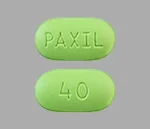


Generic Paxil 40 mg
Price range: $781.20 through $2,475.00
| Variation | Price | Quantity | Add To Cart |
|---|---|---|---|
| 300 pills | $2,475.00 |
|
Add to cart |
| 180 pills | $1,512.00 |
|
Add to cart |
| 240 pills | $1,992.00 |
|
Add to cart |
| 90 pills | $781.20 |
|
Add to cart |
Paxil 40 mg (Paroxetine): Higher-Strength Prescription Review
Paxil 40 mg is an immediate-release paroxetine tablet used in adult treatment plans when a prescriber has determined that a higher strength is appropriate. Paroxetine is an SSRI approved for major depressive disorder, obsessive-compulsive disorder, panic disorder, social anxiety disorder, generalized anxiety disorder, and posttraumatic stress disorder. Forty milligrams is not the labeled starting dose for any of these conditions, and it should not be selected by a shopper based on symptom severity alone.
This page is designed for valid prescription and refill questions: Paxil 40 mg uses, dosage context, side effects, interactions, monitoring, generic price comparison, and how to order paroxetine 40 mg from a licensed online pharmacy. It does not instruct a patient to increase from 20 mg or 30 mg. A higher dose may increase some adverse effects without providing more benefit, depending on the condition and patient.
40 mg product profile
| Active ingredient | Paroxetine |
|---|---|
| Product type | Immediate-release oral tablet |
| Strength | 40 mg |
| Drug class | Selective serotonin reuptake inhibitor |
| Regulatory status | Prescription only |
| Usual labeled schedule | Once daily in the morning, with or without food, according to prescription |
| Not interchangeable with | Paxil CR controlled-release products |
| Main safety theme | Reconfirm clinical benefit, tolerability, interactions, and dose ceiling |
Where 40 mg fits within labeled dosage ceilings
| Adult indication | Labeled starting dose | Labeled maximum dose |
|---|---|---|
| Major depressive disorder | 20 mg | 50 mg |
| Obsessive-compulsive disorder | 20 mg | 60 mg |
| Panic disorder | 10 mg | 60 mg |
| Posttraumatic stress disorder | 20 mg | 50 mg |
| Social anxiety disorder | 20 mg | Safety studied up to 60 mg, but labeling does not show added benefit above 20 mg for all patients |
| Generalized anxiety disorder | 20 mg | Studied up to 50 mg, but labeling does not show greater benefit above 20 mg for all patients |
These are label boundaries, not personalized instructions. A maximum is not a target. A prescriber may decide that 40 mg is justified for one condition and not justified for another, even when both are FDA-labeled uses of paroxetine.
The central question: what improved after the increase?
A 40 mg refill should be linked to observable benefit. For depression, has mood, interest, safety, or function improved? For OCD, are obsessions and compulsions less time-consuming? For panic disorder, are attacks and avoidance reduced? For PTSD, are symptoms and daily functioning better? For GAD or social anxiety, was there a clear additional benefit beyond the prior dose?
If the patient cannot identify benefit, or if sexual dysfunction, sweating, constipation, sedation, insomnia, emotional blunting, or other effects became substantially worse, the prescriber should review the balance. Do not increase further because 40 mg feels “not strong enough” without an assessment.
Condition-specific evidence at 40 mg
Major depressive disorder
Forty milligrams is below the labeled 50 mg maximum, but remaining below the ceiling does not prove the dose is necessary. Document whether depressive symptoms and function improved after the last increase. If severe agitation, emotional numbing, sexual dysfunction, or sedation increased without benefit, report it.
Obsessive-compulsive disorder
OCD trials and labeling support a broader dose range, but medication should be assessed alongside exposure and response prevention when available. Track time spent on compulsions, degree of distress, avoidance, and interference. A patient should not keep increasing while compulsive behavior remains unaddressed in therapy.
Panic disorder
Panic treatment begins low and may be titrated. At 40 mg, the review should distinguish fewer attacks and less avoidance from medication-related activation, sleep loss, or emotional blunting. Paxil remains a daily treatment and is not an emergency rescue tablet.
Social anxiety disorder and generalized anxiety disorder
For these conditions, current labeling states that available evidence does not suggest additional benefit above 20 mg for all patients. That does not make every 40 mg prescription wrong, but it makes the individualized rationale particularly important. The patient should not infer that twice the milligrams means twice the anxiety relief.
Posttraumatic stress disorder
Track intrusion, avoidance, negative mood or cognition, arousal, sleep, and function. Medication may reduce some symptoms, while trauma-focused psychotherapy remains important. Dissociation, substance use, nightmares, and immediate safety may need their own treatment strategies.
Before the first 40 mg dose
Confirm the date the increase begins and which previous bottle is being replaced. Review suicidal risk, bipolar symptoms, adverse effects, pregnancy, kidney or liver impairment, glaucoma, seizures, bleeding history, falls, and sodium problems. Provide a complete medicine and supplement list. If 40 mg was prescribed months ago but never started, contact the prescriber before beginning it now.
Ask when follow-up will occur and what changes should trigger an earlier call. A higher strength should not be initiated immediately before travel, a safety-sensitive work period, or an important procedure without considering access to care and the clinician’s plan.
Do not use body size or symptom intensity to self-select 40 mg
Paroxetine adult dosing is not calculated simply from body weight. A larger body does not automatically need 40 mg, and severe symptoms do not justify skipping titration. Metabolism, organ function, interactions, diagnosis, and nervous-system sensitivity influence exposure and response.
Likewise, a smaller adult is not automatically unable to take 40 mg. The prescriber evaluates the full clinical picture. Online comparisons with another person’s dose provide little useful guidance.
How dose increases are generally approached
Current labeling allows increases in 10 mg increments at intervals of at least one week for several indications when response is inadequate. A clinician may proceed more slowly. The patient’s history, age, organ function, prior activation, other drugs, and side effects influence timing.
Do not combine a 20 mg tablet and half of a 40 mg tablet unless the exact plan is prescribed and the pharmacist confirms the product can be split. Do not alternate strengths on different days to average 40 mg. Consistent, accurately dispensed dosing is essential.
Taking Paxil 40 mg
Immediate-release Paxil is generally taken once daily in the morning, with or without food. Follow the current pharmacy label. If morning dosing causes problematic sleepiness or another timing issue, ask the prescriber or pharmacist before changing.
Do not take a second 40 mg tablet after vomiting or because a dose may have been forgotten. Call the pharmacist for instructions based on timing. Do not crush or mix it into food unless the exact product labeling and pharmacist permit that method.
Missed doses and paroxetine’s discontinuation burden
Take a missed dose when remembered unless it is close to the next scheduled dose; then skip it. Do not double. Because paroxetine can produce discontinuation symptoms, some patients notice dizziness, nausea, sensory disturbances, anxiety, or irritability after missed doses.
Repeated missed doses at 40 mg can produce substantial fluctuations. Discuss adherence barriers. If several days were missed, contact the prescriber before restarting the full dose.
Boxed warning and monitoring after an increase
Antidepressants increased suicidal thoughts and behaviors in pediatric and young adult patients in short-term studies. Paxil is not approved for pediatric patients. All patients need observation for worsening depression, suicidal thinking, and unusual behavior, especially during the first months and around dose changes.
New self-harm thoughts, severe agitation, reckless behavior, aggression, marked insomnia, worsening panic, or an abrupt mood change calls for prompt clinical contact. Imminent risk requires emergency services, not a routine message to an online pharmacy.
Activation of mania or hypomania
Antidepressants can precipitate mania or hypomania in a susceptible person. Report past or family history of bipolar disorder and any period of elevated or intensely irritable mood, little need for sleep, rapid speech, racing thoughts, grandiosity, psychosis, or risk-taking.
After an increase to 40 mg, a sudden surge in energy with impaired judgment is not ordinary improvement. Arrange urgent assessment. Do not self-medicate with alcohol, cannabis, or a borrowed sedative.
Serotonin syndrome
Paroxetine cannot be used with MAOIs intended for psychiatric disorders or within required washout intervals. Linezolid and intravenous methylene blue can also create a dangerous interaction. Other serotonergic medicines can raise risk.
Symptoms may include agitation, confusion, hallucinations, sweating, fever, rapid heart rate, unstable blood pressure, tremor, muscle rigidity, overactive reflexes, poor coordination, nausea, vomiting, or diarrhea. Seek urgent medical care for a concerning combination.
Thioridazine, pimozide, and heart-rhythm risk
Paxil is contraindicated with thioridazine and pimozide because paroxetine inhibits their metabolism and can contribute to dangerous QT prolongation and ventricular arrhythmias. Tell the prescriber about fainting, known QT prolongation, low potassium or magnesium, and all rhythm-affecting medicines.
Chest pain, fainting, severe palpitations, or shortness of breath needs prompt evaluation. Do not assume the symptom is anxiety without assessment.
CYP2D6 interactions at a higher paroxetine dose
Paroxetine is a strong CYP2D6 inhibitor. It can change exposure to atomoxetine, certain antipsychotics, tricyclic antidepressants, and some heart medicines. It can reduce the conversion of tamoxifen to an active metabolite, potentially reducing tamoxifen effectiveness.
Provide the full list to every prescriber and pharmacist. Do not stop oncology or cardiac treatment to continue Paxil. The teams can evaluate alternatives and monitoring.
Bleeding risk
SSRIs can increase bleeding risk, especially with aspirin, ibuprofen, naproxen, anticoagulants, and antiplatelet medicines. Mention ulcers, easy bruising, heavy bleeding, and nonprescription pain-reliever use.
Seek urgent care for black stools, vomiting blood, uncontrolled bleeding, severe weakness, or other signs of major blood loss. Do not stop a blood thinner without professional direction.
Pregnancy considerations become part of every refill
Paroxetine has specific pregnancy warnings, including an association between first-trimester exposure and cardiovascular malformations. SSRIs used later in pregnancy may be associated with newborn complications. The effects of untreated serious depression or anxiety also matter.
Discuss pregnancy planning before conception. If pregnancy occurs while taking 40 mg, contact the prescriber promptly but do not abruptly stop. A supervised plan may involve continuation, transition, or gradual reduction.
Breastfeeding
Paroxetine is present in human milk. The healthcare team considers the patient’s treatment needs, breastfeeding benefits, infant exposure, and any observed effects. Tell the infant’s clinician about the 40 mg dose and report unusual feeding, sedation, irritability, or other concerns.
Sexual dysfunction and dose-related burden
Paroxetine may cause decreased desire, erectile difficulty, delayed or absent ejaculation, and delayed or absent orgasm. Some adverse effects can be more troublesome at higher exposure, though individual response varies.
Ask specifically at follow-up. Do not assume the only choices are tolerating the problem or stopping suddenly. The clinician may discuss the diagnosis, other causes, benefits, dose, and treatment alternatives.
Common adverse effects
Nausea, dry mouth, constipation, diarrhea, sleepiness, dizziness, insomnia, sweating, tremor, weakness, headache, appetite or weight changes, and sexual problems may occur. Emotional blunting may also be reported. Side effects should be evaluated by severity and impact, not only by whether they appear in a leaflet.
Call the clinician if an effect interferes with eating, hydration, driving, work, relationships, or adherence. Severe allergy, seizure, serotonin syndrome, suicidal crisis, or acute eye symptoms requires urgent care.
Weight, appetite, and sleep
Changes in appetite and weight may reflect paroxetine, recovery from illness, inactivity, altered sleep, another medicine, or a medical condition. Track the pattern rather than using unregulated weight-loss products. Many “energy” and “fat burner” supplements contain stimulants that can worsen anxiety, sleep, blood pressure, or heart rate.
Sleepiness and insomnia are both possible. Distinguish difficulty sleeping from a reduced need for sleep with high energy, which can suggest mania-like activation. Do not move the dose to nighttime or add a sleep aid without interaction review.
Emotional blunting versus symptom relief
Some patients describe reduced emotional range, indifference, or detachment. Others experience healthy relief from overwhelming anxiety or depression. The difference is personal but clinically relevant. Describe whether positive emotions, relationships, motivation, and decision-making changed after the 40 mg dose.
The prescriber can consider whether the experience reflects residual illness, medication effect, dissociation, or another problem. Do not make an abrupt change simply to “feel something again.”
Low blood sodium and fall risk
Hyponatremia can occur with SSRIs. Risk may be higher in older adults, people taking diuretics, and those who are volume-depleted. Symptoms include headache, difficulty concentrating, memory problems, confusion, weakness, and unsteadiness. Severe cases may cause hallucinations, seizures, coma, or respiratory arrest.
A fall, sudden confusion, or new weakness should be assessed. Do not attribute it only to stress or age.
Angle-closure glaucoma and seizures
Pupil dilation may trigger angle closure in patients with untreated anatomically narrow angles. Sudden eye pain, redness, nausea, headache, halos, or blurred vision requires urgent eye care. Tell the prescriber about glaucoma or narrow-angle risk.
Paroxetine should be prescribed cautiously in seizure disorders. Report seizures immediately. Include head injury, alcohol withdrawal risk, and seizure-threshold-lowering medicines in the history.
Why older adults and severe organ impairment need special caution
Current labeling starts older adults and patients with severe renal or hepatic impairment at 10 mg and gives a lower maximum. A 40 mg prescription in one of these groups requires clear prescriber oversight and confirmation of the intended plan.
These patients may experience higher exposure and need closer monitoring for falls, sodium changes, sedation, interactions, and withdrawal. Do not copy another adult’s dosing schedule.
Stopping Paxil 40 mg safely
Forty milligrams should not be stopped suddenly. Discontinuation can cause dizziness, abnormal dreams, sensory disturbances, nausea, sweating, anxiety, irritability, emotional lability, headache, tremor, confusion, insomnia, lethargy, and tinnitus.
A taper may use several tablet strengths or an appropriate liquid and may take different lengths of time for different patients. Never create a taper by taking 40 mg every other day or by crushing controlled-release products. If withdrawal is severe, contact the prescriber.
Relapse versus withdrawal
Withdrawal often follows a dose reduction or missed doses and can include physical symptoms such as dizziness or electric-shock-like sensations. Relapse may resemble the original disorder. The timing and symptom pattern can overlap.
Keep a dose-and-symptom timeline and seek professional assessment. Suicidal thoughts, inability to function, or severe symptoms require prompt help regardless of the cause.
Long-term effectiveness review
Long-term treatment should be periodically re-evaluated. Review the number and severity of prior episodes, relapse history, current function, psychotherapy, side effects, patient preference, and medical changes. The existence of remaining refills does not replace clinical monitoring.
If stable, do not reduce solely to use a lower strength; if poorly controlled, do not increase solely because a higher strength exists. Both changes require clinical reasoning.
Laboratory and physical monitoring
No routine blood level tells whether 40 mg is the “correct” dose. Clinical response and adverse effects guide most decisions. A clinician may order sodium or other tests when age, diuretic use, symptoms, kidney or liver disease, or additional medicines justify them.
Blood pressure, falls, weight, bleeding, and eye symptoms may also be reviewed. A normal laboratory result does not rule out suicidal risk, mania, sexual dysfunction, or discontinuation problems.
Psychotherapy should not disappear as the dose rises
A higher medication dose does not replace condition-specific therapy. Exposure and response prevention may be central for OCD; cognitive behavioral and exposure-based methods can help panic and social anxiety; trauma-focused treatment can help PTSD; and structured psychotherapy may improve depression and generalized anxiety.
Coordinate major medication changes with the therapist when appropriate. If therapy exposes a new safety concern, contact the prescriber rather than waiting for the next refill.
Switching from 40 mg to another antidepressant
Do not stop 40 mg and begin another product based on an online conversion. Switch methods vary and may involve gradual taper, cautious overlap, or a washout. MAOIs require strict separation. Fluoxetine’s long persistence and paroxetine’s discontinuation profile can make certain switches especially complex.
Write down the last paroxetine dose and the first dose of the new medicine. If a pharmacist sees duplicate active prescriptions, clarify which one is current. Serotonin-syndrome symptoms during a switch require urgent evaluation.
Procedures, dental care, and pain treatment
Tell procedural teams that you take paroxetine 40 mg. Bleeding risk and selection of postoperative pain medicines may matter. Tramadol is serotonergic and also depends partly on CYP2D6; paroxetine can complicate the combination. Other drugs may have their own concerns.
Do not stop before surgery unless the responsible clinician directs it. Abrupt withdrawal can introduce dizziness, nausea, agitation, or other symptoms during recovery.
Overdose and accidental double dosing
An accidental second 40 mg tablet creates an 80 mg exposure and requires prompt professional advice. Do not wait for severe symptoms or try to induce vomiting. In the United States, call Poison Help at 1-800-222-1222. Call 911 if the patient collapses, has a seizure, has breathing difficulty, or cannot be awakened.
Keep the container available for responders. Secure large quantities when children are present or self-harm risk exists. A weekly organizer may help some patients, but it must be kept locked and updated when the dose changes.
Care coordination at a higher dose
Primary care, psychiatry, oncology, cardiology, pain care, and pharmacy records may not automatically synchronize. Carry an updated list that says “paroxetine immediate release 40 mg once daily” rather than only “Paxil.” Include start date and prescriber when possible.
If a new clinician recommends a medicine, ask that professional and the pharmacist to review interactions. Never assume that a prescription is compatible simply because it came from a licensed clinician who may not have seen the complete record.
Brand Paxil and generic paroxetine 40 mg
FDA-approved generic paroxetine must meet applicable quality and bioequivalence standards. It may look different and use different inactive ingredients. Compare the pharmacy label, manufacturer, and imprint after a refill.
A generic manufacturer change can be legitimate, but an unmarked or loose tablet from an unverifiable seller is not. Ask the dispensing pharmacist to confirm identity before taking it.
Buying Paxil 40 mg online with a valid prescription
Searches such as “buy Paxil 40 mg online,” “paroxetine 40 mg refill,” “generic Paxil 40 mg price,” and “order Paxil 40 mg with prescription” should lead to a licensed pharmacy process. The pharmacy should require a valid prescription, show a verifiable address and phone number, protect health information, and provide pharmacist access.
Avoid a website that invites the customer to choose a higher dose, sells without a prescription, promises a cure, or ships unlabeled tablets. High strength plus weak verification is a dangerous combination. Verify the pharmacy through the relevant board-of-pharmacy or regulatory database.
How to compare paroxetine 40 mg prices correctly
- Match immediate-release paroxetine 40 mg, not Paxil CR.
- Compare the same quantity and brand/generic status.
- Add shipping, consultation, subscription, and dispensing fees.
- Check insurance network and prior-authorization rules.
- Verify that the prescription has enough authorized refills.
A very low price for a different formulation or quantity is not a true comparison. Do not order 20 mg tablets to take two at a time unless the prescription authorizes that exact substitution.
Delivery inspection
Check patient name, active ingredient, 40 mg strength, immediate-release dosage form, directions, quantity, prescriber, pharmacy, manufacturer, imprint, expiration/beyond-use information, and tamper-evident packaging. Store the old and new supplies separately while comparing them.
If anything differs, do not take the tablet. Contact the dispensing pharmacist. Do not use an internet photo or taste to identify medicine.
Preventing refill gaps
Review the supply at least a week before it ends when practical. Prescription expiration, required appointments, prior authorization, delivery delays, and stock problems can take time. If the current pharmacy cannot fill the prescription, ask it and the prescriber to coordinate a lawful transfer.
Do not take half doses, skip days, or substitute another formulation to extend the supply. If an emergency supply is legally available, a licensed pharmacist can explain the conditions. Avoid marketplace sellers advertising overnight Paxil without prescription verification.
Questions to ask the pharmacist
- Is this immediate-release paroxetine 40 mg and the same manufacturer as my prior refill?
- Does the tablet contain an inactive ingredient relevant to my allergy?
- Do my new pain, migraine, heart, ADHD, or sleep medicines interact?
- What should I do about a missed dose or vomiting after the tablet?
- Does this prescription replace lower-strength bottles?
- How should the package be stored during hot-weather delivery?
- Which changes in imprint or packaging require verification?
Frequently asked questions
Is Paxil 40 mg a high dose?
It is above the labeled starting doses and within the labeled maximums for several adult indications. Whether it is “high” clinically depends on diagnosis, age, organ function, response, and tolerability.
Does 40 mg work better than 20 mg?
Not for every person or condition. For GAD and social anxiety disorder, labeling does not establish greater benefit above 20 mg for all patients. Other disorders may require individualized titration.
Can I begin at 40 mg if symptoms are severe?
No product page can support that. Forty milligrams is not a labeled starting dose. A prescriber should select and titrate the dose.
Can I switch between Paxil 40 mg and Paxil CR?
Do not switch formulations without a prescription plan. The release systems and strengths differ.
Can I stop for a weekend?
No. Unplanned interruption can cause withdrawal and symptom return. Take it consistently unless the prescriber instructs otherwise.
What if I accidentally take two 40 mg tablets?
Contact poison-control or urgent medical services for immediate advice. In the United States, Poison Help is 1-800-222-1222; call 911 for collapse, seizure, breathing difficulty, or inability to awaken.
Can I buy Paxil 40 mg without a prescription?
No legitimate U.S. pharmacy should dispense it without a valid prescription. Avoid sellers that offer to bypass medical review.
Can 40 mg be used in children?
Paxil is not approved for pediatric patients. A child or adolescent needs specialist evaluation and an age-appropriate plan.
Pre-refill decision
Before authorizing a 40 mg refill, confirm that the dose still provides measurable benefit, adverse effects remain acceptable, no interacting medicine or pregnancy has been overlooked, and follow-up is current. A higher strength deserves clearer—not weaker—clinical documentation.
Online ordering can provide convenience and price comparison only when it preserves the prescription, licensed dispensing, pharmacist counseling, accurate formulation, and emergency-care boundaries that make treatment safer.
Also confirm that no older paroxetine strength or Paxil CR prescription remains active by mistake. Duplicate bottles can lead to an accidental extra dose, especially after pharmacy transfers or insurance changes. Keep only the current regimen in the active medication area, while disposing of obsolete tablets through a take-back option after the pharmacist or prescriber confirms they are no longer needed. Never combine remaining strengths to recreate 40 mg without written directions.
If the prescription is newly increased, schedule the refill and clinical review as separate safety steps: the pharmacy verifies the correct product, while the prescriber verifies that the dose is helping. Neither check replaces the other. Report both benefit and burden honestly before another quantity is authorized.
A concise outcome record for the next appointment
Write the date 40 mg began, the previous dose, and three target outcomes. Add the frequency and severity of common side effects, missed doses, alcohol or substance changes, and any new prescription. Use concrete examples: hours lost to compulsions, panic attacks per week, days unable to work, number of social situations avoided, or nights disrupted by trauma symptoms.
Include positive and negative changes. “Less anxious but too sedated to drive” communicates a different balance from “less anxious and working normally.” Bring the record and the current bottle to the visit. This is more useful than asking whether 40 mg is generally strong or weak.
Travel with paroxetine 40 mg
Carry tablets in the original pharmacy-labeled container and keep them in hand luggage when permitted, protected from extreme heat and moisture. Research destination prescription rules before departure. Bring an updated medication list and enough authorized medicine for the trip while allowing for reasonable delays.
Time-zone changes can affect dose timing. Ask the pharmacist for a plan rather than compressing two doses or creating a long gap. Do not mail tablets to yourself across borders or buy replacement Paxil from an unverified local seller.
Storage and disposal
Keep tablets in the original labeled container, protected from unsuitable heat and moisture and secured from children and pets. Do not mix strengths or manufacturers in one bottle. Use a take-back program for unwanted or expired medicine when available.
Official references
| Select Variation |
300 pills ,180 pills ,240 pills ,90 pills |
|---|